Setting up a recovery space at home can make post-surgery care safer, easier, and far less stressful. The right recovery room equipment helps with rest, transfers, mobility, and everyday tasks.
Our roundup focuses on practical, buyer-friendly options that support comfort and independence without overcomplicating your setup.
Best 7 Recovery Room Equipment Picks for 2026
Best for Full-Feature Home Care

- Full electric control for key patient-position adjustments
- One-click CPR and Trendelenburg functions add hospital utility
- 550 lb capacity with mattress, siderails, and locking casters
Best For: Home caregivers and patients who need a highly adjustable medical bed with hospital-style functionality.
Best for Post-Op Compression
Ice Machine for Knee Recovery with Leg Pillow

- Combines cold therapy, compression, and leg elevation
- Compact 12QT design works well in home recovery spaces
- Quiet motor and timer modes suit day or night use
Best For: People recovering from knee or hip surgery who want a portable cold therapy setup with elevation support.
Best for Bedside Convenience
Drive Overbed Table with Wheels

- Adjusts from 28 to 45 inches for bedside flexibility
- Smooth-rolling swivel casters with stable H-base design
- Non-tilt laminate top supports up to 40 lb
Best For: Home recovery, assisted living, and hospital bedside use.
Best for Bed Mobility
Vive Bed Ladder Assist with Padded Grip

- Comfortable foam handles for a secure grip
- Tool-free setup for many bed types
- Adjustable length with 300-lb support
Best For: People who need help sitting up in bed during recovery or daily mobility.
Best Reacher for Recovery

- 32-inch reach reduces bending and stretching
- 360-degree swivel head improves access
- Magnetic tip picks up coins and keys
Best For: People recovering from surgery or seniors who need a simple bedside reach aid.
Best for Home ICU Care
Premium 5-Function Electric ICU Bed
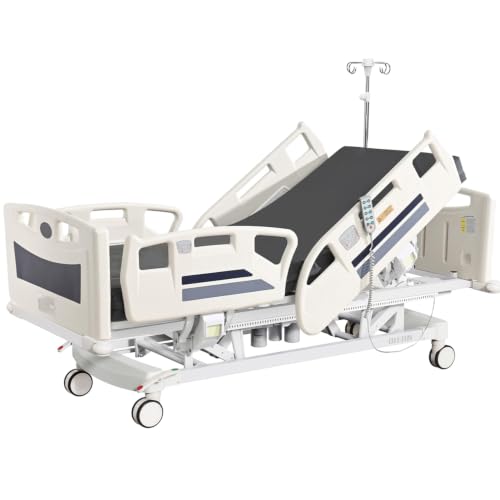
- 5-function electric adjustability with CPR release
- 550 lb capacity with locking casters and siderails
- Includes waterproof memory foam mattress and IV pole
Best For: Caregivers setting up a hospital-style bed for serious home recovery needs.
Best for Hip & Knee Recovery

- Multi-loop handle improves grip and control
- Rigid reinforced strap adds lifting support
- Extra-wide foothold loop works with casts and shoes
Best For: People recovering from hip or knee surgery who need help moving a leg with less strain.
Best for Full-Feature Home Care – Premium 5-Function ICU Bed
If you need recovery room equipment that brings true hospital-style functionality into the home, this full-electric ICU bed is built for serious caregiving. It combines height, backrest, and leg adjustments with Trendelenburg positioning, a CPR release, and a pressure-relieving mattress for a more complete care setup.
Best For: Home caregivers, seniors, and post-surgery patients who need a highly adjustable medical bed with hospital-grade features.
Pros:
- Full electric control for backrest, legrest, and height adjustments
- Includes Trendelenburg/reverse Trendelenburg and one-click CPR recovery
- 550 lb capacity with sturdy siderails and central locking casters
- Comes with a 4.7-inch waterproof memory foam mattress
Cons:
- Heavy-duty setup may be more than casual home users need
- Large footprint requires enough room for safe operation
- Assembly is mostly complete, but still not fully plug-and-play
This is a strong choice if you want recovery room equipment that prioritizes adjustability, safety, and caregiver convenience over simplicity. It is especially compelling for long-term home medical care where a bed needs to do far more than standard adjustable furniture.
Best for Post-Op Compression – Ice Machine for Knee Recovery with Leg Pillow
If you want recovery room equipment that combines cold therapy, compression, and leg support in one compact setup, this unit is a practical pick for home use after knee or hip surgery. The 12-quart design fits easily beside a bed or sofa, while the programmable timer and cycle modes make it easier to follow a doctor-guided routine.
Best For: Post-op users who want a portable cold therapy machine with an inflatable elevation pillow for knee or hip recovery.
Pros:
- Includes an inflatable leg elevation pillow and hand pump for added post-surgery comfort
- Offers continuous or cycle therapy with 10/20/30-minute intervals and 3 flow speeds
- Compact 12QT build is easy to place in a bedroom, living room, or recovery space
- Quiet operation makes it suitable for daytime rest or overnight use
Cons:
- Best suited to targeted recovery support rather than whole-body therapy
- Inflatable pillow may not feel as sturdy as a rigid elevation wedge
This is a strong fit if you need recovery room equipment that prioritizes comfort, portability, and joint-specific cold therapy. The added elevation pillow helps round out the recovery setup, making it more useful than a basic ice machine alone.
Best for Bedside Convenience – Drive Overbed Table with Wheels
If you need recovery room equipment that adds a stable surface without taking up much space, this Drive overbed table is a practical pick. It rolls easily, adjusts to different heights, and gives patients a reliable spot for meals, reading, laptops, and basic bedside tasks.
Best For: Home recovery setups, assisted living rooms, and hospital beds where a simple, adjustable bedside table is needed.
Pros:
- Height adjusts from 28 to 45 inches for flexible bedside use
- Swivel casters and H-base make it easy to move and keep steady
- Non-tilt laminate top is durable, easy to clean, and supports up to 40 lb
Cons:
- Not a tilting surface, so it’s less versatile for angled reading or drawing
- Best suited to light-to-moderate loads rather than heavy equipment
As recovery room equipment, this table stands out for dependable day-to-day convenience rather than specialty features. It’s a straightforward, well-built option for anyone who wants a stable, mobile bedside surface that works in both home and clinical settings.
Best for Bed Mobility – Vive Bed Ladder Assist with Padded Grip
If you need practical recovery room equipment to help with sitting up and repositioning in bed, this bed ladder assist is a simple, low-cost solution. It’s especially useful for people recovering from surgery, dealing with weakness or spinal issues, or anyone who wants a steadier way to get upright without relying on a caregiver every time.
Best For: Seniors, post-surgery patients, pregnant users, and anyone who needs extra help sitting up in bed.
Pros:
- Soft, non-slip foam handles make each pull more comfortable and secure.
- Tool-free installation works with many standard, adjustable, and hospital-style beds.
- Adjustable ladder length and 300-pound capacity add useful versatility and support.
Cons:
- Requires a sturdy fixed bed frame or base for proper attachment.
- It assists with sitting up, but it is not a full transfer aid.
As recovery room equipment, this is a straightforward choice for improving independence at bed level without taking up much space. It won’t replace more advanced mobility aids, but for simple sit-up assistance, it offers a practical mix of comfort, portability, and dependable support.
Best Reacher for Recovery – Grabber Reacher Tool 32”
If you need simple, low-effort recovery room equipment, this 32-inch grabber reacher is a practical helper for picking up items without bending or stretching. The rotating head, strong claw grip, and built-in magnet make it useful for bedside tasks, light cleanup, and reaching dropped essentials during recovery.
Best For: Patients, seniors, or caregivers who need an easy grabber tool for post-surgery recovery, bedside reach, and light household pickup.
Pros:
- 32-inch length helps reduce bending and overreaching
- 360-degree swivel head improves access to awkward spots
- Magnetic tip is handy for keys, coins, and other metal items
- Foldable design makes storage and transport easier
Cons:
- Not a substitute for heavier-duty lifting tools
- Best suited to light items rather than bulky objects
Overall, this is a straightforward, budget-friendly add-on to recovery room equipment when the goal is safer reach and less strain. It’s especially useful for post-op users who want a simple tool for daily independence without complicated setup.
Best for Home ICU Care – Premium 5-Function Electric ICU Bed
If you need recovery room equipment that feels closer to a true clinical bed than a basic home-care frame, this 5-function electric ICU model is worth a look. It combines powered height, backrest, legrest, Trendelenburg support, and CPR release into one setup, making it a strong fit for higher-acuity care at home.
Best For: Families, caregivers, and home-care setups that need a hospital-style bed with advanced positioning and easy cleaning.
Pros:
- 5-function electric adjustment, including height, back, leg, and Trendelenburg positioning
- 550 lb capacity with sturdy siderails and central locking casters for stability
- Includes a 4.7-inch waterproof memory foam mattress and IV pole support
- 95% pre-assembled for a smoother setup than many medical bed options
Cons:
- Large footprint may be too bulky for smaller rooms
- Higher-end feature set makes it more expensive than basic home hospital beds
- Best suited to users who truly need ICU-style adjustability
For buyers comparing recovery room equipment, this bed stands out because it packs nearly everything you’d expect from a hospital-grade platform into a home-use format. The tradeoff is size and cost, but the functionality is hard to beat if care needs are serious.
Best for Hip & Knee Recovery – 42-Inch Multi-Loop Leg Lifter
If you need practical recovery room equipment for getting a leg in and out of bed, a car, a couch, or a wheelchair, this 42-inch leg lifter is built for controlled, low-effort movement. Its multi-loop handle and rigid strap design make it easier to guide weak, stiff, or post-op legs without awkward bending.
Best For: People recovering from hip replacement, knee surgery, or other leg mobility limitations who want extra reach and a secure grip.
Pros:
- Multi-loop handle gives you multiple grip positions for better control
- Rigid, reinforced strap helps lift and position the leg more steadily
- Extra-wide foothold loop fits feet, shoes, and casts more easily
- Helpful for bed transfers, vehicle entry, and wheelchair use
Cons:
- Designed for assistance, not full weight-bearing support
- Rigid construction may feel less flexible than softer straps
For buyers comparing recovery room equipment, this leg lifter stands out for its long reach, secure loop design, and simple everyday usefulness after surgery or injury. It’s a straightforward mobility aid when the goal is safer, less painful leg positioning.
How We Picked the Best Recovery Room Equipment
We prioritized items that solve common recovery challenges: getting in and out of bed, moving safely, managing swelling, and reaching essentials with less strain. We also looked for Recovery Room Equipment that is simple to use, appropriate for home settings, and helpful for both patients and caregivers.
Quick Comparison: What Each Type Helps with
Bed systems and support tools typically help with positioning and safer rest, while cold therapy and leg support can aid comfort after orthopedic procedures. Overbed tables improve access to meals, medications, and personal items. Reaching and transfer aids are best for reducing bending, twisting, and risky movements during healing.
Key Buying Factors for Recovery Room Equipment
Comfort and Adjustability
Look for height adjustment, supportive surfaces, and features that match the user’s mobility level. Adjustable gear is especially useful when needs change during recovery.
Safety and Ease of Use
Choose products that feel stable, intuitive, and easy to operate with limited strength or range of motion. Non-slip details, secure grips, and smooth movement can make a major difference.
Space and Setup
Some Recovery Room Equipment is compact and portable, while other items are meant to stay in place. Measure the room and think about bedside access, caregiver clearance, and storage before buying.
Recovery Goal
Match the product to the main need: pain relief, elevation, transfer assistance, bedside convenience, or mobility support. The best choice is usually the one that addresses the biggest daily challenge first.
Who Should Buy Which Recovery Room Equipment?
If you’re building a full home recovery station, a hospital-style bed and overbed table can create the most functional base. For orthopedic patients, cold therapy, leg support, and leg lifters are often the most useful additions. Seniors or anyone with limited upper-body strength may benefit most from bed ladders and reachers to reduce unsafe movements.
In short, the best Recovery Room Equipment is the gear that makes daily care safer, simpler, and more comfortable for the specific person recovering.