If you want a Teeter FreeStep Recumbent Cross Trainer Stepper review that focuses on real buyer value, the main story is simple: this is a low-impact cardio machine built to be easier on the knees, back, hips, and ankles.
It is not trying to be the most aggressive home trainer; it is trying to be the most usable one for people who need joint-friendly movement.
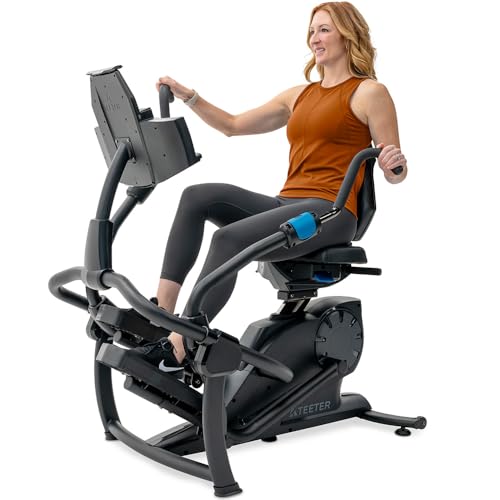
FreeStep Review Summary
The Teeter FreeStep Recumbent Cross Trainer Stepper makes sense for buyers who want steady cardio, seated support, and total-body motion without the harsh feel of high-impact machines.
It is especially compelling if you are comparing recumbent bikes and cross trainers and want something that claims to spread effort across the upper and lower body while keeping the movement gentle.
The strongest reason to buy it is the combination of patented natural stride, dual power motion, and recumbent seating.
That mix is designed to reduce stress while still making the workout feel productive.
It is also a fit for people who want multiple resistance levels, built-in workout programs, and app-based training without having to build a complicated setup around the machine.
Review Scorecard
| Category | Score | Buyer-focused rationale |
|---|---|---|
| Joint Comfort | 10/10 | Built around zero-impact, seated movement with marketing claims focused on knees, back, hips, and ankles. |
| Full-Body Engagement | 9/10 | Dual power motion works upper and lower body together or separately. |
| Workout Flexibility | 8/10 | 20 resistance levels and 21 pre-programmed workouts create useful variety. |
| Ease of Use | 8/10 | Electronic step lock, media rack, and transport wheels improve day-to-day convenience. |
| Training Guidance | 8/10 | Free app access and trainer-led classes help beginners stay consistent. |
| Build and Comfort Features | 9/10 | Large seat, comfort-focused pedals, synchronized handles, and long-term motion features are strong signals. |
For the right buyer, this is a practical home cardio machine rather than a flashy one.
If your priority is safer-feeling daily movement, that tradeoff is a strength, not a weakness.
Key Features and Specifications of FreeStep
Teeter positions the FreeStep as a home-use stepper with a patented natural stride licensed from commercial physiotherapy steppers.
The listing emphasizes a motion pattern meant to feel easier on the body than typical recumbent bikes or cross trainers with a cycling motion.
The most useful listed details are straightforward:
- Zero-impact exercise with a seated position intended to reduce stress on joints and back
- Dual power motion that works both the upper and lower body
- 20-level magnetic resistance with quick-key console control
- Color LCD screen with 7 tracking metrics
- 21 pre-programmed workouts for goal-based training
- Bluetooth heart rate compatibility with HRM sold separately
- Media rack with USB charging and adjustable height for a phone or tablet
- Extra-large ComfortMax seat
- SoftStep pedals with grip surface
- Electronic step lock for easier entry and exit
- Transport wheels and dual cup holders
- Free Teeter Move app with subscription-free trainer classes
- User range listed at 4 ft 11 in to 6 ft 6 in
- Weight capacity listed at 350 lb
The feature set points to a machine built for repeat use.
Nothing here suggests a minimalist “just enough” cardio unit.
It is clearly aimed at buyers who want comfort, adjustability, and guided workouts in one machine.
Pros and Cons of FreeStep
Pros
- Very joint-conscious design for buyers who need gentler cardio
- Upper and lower body training can make workouts feel more efficient
- Good resistance range for a broad mix of fitness levels
- Useful console and app support for people who like structure
- Comfort-focused hardware like the large seat, pedal grip, and step lock
- Higher capacity and user range than many compact cardio options
Cons
- Not a compact, minimalist machine
- Less suited to buyers who want standing intensity or an athletic treadmill-style feel
- App and heart-rate extras are helpful, but not essential for the core workout
- Assembly and setup may matter more than with simpler equipment
The main tradeoff is obvious: the FreeStep is designed for comfort and consistency, not maximum intensity per square foot.
That is the right tradeoff for some buyers and the wrong one for others.
Who Should Buy FreeStep?
Buy this if you want a cardio machine that feels easier on the body than a typical bike, elliptical, or upright trainer.
It is a strong fit for older adults, anyone returning to exercise, and buyers who need a seated option because standing cardio is uncomfortable.
It also makes sense if you want to keep workouts consistent.
The combination of resistance levels, pre-set workouts, and trainer-led app classes supports routine use better than a machine that depends entirely on self-motivation.
You should also consider it if you want one machine that can support both upper-body and lower-body effort.
That matters if you are trying to make a shorter workout feel more complete.
Skip it if you want a compact cardio tool with a small footprint, or if you mainly care about high-intensity intervals, running-style effort, or a more athletic training feel.
The FreeStep is built for smooth, joint-friendly use first.
How FreeStep Handles Daily Training
Joint-Friendly Motion
The biggest design point is the natural stride and seated setup.
Teeter’s listing repeatedly frames the machine as easier on the knees and back than common cardio alternatives, and that is the central reason to consider it.
For buyers with joint concerns, that matters more than raw athletic output.
Full-Body Efficiency
The dual power system is one of the better arguments for this machine over a standard recumbent bike.
Being able to work the arms and legs at the same time can make a moderate workout feel more complete, and isolating the arms or legs gives you a bit of training flexibility.
Resistance and Control
The 20 resistance levels and console quick-keys should cover casual users and more committed exercisers alike.
The listed magnetic resistance and synchronized motion are signs that the machine is aimed at smooth, repeatable training rather than noisy, abrupt effort changes.
Comfort and Routine Use
The seat, step lock, media rack, cup holders, and transport wheels are not headline features, but they matter in daily life.
Machines get used when they are easy to sit down on, easy to adjust, and easy to keep in a room you already live in.
Alternatives to FreeStep
If you like the idea of the FreeStep but want to compare other options, start with these Amazon searches:
- Schwinn recumbent bike
- Nautilus recumbent bike
- Sunny Health & Fitness recumbent bike
- Elliptical cross trainer
These are credible comparisons because they overlap on the same buyer intent: low-impact cardio, seated or guided training, and home use.
A recumbent bike is the clearest substitute if you want comfort first.
An elliptical is better if you want a more upright, whole-body motion and do not need the same seated support.
If you are unsure whether the FreeStep is the right fit, compare the motion pattern first.
The Teeter is for buyers who want a gentler feel and a more therapy-adjacent training style.
A standard recumbent bike is simpler.
An elliptical is often more demanding.
The best choice depends on which of those tradeoffs you want to live with every week.
Is FreeStep Worth It?
Yes, if your priority is comfortable, low-impact cardio that you are more likely to keep using. The Teeter FreeStep stands out because it combines seated support, dual-action movement, adjustable resistance, and training app support in a way that is clearly aimed at joint-conscious buyers.
It is not the best pick if you want the hardest workout, the smallest footprint, or the most stripped-down machine.
But if you need a home cardio option that feels safer, smoother, and easier to stick with, the FreeStep is a serious contender.