The best parallettes for strength training give you a more comfortable, versatile way to train push-ups, dips, L-sits, handstands, and planche progressions. The right pair can also reduce wrist extension compared with floor-based movements.
This roundup compares 10 options across compact push-up bars, taller dip-style parallettes, and adjustable designs, with attention to stability, grip comfort, materials, and practical home storage.
Best 10 Parallettes for Strength Training Picks for 2026
Best Wrist-Friendly Pick
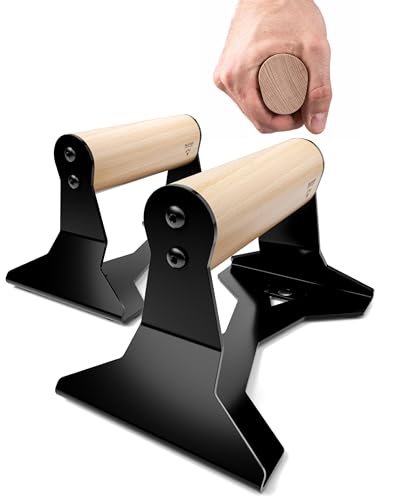
- Comfortable beech wood handles
- Stable steel feet with anti-slip pads
- Preassembled and portable
Best For: Wrist-conscious home calisthenics
Best Heavy-Duty Adjustable Pick

- Six adjustable width settings
- Tall 35.43-inch training height
- Carbon steel rated up to 880 pounds
Best For: Advanced dips and static calisthenics
Best Portable Foam-Grip Pick

- Compact 16.8-by-10-by-10-inch design
- Foam grips help cushion wrists
- Disassembles for storage and travel
Best For: Portable bodyweight floor workouts
Best Wooden High-Platform Pick

- Comfortable beech wood handles
- 12.8-inch height for skill work
- Rotating rubber leveling feet
Best For: Stable handstand, L-sit, and planche practice
Best All-Around Steel Pick
Portable Rubberbanditz Parallettes

- Alloy-steel frame with non-skid feet
- Supports dips, L-sits, planches, and handstands
- Compact 4-pound design for home or travel
Best For: Versatile upper-body and calisthenics training
Best Wooden Grip
Beech Wood Calisthenics Parallettes

- Smooth, naturally grippy beech wood handles
- Metal structure supports up to 550 pounds
- Detachable design with non-slip rubber feet
Best For: Comfort-focused calisthenics and push-up training
Best High-Height Option
TABEKE 14-Inch Steel Parallettes

- 14-inch height for expanded range of motion
- 1.8mm steel frame rated up to 660 pounds
- Foam handles and adjustable rubber feet
Best For: Tall, heavy-duty calisthenics and dip training
Best Wooden Pick
Wooden Parallettes for Everyday Calisthenics

- Smooth natural-wood handles
- Rubber feet help prevent sliding
- Portable two-piece design
Best For: Home and travel calisthenics
Best Heavy-Duty Pick
12-Inch Steel Parallettes and Dip Bars

- 660-pound stated capacity
- 12-inch height for dips and L-sits
- Foam grips and adjustable feet
Best For: Home gyms and demanding calisthenics
Best Wrist-Friendly Design
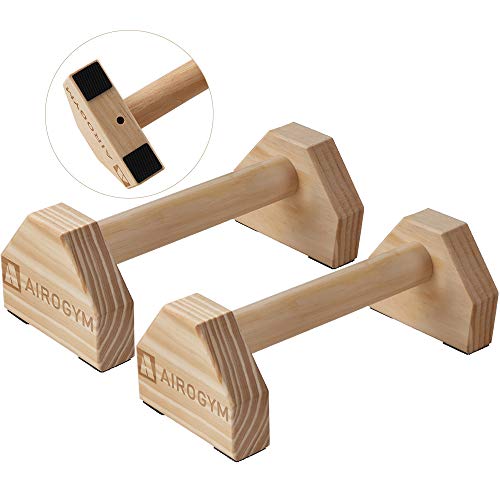
- Rounded 4cm wooden handles
- Generous floor clearance
- Non-slip triangular base
Best For: Comfort-focused home workouts
Best Wrist-Friendly Pick – Ergonomic Wooden Parallettes
For shoppers seeking parallettes for strength training with a comfortable grip, this PULLUP & DIP set combines beech wood handles with heavy-duty steel feet. Its compact, preassembled design supports push-ups, dips, L-sits, and handstand work while allowing a deeper range of motion.
Best For: Home athletes who prioritize wrist comfort, portability, and a ready-to-use set for upper-body calisthenics.
Pros:
- Ergonomic beech wood handles provide a comfortable, non-slip grip.
- Steel construction and anti-slip pads support a stable stand, with a listed maximum load of 200 kg.
- Arrives fully assembled and includes an exercise-guide eBook.
Cons:
- The compact dimensions may provide less clearance than taller dip bars.
- The wood-and-steel design weighs 4.2 pounds, which may be heavier than basic plastic handles.
This is a practical choice for push-up variations and floor-based strength training, especially if standard foam or plastic grips bother your wrists. Its fixed height keeps the setup simple, but limits adjustability.
Best Heavy-Duty Adjustable Pick – KAKICLAY Adjustable Dip Bars
These KAKICLAY dip bars are designed for demanding parallettes for strength training sessions, with adjustable width, a 35.43-inch height, and carbon-steel construction. The taller format gives you room for dips, L-sits, handstands, planches, and weighted calisthenics.
Best For: Advanced trainees who want tall, adjustable bars for dips, static holds, and high-load training.
Pros:
- Six width settings let you customize the connection for stability and exercise preference.
- Carbon-steel bars are rated for up to 880 pounds according to the supplied specifications.
- 40 mm powder-coated grips, non-slip feet, and included grip tape support secure handling.
- Includes assembly tools and a 24-month hassle-free warranty.
Cons:
- Assembly is required, unlike fully assembled compact parallettes.
- The tall, wide frame is less convenient for small storage spaces or backpack travel.
With its adjustable stance and tall profile, this is the most versatile option here for serious dip and static-skill work. It is better suited to a dedicated training area than casual floor workouts.
Best Portable Foam-Grip Pick – AmazeFan Floor Parallettes
The AmazeFan bars offer a portable approach to parallettes for strength training, with a 16.8-by-10-by-10-inch profile and a design intended for floor work. Their foam-covered handles and enlarged anti-slip feet are suited to push-ups, handstands, dips, L-sits, and other bodyweight exercises.
Best For: Beginners and mobile trainees who want compact bars for home, gym, or outdoor floor workouts.
Pros:
- Thicker foam grips are designed to reduce wrist stress and fatigue.
- Enlarged anti-slip feet help stabilize the bars and protect flooring.
- The bars can be assembled, disassembled, moved, and stored relatively easily.
- The raised design accommodates handstands, dips, V-sits, and abdominal exercises.
Cons:
- Assembly is required.
- The supplied details list conflicting materials and an unusually low 16-ounce maximum-weight field, so buyers should verify the current specifications before heavy loading.
This set has useful portability and exercise versatility for unweighted floor training. Because the listed weight information is inconsistent, it is best approached cautiously for advanced or heavily loaded movements.
Best Wooden High-Platform Pick – SNADER Wood Parallettes
SNADER’s wood parallettes combine smooth beech handles with welded steel brackets and a 12.8-inch height. For parallettes for strength training, the spacious 17-inch base is intended to provide room for push-ups, dips, L-sits, handstands, and planche practice.
Best For: Calisthenics users who want higher, stable parallettes with wood grips and adjustable leveling feet.
Pros:
- Beech wood handles offer a smooth, sweat-absorbing, non-slip grip.
- Welded steel brackets are listed to support up to 660 pounds in the product description.
- Rotating eccentric rubber pads help level the bars and protect floors.
- Includes two stands, a manual, and a screwdriver for quick assembly.
Cons:
- Assembly is required.
- The supplied specifications list both 660 and 440 pounds as maximum capacities, so the current rating should be confirmed.
- At 12.8 inches high, the bars may be less compact than low push-up handles.
This model offers a useful middle ground between compact push-up handles and full-height dip stations. Its wood grip and leveling feet are appealing for skill practice, though the conflicting capacity details merit a pre-purchase check.
Best All-Around Steel Pick – Portable Rubberbanditz Parallettes
If you want versatile parallettes for strength training, the Rubberbanditz model combines a portable design with the height and stability needed for push-ups, dips, L-sits, planches, and handstands. Its alloy-steel construction and 330-pound maximum weight recommendation make it a practical option for home workouts.
Best For: Home users who want one compact set of parallettes for varied upper-body and calisthenics exercises.
Pros:
- Alloy-steel construction with solid welding for durability.
- Non-skid feet and foam-covered handles support grip and stability.
- Useful for push-ups, dips, handstands, L-sits, and planches.
- Portable 4-pound design is convenient for travel workouts.
Cons:
- Fixed handles do not offer height or angle adjustment.
- No warranty is listed.
- Its 330-pound weight recommendation is lower than some competing options.
With a 16-by-8.5-by-9-inch profile, this set balances portability and exercise versatility. It is a strong fit when you want durable steel parallettes without moving up to a larger dip-station setup.
Best Wooden Grip – Beech Wood Calisthenics Parallettes
These wooden parallettes for strength training emphasize a comfortable, naturally grippy handle and a stable metal support structure. The detachable two-piece design is suited to home, gym, and storage-conscious setups, while the 550-pound maximum weight recommendation provides substantial support.
Best For: Trainees who prefer wooden handles and want stable push-up bars for calisthenics and upper-body work.
Pros:
- Beech wood handles offer a smooth, naturally grippy surface.
- Reinforced metal brackets support a listed capacity of up to 550 pounds.
- Soft rubber foot pads help reduce sliding.
- Detachable structure makes placement and storage easier.
Cons:
- At 2.4 kg, it is heavier than the lighter steel set in this roundup.
- The notes describe push-up and upper-body use but do not specify a height suited to deep dips.
- Limited warranty coverage is listed rather than a full warranty.
The 1.6-inch-diameter handles are designed to distribute pressure and reduce hand and wrist strain. This is a compelling choice if grip comfort and a wood-and-metal construction matter more than maximum portability.
Best High-Height Option – TABEKE 14-Inch Steel Parallettes
For athletes who want extra clearance and range of motion, these 14-inch parallettes for strength training provide a taller platform for wide and standard push-ups, dips, L-sits, and handstands. The 1.8mm steel frame supports up to 660 pounds and uses an extended base to help limit wobbling.
Best For: Experienced or developing calisthenics users who want tall, heavy-duty parallettes for a broader range of exercises.
Pros:
- 1.8mm steel construction supports a listed 660-pound maximum.
- 14-inch height allows more exercise clearance and range of motion.
- Full-coverage foam handles provide cushioning and a sweat- and slip-resistant grip.
- Adjustable rubber feet can compensate for uneven ground.
Cons:
- The 14-inch height and 14-by-14-inch dimensions may be less convenient to store than compact parallettes.
- Assembly is required, although included tools are designed for a quick setup.
- Taller bars may feel less approachable for beginners than lower push-up handles.
This TABEKE set stands out for its combination of height, broad base, and high listed load capacity. Choose it when deeper movement options and a cushioned grip are priorities, especially for dips, L-sits, and handstand work.
Best Wooden Pick – Wooden Parallettes for Everyday Calisthenics
If you want compact parallettes for strength training, these wooden push-up bars provide a warm, smooth grip and a stable triangular base. Their rubber feet are designed to reduce sliding and surface marks, while the portable two-piece design suits home workouts or travel.
Best For: Beginners and experienced athletes who want lightweight wooden bars for push-ups, planks, handstands, V-sits, and general calisthenics.
Pros:
- Natural wood handles offer a smooth grip that may help reduce discomfort and slipping.
- Anti-slip rubber feet help keep the bars stable on different surfaces.
- Lightweight, portable two-piece design is easy to store or carry in a gym bag.
- Supports exercises targeting the arms, chest, shoulders, back, and core.
Cons:
- The product details contain conflicting load information, listing both 600 pounds and 9.6 ounces.
- Wood may require more care than a coated steel frame.
These are a practical choice if grip comfort and portability matter more to you than extra height. Check the product listing carefully for the applicable weight specification before ordering.
Best Heavy-Duty Pick – 12-Inch Steel Parallettes and Dip Bars
For athletes who want taller parallettes for strength training, this 12-inch steel set offers a substantial platform for dips, L-sits, handstands, and push-ups. Its extended base, thickened steel construction, foam handles, and adjustable rubber feet are aimed at improving stability and comfort during demanding sessions.
Best For: Home-gym users and calisthenics athletes seeking tall, heavy-duty bars for upper-body strength work and elevated bodyweight exercises.
Pros:
- Thickened alloy-steel construction is rated for up to 660 pounds.
- 12-inch height creates room for dips, L-sits, handstands, and varied push-ups.
- Full-coverage foam handles help reduce hand fatigue during training.
- Adjustable non-slip feet help balance the base, including on uneven ground.
Cons:
- At 9 pounds, this is less convenient to carry than lightweight wooden bars.
- Assembly is required, even though the manufacturer says it can be completed quickly.
- The taller frame may feel more substantial than needed for basic push-ups.
This is the strongest fit for users prioritizing height, stability, and exercise versatility. Its steel frame and larger footprint favor a dedicated home-gym setup over minimalist travel use.
Best Wrist-Friendly Design – 30CM Wooden Push-Up Stands
These 30cm wooden bars are a balanced option for shoppers comparing parallettes for strength training with an emphasis on grip comfort and wrist clearance. The rounded 4cm handles, non-slip bases, and triangular construction create a stable platform for push-ups, planks, handstands, and other bodyweight movements.
Best For: Home exercisers who want solid wooden parallettes with extra hand-to-floor clearance and a comfortable rounded grip.
Pros:
- Solid pine-wood construction provides a sturdy, natural-feeling grip.
- 30cm length and approximately 10cm height provide useful clearance from the floor.
- Non-slip bases and a wide-bottom triangular structure support stability.
- Designed for varied calisthenics, strength training, planks, and fitness routines.
Cons:
- Wooden construction may not be as resistant to moisture or wear as coated steel.
- The listed capacity varies between 440 and 500 pounds, so verify the current specification.
- Its larger wooden form may be less compact than shorter travel bars.
Choose this pair if you prefer a stable wooden design with generous floor clearance and a thick rounded handle. It is especially appealing for users who find standard floor push-ups uncomfortable on the wrists.
How We Picked the Best Parallettes for Strength Training
We evaluated these parallettes by comparing their intended use, construction, height, handle design, base stability, and portability. A low pair is usually best for push-ups, frog stands, and handstand practice, while taller bars create more clearance for dips, L-sits, and tuck-based movements. We also considered whether each design uses wood, steel, or a combination of materials, since that affects grip feel, durability, weight, and maintenance.
Because product specifications and user needs vary, check the current listing for dimensions, weight capacity, and included features before buying. Always place the bars on a firm, level surface and test them for movement before loading your full body weight.
Quick Comparison
| Type | Best for | Main advantage | Potential trade-off |
|---|---|---|---|
| Low wooden parallettes | Push-ups, planche work, handstands | Natural grip and compact size | Less clearance for deep dips |
| Steel parallettes | Frequent strength training | High durability and rigid support | Can feel heavier or colder to grip |
| Tall parallettes | Dips, L-sits, and elevated holds | More room beneath the body | Needs a wider, more stable base |
| Adjustable dip bars | Mixed exercises and shared use | Customizable height and width | More setup and hardware to check |
Key Buying Factors for Parallettes for Strength Training
Height and Exercise Clearance
Choose low bars for wrist-friendly push-ups, handstand drills, and planche progressions. Taller models are more useful for dips and L-sits because they provide space for your legs and hips. If you want one pair for varied calisthenics, a medium or adjustable height may offer the best compromise.
Stability and Weight Capacity
Look for broad feet, rubber or non-slip bases, rigid joints, and a clearly stated load rating. Stability matters most during handstands, deep dips, and explosive transitions. A heavier steel frame may resist sliding, while a lighter wooden pair is easier to move and store.
Handle Comfort and Grip
Wooden handles often provide a warm, tactile grip, while foam-covered steel can reduce pressure during longer sessions. Consider handle diameter, surface texture, and whether your hands become sweaty. Smooth surfaces should still allow a secure grip without excessive wrist tension.
Portability and Storage
Compact two-piece parallettes are convenient for small home gyms and travel. Taller or adjustable dip bars can support more exercises but usually take up more space. If you frequently reposition your equipment, prioritize manageable weight and simple assembly.
Who Should Buy Which Parallettes for Strength Training?
Beginners: Start with stable, low-to-medium-height bars and comfortable handles. They are versatile for incline or elevated push-ups, support holds, and gradual handstand practice.
Calisthenics athletes: Choose rigid parallettes with dependable bases and enough height for L-sits, dips, and planche training. Steel or reinforced designs are appropriate for frequent, high-load practice.
Handstand and planche trainees: Low wooden parallettes can provide a secure, wrist-friendly platform with a natural grip. Prioritize stability over minimal weight.
Home-gym users who want versatility: Taller or adjustable bars make more sense if dips, L-sits, and multiple users are priorities. Confirm that the adjustment system locks firmly before every workout.