The right anchor turns battle-rope training from a makeshift setup into a more controlled, repeatable workout. Stability, installation method, rope compatibility, and portability all affect how confidently you can train.
We selected 10 battle rope anchors for athletes across wall-mounted, ceiling-mounted, strap-based, and portable designs. Use the guide below to match the anchor to your training space, rope size, and preferred workout style.
Best 10 Battle Rope Anchors for Athletes Picks for 2026
Strap-Based Protection
FitWorx Battle Rope Anchor Kit

- Fits 1.5- and 2-inch ropes
- Up to 2,000 pounds of force
- Includes straps, snap hook, and guide
Best For: Portable workouts that need rope protection
Versatile Fixed Mount

- Mounts to walls, studs, or beams
- Supports up to 700 pounds
- Includes wood and concrete screw sets
Best For: Permanent multi-equipment gym setups
Outdoor-Ready Strap
J Bryant Fitness Outdoor Anchor Kit
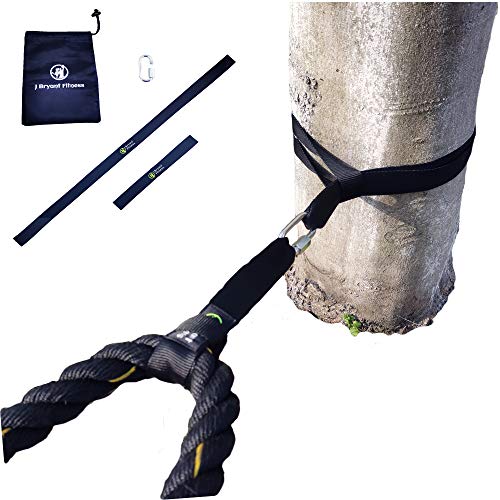
- 19-, 31-, and 59-inch length options
- Fits 1.5- and 2-inch ropes
- Up to 1,500 pounds of force
Best For: Outdoor setups using trees, posts, or racks
Two-Point Gym Mounting
Lyellfe 2-Pack Battle Rope Anchor
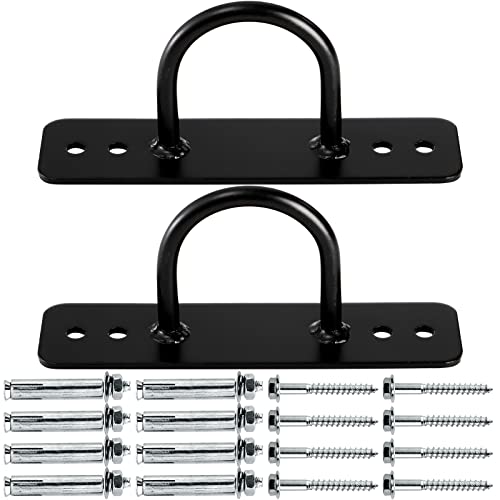
- Two permanent steel anchors
- 661-pound capacity per anchor
- Hardware for wood and concrete
Best For: Permanent home gyms with multiple hanging accessories
Best Portable Strap Kit
Hoedia Battle Rope Anchor Strap

- Fits 1.5- and 2-inch ropes
- 1,700-pound listed tensile strength
- Compact two-strap kit with carabiner
Best For: Portable home, outdoor, and travel workouts
Best Freestanding Anchor
Portable Battle Rope Anchor Base

- No drilling or separate object required
- Holds 60–70 pounds of sand
- Non-slip Oxford fabric base
Best For: Renters and movable indoor or outdoor setups
Best Fixed Wall Mount
Meister XSteel Battle Rope Kit

- Supports ropes from 1.0 to 2.5 inches
- Steel anchor and storage hook included
- Designed for studs or block construction
Best For: Permanent home or commercial gym installations
Strap Protection Pick
Reinforced Battle Rope Anchor Strap Kit

- Fits 1.5- and 2-inch ropes
- Reinforced nylon with stainless carabiners
- Up to 1,700-pound tensile strength
Best For: Quick attachment to poles, fixtures, or equipment
Portable Base Pick
Meister Sand-Weighted Battle Rope Anchor

- Holds up to two battle ropes
- Fill with 50–70 pounds of sand
- Textured rubberized base limits movement
Best For: Portable solo or group training setups
Permanent Mount Pick
Wall and Ceiling Battle Rope Anchor

- Supports up to 700 pounds
- Fits 2-inch or larger ropes
- Includes wood and concrete mounting hardware
Best For: Dedicated home or commercial gym installations
Strap-Based Protection – FitWorx Battle Rope Anchor Kit
Battle Rope Anchor Strap Kit With Bonus Battle Rope Workout Guide- FitWorx By RadBizz
Check Price On AmazonFor athletes seeking battle rope anchors for athletes, the FitWorx strap kit offers a portable setup that helps reduce rope damage. It works with 1.5- and 2-inch ropes and uses a snap-hook connection between the rope strap and a heavy anchor point.
Best For: Athletes who want a portable, rope-protecting anchor setup for home or outdoor workouts.
Pros:
- Works with both 1.5- and 2-inch battle ropes
- Designed to help prevent rope damage
- Rated to withstand up to 2,000 pounds of force
- Includes two straps, a snap hook, and a workout guide
Cons:
- Requires a suitable heavy anchor point
- Setup involves wrapping and connecting two separate straps
This is a practical choice when portability and rope protection matter more than a permanent installation. Its included guide is a useful extra for athletes building a battle rope routine.
Versatile Fixed Mount – Hipiwe Wall/Ceiling Anchor
The Hipiwe mount is a fixed option for athletes comparing battle rope anchors for athletes with broader training needs. Its painted-steel bracket can be installed on walls, vertical studs, or overhead beams for use with battle ropes and other suspension equipment.
Best For: Home gyms, commercial spaces, and athletes who want one permanent anchor for multiple training tools.
Pros:
- Can be mounted vertically or horizontally
- Supports up to 700 pounds
- Includes screw sets for wood and concrete
- Works with suspension straps, resistance bands, rings, battle ropes, and other equipment
Cons:
- Professional installation is recommended
- Requires a suitable wall, stud, or overhead beam
- Permanent mounting is less portable than a strap kit
Choose this bracket when you are building a dedicated training area and want compatibility beyond battle ropes. The wood and concrete hardware options add installation flexibility, but the mounting surface must be appropriate.
Outdoor-Ready Strap – J Bryant Fitness Outdoor Anchor Kit
For athletes needing battle rope anchors for athletes in outdoor settings, the J Bryant Fitness kit emphasizes extra length and flexible placement. It fits 1.5- and 2-inch ropes and can attach to a rack, tree, or post within the stated circumference limit.
Best For: Outdoor athletes who want a longer strap system for trees, posts, or racks.
Pros:
- Available in 19-, 31-, and 59-inch lengths
- Fits 1.5- and 2-inch battle ropes
- Webbing withstands up to 1,500 pounds of force
- Steel oval carabiner helps protect the strap from damage
Cons:
- Suitable trees or posts must be within 17.8 inches in circumference
- Requires an anchor object strong enough to support the workout
- Lower stated force rating than the FitWorx kit
The longer sizing makes this a useful choice for outdoor training locations where a standard anchor strap may not reach. Check the circumference limit and anchor strength before using it.
Two-Point Gym Mounting – Lyellfe 2-Pack Battle Rope Anchor
The Lyellfe two-pack suits athletes comparing battle rope anchors for athletes who are outfitting a more permanent gym. These steel brackets attach to walls, vertical studs, or overhead beams and support battle ropes alongside several other suspension and hanging accessories.
Best For: Home or gym owners who want two permanent steel mounting points for varied equipment.
Pros:
- Includes two painted-steel wall or ceiling anchors
- Each anchor supports up to 661 pounds
- Includes hardware options for wood and concrete plus replacement screws
- Compatible with battle ropes, straps, rings, hammocks, and other equipment
Cons:
- Requires permanent installation
- Installation depends on suitable walls, studs, or overhead beams
- Each anchor has a lower stated capacity than the Hipiwe mount
This two-pack is a strong fit for a dedicated training area where multiple mounting points are useful. Its broad equipment compatibility adds value, while the permanent steel design makes it less suitable for portable workouts.
Best Portable Strap Kit – Hoedia Battle Rope Anchor Strap
For athletes looking for battle rope anchors for athletes that pack easily, the Hoedia strap kit offers a flexible setup without drilling. Its two nylon straps and stainless-steel carabiner can connect a rope to a suitable heavy anchor point such as a stairwell column or gym equipment.
Best For: Home gyms, outdoor workouts, and athletes who need a portable anchor solution.
Pros:
- Works with 1.5- or 2-inch battle ropes and anchor points up to 13 inches in circumference.
- Reinforced nylon straps provide a listed tensile strength of up to 1,700 pounds.
- Wider strap design helps reduce rope slip, abrasion, and uneven tension.
- Compact kit includes two straps and a heavy-duty carabiner.
Cons:
- Requires access to a separate heavy, secure anchor point.
- Not a fixed wall-mount solution.
This is a practical choice when portability and quick setup matter more than having a permanent training station. Confirm that the anchor point is appropriately secure before use.
Best Freestanding Anchor – Portable Battle Rope Anchor Base
This portable base is a useful option for athletes comparing battle rope anchors for athletes who cannot drill into floors or walls. The unfilled Oxford fabric bag is designed to hold 60–70 pounds of sand, creating a temporary training point for indoor or outdoor sessions.
Best For: Renters, apartment users, garages, parks, and athletes who want a movable anchor base.
Pros:
- Creates a no-drill anchor without relying on a separate heavy object.
- Holds approximately 60–70 pounds of sand or similar weighting material.
- 1680D Oxford fabric and a non-slip base support repeated use.
- Zippered opening makes filling and storage straightforward.
Cons:
- Sand or filling material is not included.
- Requires filling before training and may be less convenient than a fixed mount.
The anchor base prioritizes location flexibility and rental-friendly setup. Its usefulness depends on having suitable filler available and placing the base where it can resist movement during rope work.
Best Fixed Wall Mount – Meister XSteel Battle Rope Kit
Meister XSteel Battle Rope Wall Mount Kit w/Anchor & Storage Hook - Matte Black
Check Price On AmazonFor a permanent training area, the Meister XSteel is a strong contender among battle rope anchors for athletes. This steel wall-mount kit combines an anchor with a storage hook, helping support rope training while keeping conditioning ropes off the floor.
Best For: Home and commercial gyms with a suitable wood stud or block-construction wall.
Pros:
- Supports battle ropes from 1.0 to 2.5 inches.
- Thick steel fixtures use a textured powder-coat finish.
- Includes a wall storage hook for keeping ropes organized.
- Comes with M10 lag bolts and washers for installation on wood studs or block construction.
Cons:
- Requires permanent wall installation.
- Not suited to users who cannot drill into an appropriate wall structure.
- Heavier and less portable than strap or freestanding options.
This kit makes the most sense when you want a dedicated battle rope station and integrated storage. Verify the wall construction and installation location before mounting, and use the included hardware as directed.
Strap Protection Pick – Reinforced Battle Rope Anchor Strap Kit
POWER GUIDANCE Battle Rope Anchor Strap Kit, Fit 1.5“/2" Battle Rope for Home Gym & Outdoor Workout
Check Price On AmazonFor athletes comparing battle rope anchors for athletes’ home or outdoor workouts, this strap kit offers a quick way to attach a 1.5- or 2-inch rope to poles, fixtures, or equipment. Its widened, non-slip nylon design is intended to improve grip while helping reduce rope ripping, tearing, and fraying.
Best For: Athletes who want a lightweight, fast-installing anchor strap for compatible battle ropes.
Pros:
- Fits 1.5- and 2-inch battle ropes.
- Reinforced nylon webbing and high-strength stainless-steel carabiners.
- Rated for tensile strength up to 1,700 pounds.
- Installs on poles, fixtures, and equipment in seconds.
Cons:
- Requires a suitable pole, fixture, or piece of equipment for attachment.
- The listed strength is tensile strength, so actual setup performance depends on the anchor point.
This is a practical choice when portability and rope protection matter more than having a permanent mount or freestanding base.
Portable Base Pick – Meister Sand-Weighted Battle Rope Anchor
Meister Portable Battle Rope Anchor - Sand-Weighted Base for Rope & Fitness Training - Black
Check Price On AmazonAmong battle rope anchors for athletes who train in changing locations, the MEISTER Portable Battle Rope Anchor provides a freestanding option for garages, studios, driveways, parks, and training fields. Fill its base with 50–70 pounds of sand, connect up to two ropes, and move it using the integrated webbing handle.
Best For: Athletes who need a portable anchor for solo or group battle rope sessions without a permanent installation.
Pros:
- Supports up to two battle ropes of any length or diameter.
- Rubberized base is designed to minimize movement during intense workouts.
- Tech-leather shell has double-stitched seams for durability.
- SandVault dual-closure system helps prevent sand leakage.
Cons:
- Sand is not included.
- It must be filled with 50–70 pounds of sand before use.
- Its filled size and weight make it less convenient than a strap-style anchor for frequent carrying.
This base is the most flexible choice for locations without a dependable post or wall, provided you are prepared to supply and transport the sand.
Permanent Mount Pick – Wall and Ceiling Battle Rope Anchor
For athletes seeking battle rope anchors for athletes’ home or commercial gyms, this wall- and ceiling-mount bracket creates a fixed training point. It is designed for wood or concrete installation and can also anchor suspension straps, resistance trainers, rings, yoga swings, hammocks, and boxing equipment.
Best For: Athletes who want a dedicated wall or ceiling anchor for battle ropes and other training systems.
Pros:
- Supports loads up to 700 pounds.
- Inner hoop accommodates 2-inch or larger battle ropes.
- Includes expansion screws for concrete and self-tapping screws for wood.
- Works with battle ropes, bands, suspension straps, rings, and other equipment.
Cons:
- Installation requires a suitable wall or ceiling and hardware installation.
- It is not a portable anchor.
- The product includes one anchor point, limiting setup options unless additional mounts are purchased.
This bracket makes sense when you have a structurally appropriate installation surface and want a stable, always-ready training station.
How We Picked These Battle Rope Anchors for Athletes
We focused on the features that matter during repeated high-force pulls: attachment security, construction, installation flexibility, rope compatibility, and ease of use. The selection includes permanent wall and ceiling brackets for dedicated home gyms, adjustable straps for indoor or outdoor setups, and sand-weighted bases for renters or athletes who train in multiple locations.
Because mounting surfaces and workout demands vary, no single design is best for everyone. Always confirm the anchor’s hardware, weight guidance, and surface requirements before installation, and inspect the connection regularly for wear or loosening.
Quick Comparison
| Anchor type | Best for | Main advantage | Primary consideration |
|---|---|---|---|
| Wall or ceiling bracket | Permanent home gyms | Firm, consistent attachment | Requires suitable structure and installation |
| Anchor strap | Flexible indoor or outdoor training | Portable and simple to reposition | Needs a reliable post, beam, or other anchor point |
| Sand-weighted base | Renters and mobile athletes | No drilling required | Requires adequate fill weight and floor space |
Key Buying Factors for Battle Rope Anchors for Athletes
Mounting Surface and Installation
For high-intensity waves, slams, and pulls, a bracket should be attached to solid structural material rather than drywall alone. Check whether the kit is designed for wall, ceiling, or both, and verify that the supplied hardware suits your surface. If drilling is not practical, choose a strap or weighted base instead.
Load Stability and Construction
Look for robust metal brackets, reinforced stitching, secure loops, and hardware that resists bending or abrasion. Portable bases should be heavy enough when filled and placed on a stable, level surface. A lighter base may shift during aggressive intervals, especially with longer or thicker ropes.
Rope Fit and Clearance
Compare the anchor opening or strap loop with your rope’s diameter. Some options specifically accommodate common 1.5-inch or 2-inch ropes, while others use a broader attachment loop. Leave enough clearance for the rope to move without rubbing against sharp edges, walls, or ceilings.
Portability and Storage
Strap kits pack easily and work well for outdoor sessions when a suitable fixed point is available. Weighted bases offer greater independence but are less convenient to transport once filled. Storage hooks can help keep a permanent setup organized between workouts.
Who Should Buy Which Battle Rope Anchors for Athletes?
Choose a Wall or Ceiling Mount If…
You have a dedicated training area and want the most consistent, low-movement setup for frequent strength and conditioning sessions. These anchors are especially suitable for athletes using heavy ropes or high-volume workouts.
Choose an Anchor Strap If…
You need flexibility, train indoors and outdoors, or do not want to drill into a wall. Select a strap with enough length for your chosen attachment point and inspect it for fraying before every session.
Choose a Portable Weighted Base If…
You rent, travel, or train in spaces where permanent mounting is prohibited. Prioritize a model with clear fill instructions, adequate finished weight, and a footprint that will not slide on your workout surface.