A good plyometric box can add jumps, step-ups, squats, and conditioning drills to a home workout without taking up much space. The challenge is finding an affordable model that feels stable, offers a useful height, and suits your training level.
We selected 10 of the best plyometric boxes under $50, including wood and steel platforms, foam designs, and 3-in-1 boxes with multiple height options. Use the guide below to compare construction, safety, setup, and value before choosing.
Best 10 Plyometric Boxes Under 50 Picks for 2026
Best Adjustable Wood Pick
CAP Barbell 3-in-1 Plyometric Box
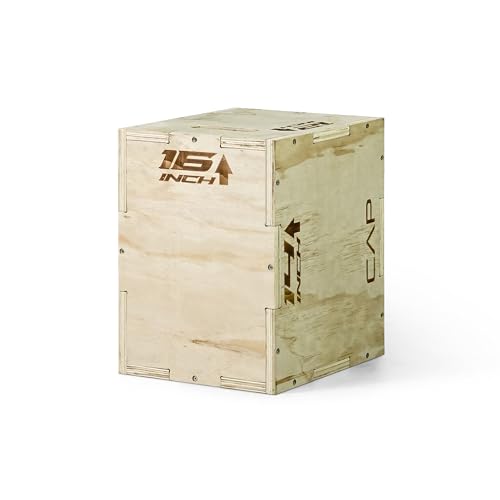
- Rotates between 12, 14, and 16 inches
- Interlocking engineered-wood construction
- Built-in handles and smooth-finished edges
Best For: Compact home and garage gyms
Best Soft-Surface Option
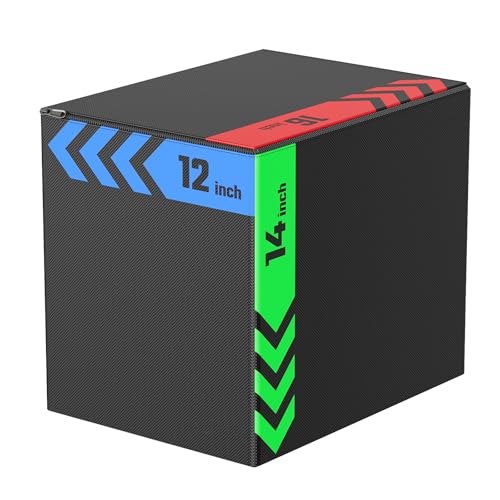
- Heavy foam core cushions high-impact workouts
- Three heights: 12, 14, and 16 inches
- Anti-slip, sweat-proof Oxford-weave cover
Best For: Beginners and softer home workouts
Best Steel Step Platform

- Heavy-gauge steel frame with 560-pound limit
- Rubber top and bottom resist slipping
- Ships pre-constructed at 12 inches high
Best For: Stable low-height step-ups and conditioning
Best High-Capacity Foam Pick
Zoomster 3-in-1 Plyometric Box

- Three levels reaching up to 24 inches
- High-density EPE foam core with PVC cover
- Stated 450-pound weight capacity
Best For: Taller home-gym jumps and HIIT
Best Steel Stability
GanFindX 12-Inch Steel Plyometric Box

- 500-pound stated weight capacity
- Non-slip top with rubber floor pads
- Compact, stackable 12-inch platform
Best For: Stable home or gym jump and step training
Best Adjustable Height
Amazon Basics 3-in-1 Wooden Plyo Box

- Three heights from 12 to 16 inches
- 450-pound stated weight capacity
- Handles and sanded edges aid handling
Best For: Progressive home-gym training at multiple heights
Best Beginner Progression
3-in-1 Wood Plyometric Jump Platform
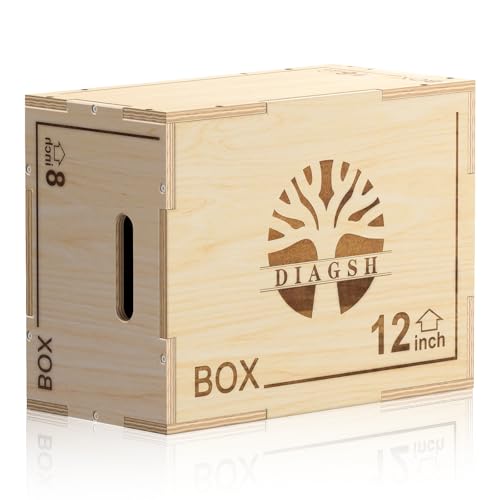
- Adjusts among 8, 12, and 16 inches
- 400-pound stated weight capacity
- Pre-drilled holes simplify assembly
Best For: Beginners building jump height gradually
Best with Extra Features

- Three height options: 12, 13, and 16 inches
- 400-pound stated weight capacity
- Textured surface with side handles
Best For: Home workouts requiring adjustable jump heights
Best Heavy-Duty Pick

- Steel platform rated for 500 pounds
- Rubber feet and textured silicone top
- 12-inch height for lower-impact training
Best For: Home gyms seeking a stable steel platform
Best Wood Capacity Pick

- Three height options for each size
- 450-pound stated weight capacity
- Puzzle-joint plywood with non-slip surface
Best For: Adjustable home-gym strength and jump training
Best Adjustable Wood Pick – CAP Barbell 3-in-1 Plyometric Box
If you want plyometric boxes under 50 that offer multiple training heights without taking up much room, the CAP Barbell 3-in-1 is a practical choice. Its engineered-wood design rotates between 12, 14, and 16 inches for box jumps, step-ups, and progressive agility work.
Best For: Home and garage gym users who want a compact, adjustable-height wood box with a 300-pound maximum weight recommendation.
Pros:
- Three height options in one box: 12, 14, and 16 inches
- Interlocking panels and countersunk screws support a stable assembled platform
- Carry handles, smooth edges, and a natural wood finish improve usability
Cons:
- Requires assembly before use
- Engineered wood may be less forgiving than a foam-covered box during missed jumps
This CAP Barbell model is a versatile pick for controlled, progressive training. Its modest height range suits many home workouts, while the rigid wood construction and 300-pound recommendation provide useful support for step-ups and plyometric drills.
Best Soft-Surface Option – papababe 3-in-1 Foam Jump Box
Among plyometric boxes under 50, the papababe 3-in-1 stands out for its soft, shock-absorbing foam construction. The 12-, 14-, and 16-inch height options support jumps, step-ups, squats, and other home-gym movements while its textured cover helps provide traction.
Best For: Beginners and home users who prioritize a softer landing surface, lightweight portability, and flexible 3-in-1 height adjustment.
Pros:
- Heavy foam filling provides shock absorption and a softer surface
- Rotates between 12, 14, and 16 inches for varied workouts
- 1000D Oxford-weave cover is described as anti-slip, sweat-proof, waterproof, and wear-resistant
Cons:
- 200-pound maximum load capacity is lower than some rigid-box options
- Soft foam may not provide the same rigid feel as steel or wood
With a 15-pound weight and a one-year manufacturer warranty, this foam box is easy to move and approachable for general conditioning. Check the 200-pound capacity against your intended exercises before buying.
Best Steel Step Platform – Rage Fitness Steel Plyo Box
For shoppers comparing plyometric boxes under 50, the Rage Fitness steel platform is a straightforward low-profile option. Its 12-inch height, heavy-gauge tubular steel frame, and rubber top and bottom make it suitable for step-ups, box jumps, dips, push-ups, and conditioning drills.
Best For: Users who want a pre-assembled 12-inch platform with a high stated weight limit and rubber contact points for grip.
Pros:
- Heavy-gauge steel construction with a stated 560-pound maximum weight limit
- Rubber top and bottom help reduce slipping, wobbling, and tipping
- Arrives constructed and ready to use
Cons:
- Only offers a 12-inch training height
- Steel construction provides a firmer, less cushioned landing surface
This is a practical choice when stability and a ready-to-use design matter more than adjustable height. Its compact 12-inch format works well for step-ups and lower box-jump progressions, and the one-year warranty adds basic coverage.
Best High-Capacity Foam Pick – Zoomster 3-in-1 Plyometric Box
The Zoomster 3-in-1 is worth considering when shopping for plyometric boxes under 50 and you want a taller, foam-based training platform. It offers three levels up to 24 inches, a high-density EPE foam core, and a reinforced PVC cover for box jumps, HIIT, step-ups, and strength work.
Best For: Home-gym users who need a taller adjustable box and want a stated 450-pound capacity with a non-slip PVC exterior.
Pros:
- Three training levels with a maximum height of 24 inches
- High-density EPE foam core is designed for shock absorption and shape retention
- Textured PVC cover helps reduce slipping and resists abrasion
Cons:
- The supplied notes do not specify the other two training heights
- The taller 24-inch setting may be more challenging for beginners
At 10 pounds, this box is relatively easy to reposition, while its 450-pound stated capacity accommodates a broad range of users. Confirm the exact level dimensions and choose the height appropriate to your current jumping ability.
Best Steel Stability – GanFindX 12-Inch Steel Plyometric Box
If you want plyometric boxes under 50 with a stable, low-profile design, the GanFindX steel platform is a practical option for home or gym training. Its 12-inch height supports controlled box jumps, step-ups, and conditioning work, while the reinforced steel frame is rated for up to 500 pounds.
Best For: Trainees who prioritize a sturdy steel platform, secure footing, and compact storage for jumps, step-ups, Bulgarian squats, and HIIT workouts.
Pros:
- Reinforced alloy-steel construction supports up to 500 pounds.
- Wide trapezoid base and rubber feet help limit movement and protect floors.
- Textured non-slip top provides a more secure landing surface.
- Stackable design and included setup instructions support convenient storage.
Cons:
- Only the 12-inch height is listed, so it offers less height variation than 3-in-1 boxes.
- Steel construction may be less forgiving than a wooden box during missed landings.
The GanFindX stands out among plyometric boxes under 50 for stability and a high stated weight capacity. Choose it when a single, compact training height is more important than adjustable progression.
Best Adjustable Height – Amazon Basics 3-in-1 Wooden Plyo Box
For shoppers comparing plyometric boxes under 50, this Amazon Basics wooden model offers three training heights in one box. Its 16-, 14-, and 12-inch orientations let you adjust workout intensity for box jumps, step-ups, dips, and conditioning exercises.
Best For: Beginners through advanced users who want adjustable height, built-in handles, and a straightforward home-gym setup.
Pros:
- Three height options—16, 14, and 12 inches—support progressive training.
- Wooden construction is rated to support up to 450 pounds.
- Wide built-in handles make repositioning easier.
- Sanded edges, pre-drilled holes, and included instructions improve usability.
Cons:
- Assembly is required before use.
- It is designed primarily for indoor training and home-gym use.
- Wood may require more care than a steel frame if exposed to moisture.
This is a versatile pick if you want one box that can grow with your training. The three marked heights are especially useful for gradually increasing jump and step-up difficulty without buying multiple platforms.
Best Beginner Progression – 3-in-1 Wood Plyometric Jump Platform
This 3-in-1 wood platform is a flexible choice among plyometric boxes under 50, particularly for users who want to begin at a low height and progress. It rotates between 8, 12, and 16 inches for box jumps, squats, step-ups, HIIT, and conditioning work.
Best For: Beginners and home users seeking three height options, a plywood build, and a simple assembly process.
Pros:
- Three heights—8, 12, and 16 inches—accommodate different skill levels.
- Plywood construction supports up to 400 pounds.
- Pre-drilled holes are intended to simplify assembly.
- Works for jumps, squats, HIIT, cardio, agility, and core training.
Cons:
- Assembly is required, even though the product notes describe setup as quick.
- The stated 400-pound capacity is lower than the other listed options.
- The supplied dimensions list a narrower 8-inch side, which may feel less substantial for some exercises.
The 8-inch starting height makes this box appealing for building confidence before moving higher. It is a practical, adaptable option when exercise variety and beginner-friendly progression matter more than maximum load capacity.
Best with Extra Features – CAELUM 3-in-1 Plyo Box
For shoppers comparing plyometric boxes under 50, the CAELUM 3-in-1 offers three compact height options in one wooden design. Its 12-, 13-, and 16-inch settings suit box jumps, step-ups, push-ups, and dips, while the textured top is designed to improve traction.
Best For: Home users who want adjustable heights and a portable wood box for varied strength and agility workouts.
Pros:
- Three height options support different training levels.
- Rated for up to 400 pounds.
- Honeycomb-textured surface and sanded edges add grip and comfort.
- Side handles and included hardware support easier setup and moving.
Cons:
- The 12-by-13-by-16-inch model does not have internal support.
- Assembly is required.
The CAELUM is a flexible choice when adjustable heights matter more than maximum size. Review the support note and selected dimensions before buying.
Best Heavy-Duty Pick – VEVOR 12-Inch Steel Plyo Box
Among plyometric boxes under 50, this VEVOR model stands out for its steel construction and 500-pound stated capacity. The 12-inch platform uses a trapezoidal structure, rubber feet, and a textured silicone top for jump training and step-up work.
Best For: Beginners and home-gym users who prioritize a sturdy, low-height steel platform for jumps, step-ups, squats, and push-ups.
Pros:
- Steel frame with welded construction is designed for stability.
- 500-pound stated weight capacity.
- Rubber feet and a textured top help limit slipping.
- Can be assembled, disassembled, or stacked for storage.
Cons:
- This listed model has one 12-inch height rather than multiple levels.
- Steel construction weighs 11.7 pounds, making it heavier than some wood options.
The VEVOR is a practical pick for a stable, lower platform. Its single height may be limiting if you want a box that grows with your training.
Best Wood Capacity Pick – Fitvids Non-Slip Plyo Box
For those shopping for plyometric boxes under 50, the Fitvids wooden box combines a puzzle-joint design with three height options per size. Its non-slip surface and 450-pound stated capacity make it suitable for home-gym jumps, step-ups, and general strength training.
Best For: Users who want a traditional plywood box with adjustable training heights and a higher stated capacity.
Pros:
- Each available size offers three height options.
- High-quality plywood construction uses puzzle joints.
- Non-slip surface supports stability during jumps.
- 450-pound stated weight capacity and a two-year manufacturer warranty.
Cons:
- Assembly takes about 10 minutes.
- Exact dimensions and height options depend on the selected size.
The Fitvids is a well-rounded wooden option for shoppers who want adjustable practice heights without choosing a single fixed platform. Confirm the size variant before ordering.
How We Picked the Best Plyometric Boxes Under 50
We focused on the features that matter most during repeated jumps and step-up workouts: stability, surface traction, height versatility, construction, assembly, and overall practicality for home use. The selection includes compact boxes for beginners, taller platforms for more experienced athletes, and adjustable 3-in-1 designs that provide multiple training heights.
Because budget equipment can vary in dimensions and finish, check the listed measurements, weight capacity, and customer feedback before ordering. A low price is useful only if the box remains steady and comfortable under normal training loads.
Quick Comparison
- Best for versatility: 3-in-1 boxes offer several heights for progression and different exercises.
- Best for portability: Foam and smaller wooden models are generally easier to move and store.
- Best for a firm feel: Steel and properly assembled wood boxes typically provide a more rigid platform.
- Best for beginners: Lower-height options reduce the barrier to learning controlled step-ups and jumps.
Key Buying Factors for Plyometric Boxes Under $50
Height and Dimensions
Choose a height that matches your current ability rather than your target. Beginners often benefit from a lower platform, while adjustable boxes let you progress gradually. Also check the top dimensions: a larger landing area can feel more forgiving, especially during fast workouts.
Stability and Construction
Wood and steel boxes can feel rigid and secure when placed on a level, non-slip floor. Foam boxes are often more forgiving if you miss a landing, but they may compress or shift depending on the design. Look for reinforced joints, broad bases, and a stated weight capacity.
Traction and Landing Comfort
A non-slip top and stable floor contact are essential. Consider where you will train and use an exercise mat only if it does not make the box rock or slide. Beginners may prefer a padded surface, while experienced users may prioritize a firm, grippy landing platform.
Assembly and Storage
Many inexpensive wooden boxes require assembly. Confirm that hardware and instructions are included, and tighten every fastener before use. If storage space is limited, compare the assembled footprint and weight—not just the product’s advertised height.
Who Should Buy Which Plyometric Boxes Under 50?
Beginners and casual home users should prioritize a lower, stable box with a grippy surface and manageable footprint. A foam or compact 3-in-1 model can be a practical starting point.
Progressive trainees should look for multiple heights so they can begin with step-ups and controlled jumps before increasing difficulty. A 3-in-1 design offers the most flexibility within a limited budget.
Users who want a firm training platform may prefer a steel or wooden box, provided its dimensions, assembly quality, and floor traction suit the intended workouts. Whichever model you choose, inspect it before every session and stop using it if it rocks, slips, or develops damage.