The best dip stations for circuit training make it easier to alternate dips with pull-ups, push-ups, knee raises, and other bodyweight movements without wasting space between exercises.
We compared these 10 options by stability, adjustability, weight capacity, footprint, portability, and the type of home workout each station supports.
Best 10 Dip Stations for Circuit Training Picks for 2026
Most Stable Power Tower
Sportsroyals 5-in-1 Power Tower

- 450-lb capacity and extended H-shaped base
- Five exercises for full-body circuits
- Six height settings with padded support
Best For: Full-body home circuits and multi-user households
Best Adjustable Dip Station
Sportsroyals DP2 Heavy-Duty Dip Station

- 600-lb rated capacity for progression
- Four height and five width settings
- Locking base with 12 rubber feet
Best For: Customizable dip circuits and multiple users
Best Portable Dip Bars
RELIFE Adjustable Parallel Bars

- 400-lb support with heavy-duty steel frame
- Adjustable height and handle spacing
- Compact for indoor or outdoor workouts
Best For: Portable, space-conscious bodyweight circuits
Best Ring-Enhanced Station

- Includes Olympic-style rings
- Open design supports dips and hanging work
- Padded grips and gusseted steel frame
Best For: Ring-based bodyweight circuits and hanging core work
Adjustable Home-Gym Pick
ProsourceFit Power Dip Station

- Eight height positions from 39–51 inches
- Two handle levels for dips, push-ups, and core work
- 400-pound capacity with compact storage
Best For: Adjustable bodyweight circuits in compact home gyms
Wall-Mounted Space Saver
Valor Fitness Foldable Dip Bar
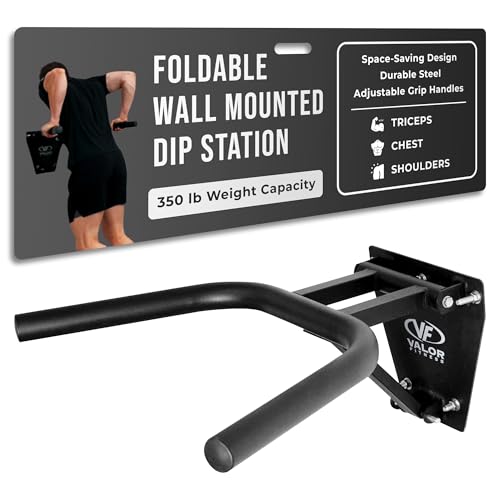
- Folds flat against the wall when unused
- Multi-grip handles support varied hand positions
- 350-pound capacity with included mounting hardware
Best For: Permanent home or garage gyms with limited floor space
High-Capacity Adjustable Stand
BalanceFrom Steel Frame Dip Station

- 500-pound user capacity
- Adjustable height from about 40–51 inches
- Supports dips, pull-ups, push-ups, leg raises, and bench press
Best For: Versatile, higher-capacity freestanding circuit training
Adjustable Power Tower

- Six exercise positions for full-body bodyweight work
- 10-level height adjustment for varied users
- Steel H-base with suction cups for added stability
Best For: Multi-exercise home circuits and family workouts
Compact Calisthenics Bars

- Supports dips, L-sits, handstands, and push-up variations
- Anti-slip rubber pads and alloy steel frame
- Two-bar design suits home or gym use
Best For: Portable calisthenics circuits and floor-based strength work
Heavy-Duty Portable Stand
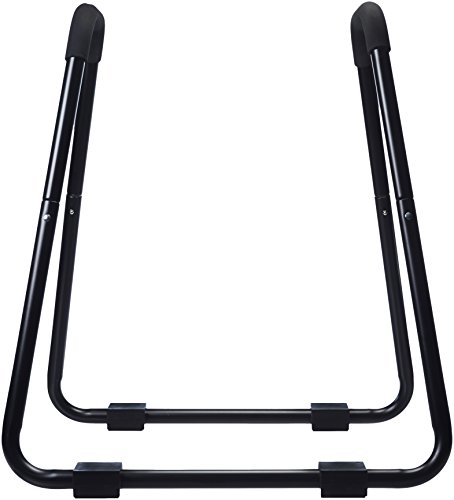
- Supports dips, raises, rows, and upper-body exercises
- Steel frame with 661.4-pound listed capacity
- Portable design with foam grips and floor pads
Best For: Dip-focused home circuits with flexible placement
Most Stable Power Tower – Sportsroyals 5-in-1 Power Tower
For shoppers seeking dip stations for circuit training, this Sportsroyals power tower combines dips with four additional bodyweight movements. Its H-shaped base, 2 mm steel frame, and extended 39.7-inch base are designed to provide steady support during fast-moving home workouts.
Best For: Full-body circuit training and households that want adjustable pull-up, dip, leg-raise, row, and push-up capability.
Pros:
- Supports up to 450 pounds with a 62.8-pound steel construction.
- Offers five exercises in one freestanding station.
- Six height settings and seven backrest positions accommodate different users.
- Eight anti-slip feet, padded armrests, and a thick back cushion support stability and comfort.
Cons:
- Its larger tower footprint may require more dedicated floor space than a basic dip stand.
- The fixed handles provide less grip-position flexibility than adjustable dip bars.
This is the most comprehensive option here if your circuit includes both upper-body pushing and pulling movements. Choose it when stability and exercise variety matter more than compact storage.
Best Adjustable Dip Station – Sportsroyals DP2 Heavy-Duty Dip Station
The Sportsroyals DP2 is a strong fit for dip stations for circuit training when multiple users need different setups. It provides four height positions and five width settings, while its locking base and 12 rubber feet are intended to keep the station planted through dips, rows, and core work.
Best For: Adjustable circuit training, weighted-dip progression, and users who want to fine-tune height and handle spacing.
Pros:
- 600-pound rated capacity supports substantial progression potential.
- Four heights and five width settings allow more individualized positioning.
- Under-mounted connector brackets and 12 thick rubber feet add floor contact.
- Foam-covered handles and detachable connector bars improve comfort and storage flexibility.
Cons:
- It requires assembly, even though the supplied instructions are designed for a quick setup.
- Its adjustable locking system has more parts and setup steps than a fixed station.
Among these options, the DP2 offers the broadest adjustment range for dip-focused circuits. It is especially compelling if you alternate between users, shoulder widths, or chest- and triceps-emphasis work.
Best Portable Dip Bars – RELIFE Adjustable Parallel Bars
RELIFE’s adjustable parallel bars suit dip stations for circuit training in compact or flexible workout spaces. The stand offers four height settings, adjustable bar spacing, foam handles, and rubber feet that can be rotated to help balance the base on uneven ground.
Best For: Portable indoor or outdoor circuits featuring dips, push-ups, L-sits, V-sits, leg raises, and handstands.
Pros:
- Supports up to 400 pounds with a heavy-duty steel frame.
- Four height settings and 20.08- to 26.77-inch handle spacing provide setup flexibility.
- Compact, lightweight design is easy to carry between locations.
- Foam handles and adjustable rubber feet support comfort and balance.
Cons:
- The maximum supported weight is lower than the Sportsroyals DP2’s 600-pound rating.
- Its lighter, portable format may feel less substantial than a larger power tower.
This RELIFE station is a practical choice when storage and portability matter as much as exercise variety. It gives circuit trainees useful adjustability without requiring a large permanent machine.
Best Ring-Enhanced Station – Fuel Pureformance Dip Station
Fuel Pureformance adds Olympic-style rings to a straightforward station, making it a useful option among dip stations for circuit training. Its open, pass-through design supports dips, pull-ups, and hanging core movements, while padded angled grips and steel gussets add practical support.
Best For: Bodyweight circuits that mix standard dips with ring-based resistance and hanging ab exercises.
Pros:
- Includes Olympic-style rings for added exercise and resistance options.
- Open design supports dips, pull-ups, hanging leg raises, and knee raises.
- Angled padded grips improve comfort during bodyweight work.
- Powder-coated 12- and 14-gauge steel with gussets is designed for stability and rust resistance.
Cons:
- It has a 26.5-pound listed weight, lighter than the heavier steel stations in this roundup.
- The listed warranty is a 30-day limited warranty.
- Assembly is required.
Choose this model if rings are central to your circuit rather than an occasional extra. Its open layout is versatile, though users wanting maximum rated capacity or extensive adjustability may prefer another station.
Adjustable Home-Gym Pick – ProsourceFit Power Dip Station
If you want dip stations for circuit training that can switch between upper- and lower-level exercises, the ProsourceFit Power Dip Station offers a compact, adjustable setup. Its two pairs of handles support dips, L-sit holds, core work, push-ups, and cardio movements.
Best For: Home users who want adjustable height and multiple handle levels for varied bodyweight circuits.
Pros:
- Eight height positions from 39 to 51 inches
- Supports dips, L-sit holds, core exercises, push-ups, and cardio
- Steel construction rated for up to 400 pounds
- Foam grips and anti-slip foot pads improve workout comfort and stability
Cons:
- Assembly is required
- Fixed handles limit grip-position adjustments
At 30 pounds, this station is relatively easy to store and fits tight spaces. It is a practical choice for circuits built around adjustable bodyweight stations rather than a full multi-function tower.
Wall-Mounted Space Saver – Valor Fitness Foldable Dip Bar
For dip stations for circuit training where floor space is limited, the Valor Fitness Wall Mount Dip Bar keeps the workout area clear. It supports dips, leg raises, knee raises, and other bodyweight exercises, then folds flat against the wall when not in use.
Best For: Garage gyms and home workout spaces with reinforced or concrete walls and limited floor area.
Pros:
- Folds flat to preserve floor space
- Supports dips, leg raises, knee raises, and bodyweight training
- Angled handles accommodate narrow, standard, and wider grips
- Heavy-duty alloy steel frame has a 350-pound capacity
Cons:
- Requires secure wall installation
- Not a freestanding option for renters or spaces without suitable walls
The foldable design makes this station especially useful in multi-purpose rooms. Its installation requirements are the main consideration, but the multi-grip layout adds useful variation to upper-body and core circuits.
High-Capacity Adjustable Stand – BalanceFrom Steel Frame Dip Station
The BalanceFrom Steel Frame Dip Station is a strong candidate among dip stations for circuit training when you want one adjustable stand for several upper-body movements. It supports dips, pull-ups, push-ups, leg raises, bench press, and related exercises, with height adjustment for different users and routines.
Best For: Home or gym users who prioritize a high weight capacity and broad exercise selection in a compact station.
Pros:
- 500-pound user capacity
- Adjusts from approximately 40 to 51 inches
- Supports dips, pull-ups, push-ups, leg raises, and bench press
- Foam-padded grips and non-slip foot pads support comfort and stability
Cons:
- Assembly details are not specified in the supplied product information
- Fixed handles offer less grip customization than multi-grip designs
With its heavy-duty steel frame and compact footprint, this station can anchor demanding circuits without requiring several separate pieces of equipment. The broad exercise range makes it the most versatile freestanding option in this group.
Adjustable Power Tower – SogesPower Dip Station
For circuit training that mixes dips, pull-ups, knee raises, and push-ups, the SogesPower Power Tower provides several stations in one freestanding unit. Its adjustable height and H-shaped base make it a versatile option for a home gym, while the listed 330-pound capacity suits many adult users.
Best For: Families or home-gym users who want an adjustable, multi-exercise station for dip-focused circuit training.
Pros:
- Supports pull-ups, chin-ups, dips, knee raises, push-ups, and leg pressing.
- Offers multiple height settings, with the pull-up bar adjusting across a broad range.
- H-shaped steel base and larger suction cups are designed to improve stability.
- 330-pound maximum weight recommendation.
Cons:
- Its larger footprint may require more dedicated floor space than portable dip bars.
- Assembly is required.
- Fixed handles limit grip customization.
The SogesPower stands out when your circuit training needs more than dip bars alone. Choose it if adjustable height and a wider range of bodyweight exercises matter more than compact portability.
Compact Calisthenics Bars – Kipika Parallette Dip Bars
The Kipika Parallette Bars are a compact choice for dip stations for circuit training, especially when your routine includes push-ups, L-sits, handstands, and other calisthenics movements. The two-bar design is easy to place on different flooring surfaces and is intended to remain stable during dynamic exercises.
Best For: Calisthenics users who want portable parallel bars for dips, push-up variations, balance work, and core exercises.
Pros:
- Supports parallel-grip push-ups, dips, handstands, L-sits, and straddling exercises.
- Alloy steel construction with foam handles and anti-slip rubber pads.
- Universal base design is listed as compatible with hardwood, tile, concrete, and rubber flooring.
- Listed maximum weight recommendation of 660 pounds.
Cons:
- The 12-inch height is less suitable for users seeking a tall, full-size dip tower.
- Assembly requires a screwdriver or drill.
- Designed primarily for bodyweight and calisthenics work rather than a broad tower-style exercise selection.
These parallettes are a strong fit for circuits built around floor-based calisthenics and controlled transitions. Their two-piece format is easier to move than a power tower, but offers fewer dedicated stations.
Heavy-Duty Portable Stand – Amazon Basics Dip Bar Station
The Amazon Basics Dip Bar Station keeps circuit training focused on dips and complementary upper-body movements. Its portable steel frame includes foam grips and floor pads, while the compact parallel-bar layout fits conveniently into many home workout areas.
Best For: Home-gym users who want a straightforward, portable station for tricep dips, raises, rows, and related bodyweight exercises.
Pros:
- Supports tricep dips, knee raises, leg raises, back rows, and other upper-body exercises.
- Steel construction carries a listed 661.4-pound maximum weight recommendation.
- Foam grips and floor pads are designed for comfort and stability.
- Lightweight, portable design can be assembled and relocated as needed.
Cons:
- Push-up rings and straps are compatible but sold separately.
- Its fixed-height design offers less adjustability than a power tower.
- It focuses on dip-bar exercises rather than pull-ups.
This station is a practical middle ground for dip-centered circuits: sturdier and more dedicated than small parallettes, but simpler than a multi-station tower. It is particularly useful when portability and a high listed capacity are priorities.
How We Picked the Best Dip Stations for Circuit Training
We focused on stations that can support repeated transitions between exercises, not just occasional triceps dips. Our comparison considers frame stability, construction, height and width adjustment, handle design, rated capacity, setup requirements, and overall versatility. We also included several formats because a compact parallette bar, wall-mounted unit, and full power tower suit very different training spaces.
Published weight limits are useful reference points, but they do not tell the whole story. A station’s base width, floor contact, fastener quality, and resistance to side-to-side movement matter during fast-paced circuits. Product dimensions and manufacturer instructions should be checked before purchase, especially if you plan to use added weight.
Quick Comparison
| Station type | Best suited to | Main advantage | Potential trade-off |
|---|---|---|---|
| Power tower | Full-body home circuits | Combines dips, pull-ups, and core work | Requires more floor space |
| Adjustable dip station | Shared or changing users | More control over height and width | More parts to adjust and secure |
| Wall-mounted station | Permanent home gyms | Minimal floor footprint | Requires suitable wall structure and installation |
| Parallette or portable bars | Compact circuits and travel | Easy to move and store | Usually offers fewer exercise options |
Key Buying Factors for Dip Stations for Circuit Training
Stability and Construction
Choose a broad, solid base if your circuits include dynamic transitions, leaning dips, or elevated push-ups. Rubber feet can help protect floors and reduce sliding, while heavier steel frames generally feel more planted. If a model can be bolted down, confirm that your floor and installation location support it.
Adjustability and User Fit
Adjustable height can improve comfort and make the station usable by multiple people. Width adjustment is helpful when you want a narrower or wider grip, but every locking point should engage fully before training. Fixed bars may be quicker to use and can feel more rigid when properly sized.
Capacity and Exercise Range
Check whether the stated capacity includes body weight only or also added resistance. For circuits, consider more than dips: pull-up handles, knee-raise supports, push-up grips, and compatibility with bands can add meaningful variety. A power tower is often the better choice for a broad bodyweight program.
Footprint, Storage, and Installation
Measure ceiling height, available floor space, and clearance around the station. Portable models suit apartments or multipurpose rooms, while wall-mounted bars save floor area but demand careful mounting. Folding or lightweight designs are convenient if the equipment must be stored after each workout.
Who Should Buy Which Dip Stations for Circuit Training?
Choose a power tower if you want one frame for dips, pull-ups, and core circuits. An adjustable dip station is the most flexible option for households with different users or changing exercise preferences. A wall-mounted dip bar works best in a dedicated gym where secure installation and minimal floor use are priorities.
For small rooms, travel, or minimalist calisthenics routines, choose portable dip bars or parallettes. If stability and high capacity matter most, prioritize a heavier steel frame with a wide base and clearly specified load rating. Regardless of format, inspect bolts and locking mechanisms regularly, and stop using the station if it rocks, shifts, or shows structural damage.