The best rebounders for circuit training can add low-impact cardio, reaction drills, throwing practice, and sport-specific movement to one workout. The right choice depends on whether you need a fitness trampoline, a target-style rebounder, or a versatile net for multiple exercises.
We’ve compared these 10 options by adjustability, stability, portability, rebound consistency, and training versatility so you can build faster, more engaging circuits at home, in a gym, or outdoors.
Best 10 Rebounders for Circuit Training Picks for 2026
Best Overall Fitness Rebounder
BCAN BT2 Adjustable-Handlebar Rebounder
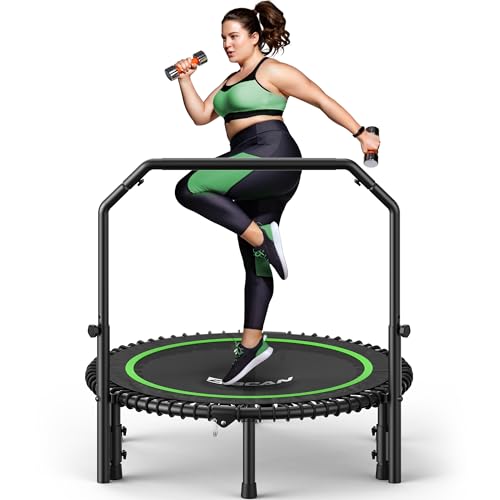
- Quiet bungee bounce for indoor workouts
- Three-position adjustable handlebar
- Reinforced 40-inch frame and legs
Best For: Adult indoor circuit training and low-impact cardio
Best for Soccer Circuits
QuickPlay RXTR Pro Coach Rebounder

- Integrated reaction light with live scoring
- Crisp HDPE passing-panel returns
- Compact setup for home or field training
Best For: Soccer passing, touch, scanning, and reaction drills
Best for Baseball Arm Circuits
PowerNet MaxControl Trampoline
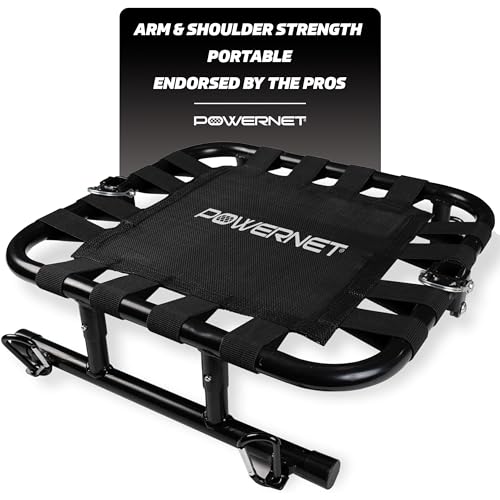
- Targets posterior-shoulder strength
- Hangs on chain-link fences with carabiners
- Folds for storage and transport
Best For: Baseball and softball throwing and arm-health drills
Best for Basketball Drills
GoSports Adjustable Passback Rebounder

- Adjustable angle and return height
- Includes rebounder and two sandbags
- Folds flat for convenient storage
Best For: Basketball passing, catching, and shooting circuits
Quiet Cardio Pick
Newan 40-Inch Silent Bungee Rebounder

- 30 bungee ropes deliver joint-friendly suspension
- Six legs and anti-slip caps support stability
- 330-pound maximum weight recommendation
Best For: Adults doing home cardio and muscle-focused circuits
Multi-Sport Training Pick
Winthai Adjustable Rebounder Net

- 4-by-4-foot net for several ball sports
- Six angle adjustments support varied drills
- Folds flat after tool-free setup
Best For: Coaches and athletes building multi-sport skill circuits
Portable Arm-Care Pick
Driveline 18-Inch Recovery Rebounder

- Targets posterior shoulder strength
- Sets up in under 15 seconds
- Folds to about 5.3 pounds with case
Best For: Baseball and softball athletes ages 13+ doing shoulder-recovery work
Adjustable Court Trainer

- Large 28-square-foot practice surface
- Five adjustable rebound angles
- Weather-resistant steel frame and net
Best For: Solo or team volleyball and multi-sport drills
Indoor Cardio Station
Kanchimi Folding Fitness Rebounder
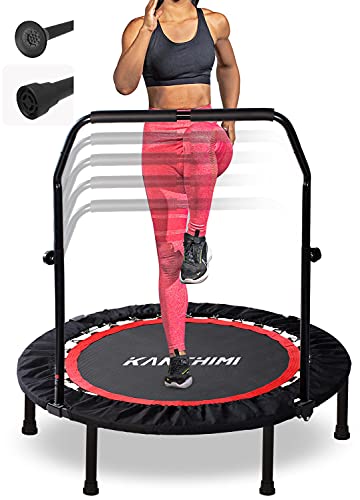
- 330-pound maximum load
- Five-position adjustable handle
- Folding frame for compact storage
Best For: Indoor cardio and jump-based fitness circuits
Portable Skill Builder

- Five rebound angles for volleyball drills
- Full-size 7x4-foot practice area
- Portable build with storage bag
Best For: Portable volleyball skill circuits and team practice
Best Overall Fitness Rebounder – BCAN BT2 Adjustable-Handlebar Rebounder
For shoppers comparing rebounders for circuit training, the BCAN BT2 is the most directly suited option here: it is an adult fitness rebounder with a low-impact bounce, adjustable handlebar, and quiet bungee system. Its reinforced construction also makes it a practical choice for repeated indoor workouts.
Best For: Adult indoor circuit training, low-impact cardio, and users who want extra balance support.
Pros:
- Adjustable handlebar with three height settings from 2’7″ to 3’2″.
- Quiet 8mm bungees with a natural latex core for a smoother bounce.
- Reinforced alloy legs, handlebar plates, and stitched PP jumping mat.
- 40-inch frame supports up to 150 kg according to the listed specification.
Cons:
- Designed for indoor fitness rather than ball-sport rebound drills.
- Some assembly is still required, although the rebounder arrives partially pre-assembled.
The BCAN is the clear fit for a conventional circuit-training setup because it combines jumping exercise with handlebar stability and a quieter operating profile. It is a strong pick when comfort and balance assistance matter more than portability.
Best for Soccer Circuits – QuickPlay RXTR Pro Coach Rebounder
The QuickPlay RXTR Pro Coach is not a jumping rebounder; it is a soccer-specific rebounder board with a reaction light. For circuit training built around passing, first touch, scanning, and reaction speed, it offers structured feedback in a compact footprint.
Best For: Soccer skill circuits, solo passing drills, reaction work, and coaching sessions.
Pros:
- Reaction light provides live scoring and target cues without requiring an app.
- HDPE passing panel delivers a crisp return for touch and control practice.
- Supports drills for passing accuracy, scanning, rhythm, and reaction speed.
- Compact design fits training areas as small as 10×10 feet and charges by USB-C.
Cons:
- It does not provide a trampoline-style jumping surface for cardio circuits.
- The system is focused primarily on soccer training rather than general fitness.
This is the specialized choice for athletes whose circuit training means alternating soccer skills under time or reaction demands. The integrated light and score tracking make it more interactive than a basic rebound board, while the compact size suits home practice.
Best for Baseball Arm Circuits – PowerNet MaxControl Trampoline
The PowerNet MaxControl is a compact sports rebounder intended for baseball and softball throwing work. It fits circuit training that alternates throwing repetitions with posterior-shoulder strengthening or rehabilitation exercises, and its folding design supports transport between practices.
Best For: Baseball and softball arm-health circuits, coach-led throwing drills, and portable training.
Pros:
- Designed to build posterior shoulder strength for throwing athletes.
- Carabiners allow vertical hanging from most chain-link fences.
- Folds for storage and transport and includes a carry bag.
- Useful for coaches, trainers, and arm-recovery programming.
Cons:
- Its sports-specific throwing purpose limits usefulness for general cardio circuits.
- The listed item weight is 33 pounds, so it is less lightweight than some portable trainers.
- The warranty excludes damage related to outdoor exposure, storage, or maintenance.
The MaxControl makes sense when a circuit is centered on throwing mechanics and shoulder care rather than jumping. Its fence-hanging capability and foldable format are particularly useful for team practices, travel, and supervised rehabilitation work.
Best for Basketball Drills – GoSports Adjustable Passback Rebounder
The GoSports Basketball Rebounder suits circuit training that combines passing, catching, shooting form, and driving drills. Its adjustable frame changes the return angle and height, while the foldable design and included sandbags make it practical for portable court sessions.
Best For: Basketball passing circuits, solo skill practice, and indoor or outdoor training with added stability.
Pros:
- Adjustable telescoping legs vary the pass-back angle and return height.
- Supports catch-and-shoot, catch-and-drive, and passing-accuracy drills.
- Rubber grip feet and two sandbags help stabilize the frame.
- Folds flat for storage and is suitable for indoor and outdoor courts.
Cons:
- Sand must be supplied separately for the included bags.
- It is a ball-training rebounder, not a trampoline for jumping-based conditioning.
- The listed warranty period is six months.
Choose the GoSports when your circuit training is basketball-focused and you need repeatable returns without a partner. The adjustable frame adds drill variety, while the fold-flat construction helps simplify storage between sessions.
Quiet Cardio Pick – Newan 40-Inch Silent Bungee Rebounder
For shoppers comparing rebounders for circuit training, the Newan offers a joint-friendly bungee bounce, a 330-pound maximum weight recommendation, and a compact 40-inch round frame for indoor cardio work.
Best For: Adults seeking a stable, relatively quiet rebounder for home cardio and muscle-focused circuits.
Pros:
- Thirty thickened bungee ropes provide elastic, joint-friendly suspension.
- Six supported legs, thick steel tubing, and anti-slip rubber caps promote stability.
- Supports users up to 330 pounds and folds cardio into a home workout setup.
Cons:
- Assembly requires physical effort, and two-person installation is recommended.
- This listed version is 40 inches and has no handle, which may limit balance support.
The Newan is a practical choice when low-noise bouncing and a higher weight capacity matter more than portability. Its bungee system and six-leg base suit repeated circuit sessions, while the compact footprint is convenient for home use.
Multi-Sport Training Pick – Winthai Adjustable Rebounder Net
Among rebounders for circuit training, the Winthai is designed for ball-sport drills rather than jumping cardio. Its 4-by-4-foot net, adjustable angles, and quick setup make it useful for rotating volleyball, soccer, baseball, and softball exercises.
Best For: Athletes, coaches, and teams building multi-sport passing, pitching, serving, and reaction circuits.
Pros:
- Supports volleyball, soccer, baseball, and softball practice.
- Two connector settings and six angle adjustments allow targeted drills.
- Tool-free setup takes about 15 minutes, and the frame folds flat for storage.
Cons:
- It is a ball-return training net, not a fitness trampoline for bounce workouts.
- The product listing specifies no warranty.
The Winthai works well when circuit training means moving between sport-specific skill stations. Its adjustable target and angle range add variety, while the fold-flat design helps simplify storage between practices.
Portable Arm-Care Pick – Driveline 18-Inch Recovery Rebounder
Driveline Baseball Shoulder Recovery Mini Trampoline (18-Inch) Portable with Carrying Case
Check Price On AmazonFor baseball-focused rebounders for circuit training, the Driveline Shoulder Recovery Mini Trampoline is a specialized option for posterior shoulder work. Its 18-inch portable frame sets up in under 15 seconds and packs into the included carrying case.
Best For: Baseball and softball athletes ages 13 and older performing portable shoulder-recovery routines.
Pros:
- Designed to develop posterior shoulder strength for throwing athletes.
- Folds and weighs about 5.3 pounds for convenient transport.
- Includes a carrying case and a 365-day manufacturer warranty.
Cons:
- The 12-inch circular rebound surface is much smaller than a general fitness rebounder.
- It is specialized for shoulder recovery rather than full-body cardio circuits.
- The product is not intended for children.
The Driveline is best viewed as a focused arm-care tool within a baseball or softball training circuit. Its fast setup and portable case are valuable for field-side routines, but its compact surface is not intended to replace a standard cardio trampoline.
Adjustable Court Trainer – 7×4 FT Volleyball Rebounder
For shoppers comparing rebounders for circuit training, this 7×4-foot volleyball rebounder offers a large practice surface and five adjustable rebound angles. Its steel frame and weather-resistant construction make it suited to repeated ball-return drills for volleyball and several other sports.
Best For: Volleyball players, families, and multi-sport athletes who want solo or team drills outdoors.
Pros:
- Large 28-square-foot rebound surface
- Five angle settings support varied drills
- Weather-resistant steel frame and high-strength net
- Includes ground stakes and elastic hooks for setup stability
Cons:
- At 15.7 pounds, it is less compact than a mini fitness rebounder
- Warranty coverage is listed as 30 days
- Assembly and anchoring are required
This is a practical choice when your circuit includes passing, bumping, spiking, or cross-training with other ball sports. The broad net and adjustable angles provide more drill variety than a fixed rebound surface.
Indoor Cardio Station – Kanchimi Folding Fitness Rebounder
For indoor rebounders for circuit training, the Kanchimi mini trampoline adds jumping intervals to a compact workout setup. It has a 40-inch frame, an adjustable handle, a 330-pound maximum load, and a folding base for easier storage.
Best For: Indoor cardio circuits, families sharing equipment, and users who need a storable rebounder with balance support.
Pros:
- 330-pound maximum weight recommendation
- Handle adjusts across five height levels from 27 to 35 inches
- Folding design stores in smaller spaces after removing the handle and legs
- Closed springs and nonslip rubber feet support safer, quieter use
Cons:
- The 40-inch surface is smaller than the 7×4-foot sports nets
- Handle and legs must be removed for the most compact storage
- Designed for fitness jumping rather than ball-return practice
This rebounder is the most suitable option here for jump-based circuit stations such as cardio intervals and low-impact conditioning. Its adjustable handle and foldable frame make it particularly convenient for home use.
Portable Skill Builder – 7×4 ft Multi-Angle Rebounder
This portable volleyball rebounder is a strong fit for rebounders for circuit training that centers on ball skills. Its 7×4-foot surface and five rebound angles support serving, passing, setting, defensive positioning, and spike drills for solo or team practice.
Best For: Volleyball athletes who want portable, multi-angle practice equipment for parks, beaches, courts, or home training.
Pros:
- Five customizable angles for varied skill drills
- Full-size 7×4-foot training surface
- Weather-resistant frame and high-tensile netting
- Portable design includes a storage bag
Cons:
- Recommended uses are focused on volleyball
- No weight or warranty details are provided in the supplied specifications
- Requires setup before practice
Choose this model when portability and volleyball-specific drill variety matter most. The storage bag and quick-assembly design make it convenient for athletes who rotate circuit stations between locations.
How We Picked the Best Rebounders for Circuit Training
We evaluated the selected rebounders for the demands of interval and circuit workouts, where equipment needs to support repeated movement with minimal setup. Our comparison considers frame stability, angle adjustment, rebound predictability, usable target area, portability, storage, and the type of training each product supports.
Because these products serve different purposes, we separated fitness trampolines from sports rebounder nets and boards. A mini trampoline may be ideal for jumping intervals, while a baseball, basketball, volleyball, or soccer rebounder may be better for reaction, passing, throwing, and footwork stations.
Quick Comparison
- Best for low-impact cardio: Bungee mini trampolines with a handlebar and padded frame.
- Best for sport circuits: Adjustable nets and boards that return balls at different angles.
- Best for upper-body conditioning: Baseball shoulder-training rebounders and compact throwing targets.
- Best for shared use: Larger portable nets with broad target areas and multiple angle settings.
- Best for small spaces: Folding trampolines and compact rebounders with carrying cases.
Key Buying Factors for Rebounders for Circuit Training
Rebound Style and Training Goal
Choose a bungee trampoline for jumping, balance, and cardio intervals. Select a net or board when your circuit includes passing, catching, throwing, striking, or reaction drills. A sport-specific rebounder usually delivers more consistent returns for that activity than a general-purpose fitness model.
Stability and Adjustability
Look for wide feet, rubber grips, sandbag compatibility, or a sturdy base if exercises involve forceful throws or repeated ball impacts. Multiple rebound angles make it easier to vary drills without moving the equipment.
Size, Setup, and Storage
Measure both the workout area and storage space before buying. Larger 7-by-4-foot nets provide a generous target, while 18- to 48-inch rebounders are easier to move between stations. Folding frames and carrying bags are useful for garages, classrooms, teams, and outdoor sessions.
Capacity and Comfort
For fitness trampolines, verify the stated weight limit and check whether the handlebar height suits the user. Bungee systems are typically quieter than exposed springs, which can matter in apartments or shared workout spaces.
Who Should Buy Which Rebounders for Circuit Training?
Home cardio users should prioritize a stable mini trampoline with a handlebar, quiet bungees, and a weight capacity comfortably above the user’s weight. Athletes building reaction circuits should choose an adjustable net or board that supports rapid, repeatable returns. Baseball and softball players will benefit from compact shoulder-recovery or throwing rebounders designed for controlled arm work. Multi-sport households and coaches should favor a larger adjustable net with a broad target and easy transport.
Before purchasing, confirm the included accessories, dimensions, assembly requirements, and recommended surface. Whichever style you choose, leave adequate clearance around the rebounder and use it according to the manufacturer’s safety guidance.