A balance board can add instability to familiar exercises, helping you train balance, coordination, ankle control, and core engagement without taking up much room.
These 10 picks cover different needs, including basic wobble training, rehabilitation, standing-desk use, resistance-band workouts, and app-guided practice.
Best 10 Balance Boards for Home Workouts Picks for 2026
Best Simple Wobble Board
Amazon Basics Wood Balance Trainer
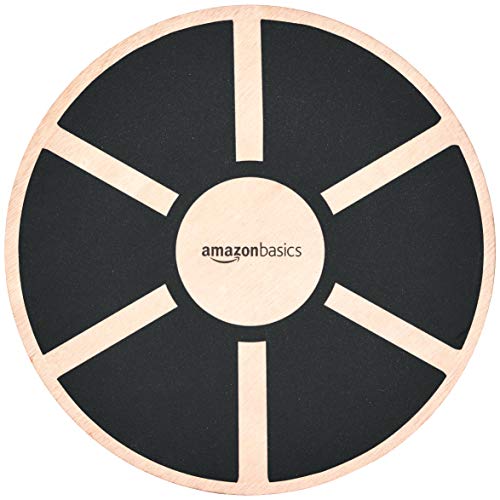
- Supports up to 265 pounds
- Non-slip solid wood surface
- Works for balance, planks, and core training
Best For: Foundational home balance and core workouts
Best Multi-Mode Balance Board
3-in-1 Slant and Rotation Trainer
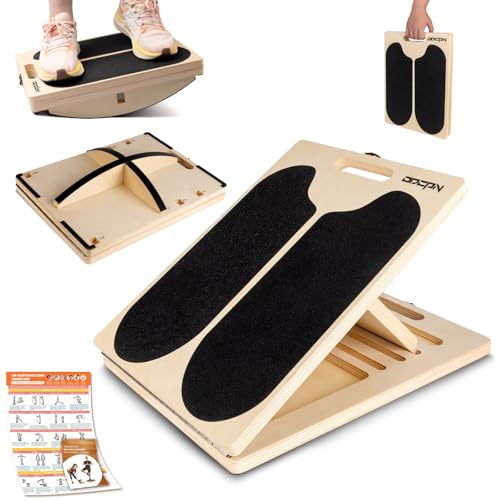
- Combines stretching and two balance modes
- Six adjustable incline angles
- Folds flat with magnetic quick-switch panels
Best For: Mobility, recovery, and varied balance training
Best Supportive Rocker Board
Professional Wooden Wobble Board

- Supports up to 350 pounds
- Anti-slip surface with floor protection pads
- Suitable for balance, planks, squats, and therapy
Best For: Beginners and balance-focused rehabilitation work
Best Low-Impact Cardio Balance Trainer

- Ski-inspired side-to-side cardio motion
- Includes resistance bands and LCD tracking
- Quiet operation and ready-to-use design
Best For: Low-impact cardio and balance-focused home sessions
Best Step-Up Wobble
StrongTek Advanced 360° Balance Board

- 360° movement adds a progressive stability challenge.
- Cross base offers more controlled floor contact.
- Textured top and 350-pound capacity support home use.
Best For: Adults progressing beyond basic rocker boards
Best Interactive Pick
GoBalance App-Enabled Balance Board

- Includes 12 games and four sports training modes.
- Bluetooth app offers feedback and progress tracking.
- Wide surface and mat support balance and core exercises.
Best For: Interactive family and home-gym training
Best Simple Rocker
Wooden 350-Pound Balance Trainer

- Supports balance, posture, core, and bodyweight exercises.
- Anti-slip top and padded base help protect floors.
- Portable, compact, and requires no assembly.
Best For: Beginners and gentle everyday stability practice
Best for Wood-Finish Stability Training
Advanced 360° Wood Balance Board

- Wood construction with an anti-slip gray surface
- 360° rotation with a stated 25° tilt range
- Useful for workouts, balance practice, and rehabilitation
Best For: Home users wanting a sturdy, wood-finish balance trainer
Best Portable Core Trainer

- Lightweight design with integrated carry handles
- Textured TPE grip zones for traction
- Full-range movement for core and stability drills
Best For: Portable home, office, and rehabilitation-focused workouts
Best for Standing-Desk Workouts

- Heavy-duty plastic supports up to 300 pounds
- 360° rotation with a 15° tilt angle
- Handles make it portable for home or office use
Best For: Standing-desk movement and everyday home core workouts
Best Simple Wobble Board – Amazon Basics Wood Balance Trainer
If you want straightforward balance boards for home workouts, this Amazon Basics model covers core training, standing balance, planks, push-ups, and targeted strengthening. Its solid wood construction and slip-resistant top make it a practical pick for a compact workout area.
Best For: Adults and athletes seeking a simple wobble board for balance, coordination, posture, and core exercises.
Pros:
- Supports up to 265 pounds.
- Non-slip surface helps provide a secure grip.
- Suitable for balance poses, planks, push-ups, and targeted workouts.
- Compact 15.75-by-15.75-inch design fits home workout spaces.
Cons:
- Designed for dry, non-slip surfaces and should not be used on wet or smooth surfaces.
- Offers a single wobble-board format rather than adjustable training modes.
This is a no-frills option for users who want one durable board for foundational balance and core work. The 265-pound capacity and one-year limited warranty add practical reassurance for regular home use.
Best Multi-Mode Balance Board – 3-in-1 Slant and Rotation Trainer
Among balance boards for home workouts, this 3-in-1 design stands out for combining calf stretching with 180-degree directional balance and 360-degree rotation. Its adjustable incline angles also make it useful for mobility work, warm-ups, and recovery-focused sessions.
Best For: Users who want one wooden trainer for calf stretching, ankle mobility, balance practice, and rotational core work.
Pros:
- Combines slant-board stretching with 180-degree and 360-degree balance modes.
- Offers six adjustable slant angles from 20 to 45 degrees.
- Includes a PVC sandpaper surface and non-slip EVA base.
- Magnetic side panels allow quick mode changes and the board folds flat for storage.
Cons:
- The supplied details list both a 460-pound design capacity and a 300-pound maximum weight recommendation, so buyers should confirm the applicable limit.
- Its multi-part design may take more setup and handling than a basic wobble board.
This is the most versatile choice in the group for combining stretching and balance training. The included poster and instructions can also help users structure sessions more carefully, particularly during recovery or mobility work.
Best Supportive Rocker Board – Professional Wooden Wobble Board
This wooden rocker board is a practical option for balance boards for home workouts when stability practice and rehabilitation are priorities. It can be used for standing drills, squats, planks, push-ups, and physical-therapy exercises while remaining compact enough for home or office storage.
Best For: Beginners, older adults, people working on balance, and users adding coordination or recovery exercises to a home routine.
Pros:
- Supports up to 350 pounds.
- Anti-slip surface helps improve footing during training.
- Protection pads help reduce potential floor damage.
- Compact and portable for home, gym, or office use.
Cons:
- The supplied dimensions are presented in an unusual orientation, so buyers should confirm the board’s footprint before ordering.
- It provides a basic rocker-board format without adjustable angles or electronic feedback.
Choose this model if you value a higher listed weight capacity and a straightforward platform for balance and proprioception work. Its broad exercise range makes it suitable for both general fitness and controlled recovery routines.
Best Low-Impact Cardio Balance Trainer – MERACH Rocking Stepper
For balance boards for home workouts with a stronger cardio focus, the MERACH rocking stepper uses a side-to-side motion that mimics cross-country skiing. It adds resistance bands, a small LCD monitor, and quiet operation for low-impact sessions at home.
Best For: Users seeking a quiet, joint-friendly cardio workout with balance practice, resistance bands, and basic progress tracking.
Pros:
- Side-to-side motion provides a skiing-inspired full-body workout.
- Includes two resistance bands for added exercise variety.
- Operates at less than 25 dB according to the supplied notes.
- LCD screen tracks steps, time, and calories.
Cons:
- Its moving ski-style motion may require caution for beginners or people with balance issues.
- Supports up to 300 pounds, lower than some traditional boards in this roundup.
- At 31 inches long, it needs more floor space than a compact wobble board.
This is better suited to rhythmic cardio and leg-focused movement than to static balance drills. The ready-to-use design, quiet operation, and under-bed-friendly profile make it convenient for frequent home sessions.
Best Step-Up Wobble – StrongTek Advanced 360° Balance Board
For shoppers comparing balance boards for home workouts, the StrongTek Advanced model offers a middle ground between a basic rocker and a round-base wobble board. Its cross-style base adds 360° directional movement while maintaining a larger floor contact area for more approachable control.
Best For: Adults seeking progressive balance, ankle-control, coordination, and core-stability training.
Pros:
- 360° directional wobble provides a more dynamic challenge than front-to-back or side-to-side rocker boards.
- Cross base offers more controlled contact with the floor than traditional round-base designs.
- Textured non-slip surface and sturdy lauan hardwood plywood construction suit daily home workouts.
- Supports up to 350 pounds and can also be used for standing-desk movement or balance practice.
Cons:
- The advanced version may be more challenging for people who are new to balance boards.
- Its 360° movement requires more active control than a basic rocker board.
This is a practical choice if you want to progress beyond a simple rocker without moving immediately to a traditional round-base board. The cross-base design keeps the challenge engaging while remaining relatively controlled.
Best Interactive Pick – GoBalance App-Enabled Balance Board
Among balance boards for home workouts, the GoBalance Sport-Play stands out for turning balance practice into an interactive activity. Bluetooth connectivity, a free app, real-time feedback, and 12 games add motivation for users who prefer guided or game-based training.
Best For: Teens and adults who want interactive balance training, family challenges, and app-guided home workouts.
Pros:
- Includes 12 free interactive games and four sports training modes.
- App provides real-time analysis and progress tracking through iOS or Android devices.
- Supports multiplayer use with up to four GoBalance boards connected to one app.
- Wide wooden surface, anti-slip finish, removable TPE mat, and balance cushion support fitness exercises.
Cons:
- Requires a compatible mobile device to access the app-based features.
- The board cannot connect directly to a TV; casting or screen mirroring is required.
- Its technology-focused features may be unnecessary for shoppers seeking a simple board.
The GoBalance is a strong fit when entertainment and feedback are part of your workout plan. It also accommodates planks, bridges, boat poses, and other full-body exercises, making it more versatile than a basic balance trainer.
Best Simple Rocker – Wooden 350-Pound Balance Trainer
For straightforward balance boards for home workouts, this wooden rocker focuses on stability practice without apps or assembly. Its anti-slip surface, padded base, and compact design make it suitable for everyday balance exercises at home, in an office, or at a standing desk.
Best For: Beginners, seniors, and users wanting portable balance, posture, core, or gentle ankle-and-knee conditioning.
Pros:
- Supports balance, core strength, posture work, planks, squats, and push-ups.
- Anti-slip top and non-slip base pads help provide stable use while protecting floors.
- Compact, portable, and ready to use without assembly.
- 350-pound maximum weight recommendation supports a broad range of users.
Cons:
- The simple rocker format may offer less directional challenge than a 360° wobble board.
- It lacks app connectivity, interactive games, and progress tracking.
- The supplied notes identify the color as yellow, which may not suit every room or preference.
This board is a sensible option for low-complexity stability work and limited-space use. Choose it if portability, floor-friendly features, and easy setup matter more than advanced movement or connected training.
Best for Wood-Finish Stability Training – Advanced 360° Wood Balance Board
For shoppers comparing balance boards for home workouts, this wood model offers a broad platform, 360° rotation, and a grippy gray surface. It arrives assembled and is designed for balance practice, core-focused movements, rehabilitation exercises, and portable use.
Best For: Users who want a sturdy wood balance board for home fitness, physical therapy, or balance training.
Pros:
- Wood construction with a water-, moisture-, and wear-resistant surface.
- 360° rotation and a stated 25° tilt range support varied balance drills.
- Anti-slip gray mesh silicone surface and built-in carry holes.
- Supports exercises such as squats, planks, push-ups, yoga, and balance training.
Cons:
- At 17.5 by 13.4 inches, its platform is less spacious than square alternatives.
- The listing gives different weight figures: a 350-pound product detail and a 500-pound support-volume claim.
- The adult-oriented design may not suit shoppers seeking a compact beginner board specifically for children.
This is a versatile pick if you prefer the feel and appearance of wood and want one board for fitness and rehabilitation-style exercises. Verify the applicable weight limit with the seller before purchase because the supplied specifications are inconsistent.
Best Portable Core Trainer – Energi Core Balance Board
This Energi Core model is a practical option among balance boards for home workouts, especially if you want to move between a home gym, office, or fitness studio. Its TPE grip zones, handles, and full-range movement support progressive balance and core exercises.
Best For: Beginners and experienced users seeking a lightweight board for core conditioning, rehabilitation, or standing-desk movement.
Pros:
- 360° tilt and rotation challenge stability from multiple directions.
- Textured TPE grip zones provide traction when used barefoot or with training shoes.
- Lightweight 2.8-pound design with integrated handles for carrying and storage.
- Suitable for balance drills, strength training, physical therapy, and daily workouts.
Cons:
- Its 100-kilogram maximum recommendation is lower than some larger plastic models.
- The 16.5-inch platform may feel limited for users wanting a larger standing surface.
- Dynamic movement may require a gradual learning curve for beginners.
Choose this board if portability and grippy handling matter more than a high stated weight capacity. Its compact size and adjustable challenge make it a flexible addition to a home workout or standing-desk setup.
Best for Standing-Desk Workouts – Yes4All Wobble Balance Board
If you want balance boards for home workouts that can also add movement to a standing desk, the Yes4All Wobble Balance Board is a compact plastic choice. Its 360° rotation, 15° tilt, textured surface, and handles support both basic balance drills and familiar bodyweight exercises.
Best For: Home-office users and beginners who want an affordable, portable board for standing-desk movement and core training.
Pros:
- Heavy-duty plastic construction supports up to 300 pounds.
- 360° rotation and a 15° tilt angle enable front-to-back, side-to-side, and circular drills.
- Textured surface helps improve foot grip during workouts.
- Lightweight, portable design with handles works at home, outdoors, in offices, or gyms.
Cons:
- The plastic construction may appeal less to shoppers seeking a wood or premium-finish board.
- A 15.75-inch diameter offers less standing area than wider platforms.
- More advanced users may want a greater tilt range or additional movement settings.
This is a well-rounded option for adding balance challenges to squats, planks, push-ups, and standing-desk routines. Its straightforward plastic design and stated 300-pound capacity make it especially practical for everyday home use.
How We Picked the Best Balance Boards for Home Workouts
We focused on the features that matter most for safe, repeatable home training: platform size, movement style, surface traction, weight capacity, construction, portability, and versatility. We also considered whether each board suits beginners, experienced users, rehabilitation exercises, or standing-desk routines.
Because product specifications can vary by version, check the current listing for dimensions, maximum user weight, included accessories, and warranty details before buying. A high weight limit is useful, but it does not automatically mean a board is more stable or better for beginners.
Quick Comparison
| Best For | Look For |
|---|---|
| Beginners | Rocking motion, textured grip, and a broad platform |
| Advanced training | 360-degree wobble movement and responsive construction |
| Physical therapy | Controlled movement, sturdy materials, and an appropriate height |
| Standing desks | Comfortable surface, manageable tilt, and easy storage |
| Full-body workouts | Resistance bands, handles, or a versatile multi-function design |
| Motivation and tracking | Bluetooth connectivity, sensors, or guided games |
Key Buying Factors for Balance Boards for Home Workouts
Movement and Difficulty
Rocking boards generally provide a more predictable starting point, while wobble and 360-degree boards allow movement in more directions and demand greater control. If you are new to balance training, start with a design that lets you progress gradually rather than choosing the most challenging board.
Grip and Stability
Look for a slip-resistant top and a base that will not unexpectedly slide across your floor. Use the board on a clear, level surface, and consider exercising near a wall, sturdy counter, or rail while learning. Bare feet or secure athletic shoes can improve control, depending on the surface texture and manufacturer guidance.
Size, Capacity, and Construction
Choose a platform that gives you enough room for your stance and supports every intended user. Wood can feel solid and responsive, while molded plastic may be lighter and easier to clean. Confirm the stated capacity and inspect the underside for bumpers, rollers, or other contact points that protect your floor.
Extra Features
Resistance bands can turn a balance board into a more complete workout station. Handles may help with portability or certain exercises, while an app-enabled model can make practice more engaging. These extras are worthwhile only if they match how you plan to train.
Who Should Buy Which Balance Boards for Home Workouts?
Choose a basic rocker if you want an affordable introduction to balance work, ankle conditioning, or core exercises. Choose a 360-degree wobble board if you already have balance experience and want a more demanding challenge. Choose a sturdy wooden model for a responsive feel and frequent training, provided its movement level suits you.
Choose a board with bands if you want to combine stability work with upper-body exercises. Choose a standing-desk board if your main goal is gentle movement during work rather than intense workouts. Choose an app-enabled option if feedback, games, and structured practice will help you use the board consistently.
Whichever model you select, begin with short sessions and controlled movements. A balance board should complement strength, mobility, and cardiovascular training—not replace them—and you should stop if you experience pain, dizziness, or unusual instability.