The best bike computers with GPS make it easier to follow routes, track rides, monitor performance, and stay oriented without constantly reaching for your phone. The right model depends on whether you prioritize navigation, training data, battery life, or simple ride tracking.
We compare 10 standout options across different budgets and riding styles, from easy-to-use navigators and color touchscreens to compact computers with long runtimes and broad sensor compatibility.
Best 10 Bike Computers with Gps Picks for 2026
Best Touchscreen Navigator
iGPSPORT BSC500 GPS Bike Computer

- 3.3-inch touchscreen plus physical buttons
- Dual-band positioning with voice navigation
- Route importing, rerouting, and climb planning
Best For: Riders who want large-screen, voice-assisted navigation
Best Easy-Use Touring Option

- 3-inch glove- and rain-friendly touchscreen
- Preloaded road, trail, and indoor profiles
- eBike routing plus safety and tracking features
Best For: Touring and recreational riders seeking straightforward navigation
Best Compact Route-Focused Computer

- On-device turn-by-turn navigation
- 20-hour battery with dual-band GPS
- Automatic route syncing and radar integration
Best For: Connected riders who prefer compact, button-based navigation
Best for Training and Battery Life
Garmin Edge 540 GPS Cycling Computer

- Up to 26 hours, or 42 in battery-saver mode
- Multi-band GNSS and ClimbPro ascent planning
- Adaptive workouts and performance insights
Best For: Structured-training riders and long-distance cyclists
Best Navigation Pick
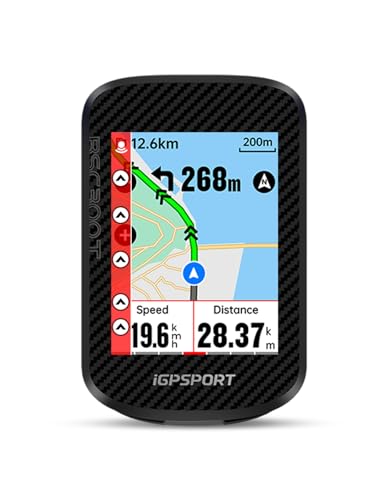
- Offline maps with turn prompts and off-course warnings
- 2.4-inch touchscreen with six buttons
- Tracks 130+ metrics and supports ANT+/Bluetooth sensors
Best For: Navigation-focused road, MTB, e-bike, and group riders
Best Elevation Tracking

- Measures altitude, gradient, and accumulated ascent
- GPS works without a wheel sensor or magnet
- 28-hour battery and IPX7 waterproofing
Best For: Straightforward rides and climbs where elevation data matters
Best Battery Life

- Up to 40 hours of battery life
- Large 2.6-inch anti-glare display
- 40+ metrics with ANT+/Bluetooth support
Best For: Long-distance riders who prioritize runtime and core ride data
Best Compact GPS Pick

- 70 g wireless GPS computer
- 50+ hour claimed battery life
- Automatic backlight and IPX6 rating
Best For: Simple, long-lasting GPS ride tracking
Best Navigation Features

- 2.8-inch color touchscreen
- Offline maps with re-route planning
- Wi-Fi, ANT+, Bluetooth, and IPX7
Best For: Navigation-focused and connected riding
Best Balanced Training Option

- 2.4-inch color display and 67 g weight
- Route imports from major cycling platforms
- 100+ data points and 25-hour battery
Best For: Versatile navigation and ride-data tracking
Best Touchscreen Navigator – iGPSPORT BSC500 GPS Bike Computer
For riders who want large-screen guidance and flexible controls, the iGPSPORT BSC500 is a capable choice among bike computers with gps. Its 3.3-inch touchscreen works alongside physical buttons, while dual-band positioning, voice alerts, route importing, and automatic rerouting support confident navigation.
Best For: Riders who prioritize touchscreen navigation, voice guidance, and route flexibility.
Pros:
- Large 3.3-inch display supports touchscreen and button operation.
- Dual-band, five-satellite positioning is designed to improve accuracy and reduce interference.
- Supports routes from iGPSPORT, Strava, Komoot, and imported route files, with yaw rerouting.
- Offers turn reminders, voice navigation, climb planning, and training analysis.
Cons:
- At 107 g, it is heavier than the listed Wahoo and Garmin Edge models.
- Its most advanced training features may be most useful with compatible sensors and connected services.
The BSC500 stands out for riders who want a highly visible interface without giving up button control. IPX7 protection and a two-year warranty add practical reassurance for regular outdoor use.
Best Easy-Use Touring Option – Garmin Edge Explore 2
The Garmin Edge Explore 2 is an accessible pick among bike computers with gps, with a 3-inch high-resolution touchscreen designed for glove and rain use. Preloaded road, off-road, and indoor profiles make setup straightforward, while ride-specific maps, POIs, and eBike routing support varied trips.
Best For: Touring, recreational, and eBike riders who want simple touchscreen navigation.
Pros:
- Glove- and rain-friendly touchscreen is designed to remain visible in direct sunlight.
- Preloaded profiles and maps help simplify initial setup.
- Provides ride-specific maps, popular roads and trails, searchable POIs, and eBike routing.
- Supports LiveTrack, GroupTrack, incident detection, Varia devices, and optional sensors.
Cons:
- Its listed battery life is up to 16 hours, shorter than the Edge 540 and ELEMNT BOLT V3.
- Heart-rate, speed, cadence, and cycling-awareness accessories are sold separately.
Choose the Edge Explore 2 when navigation simplicity matters more than advanced training metrics. Its smartphone and eBike connectivity also make it a versatile companion for supported rides.
Best Compact Route-Focused Computer – Wahoo ELEMNT BOLT V3
The Wahoo ELEMNT BOLT V3 is a compact, button-operated option among bike computers with gps, built around on-device turn-by-turn navigation. It can automatically download routes from supported services, generate routes to destinations, and provide LED and audible cues for upcoming turns or off-course riding.
Best For: Performance-oriented riders who want compact navigation, long battery life, and connected route services.
Pros:
- Turn-by-turn prompts support GPX, TCX, Strava, Ride With GPS, and Komoot routes.
- Automatic route downloads and workout uploads simplify connected ride management.
- 20-hour battery life, dual-band GPS, Wi-Fi, Bluetooth, and ANT+ support broad connectivity.
- Smart notifications, LiveTrack, and ANT+ radar integration add connected riding features.
Cons:
- The 2.3-inch screen is smaller than the displays on the BSC500 and Edge Explore 2.
- Smart notifications and LiveTrack require riding with a smartphone.
- Radar functionality requires a compatible ANT+ rearview radar accessory.
With its compact 84-gram design and button controls, the BOLT V3 is well suited to riders who value quick route cues and a clean cockpit. Its broad service integrations are especially useful for cyclists already using supported training platforms.
Best for Training and Battery Life – Garmin Edge 540 GPS Cycling Computer
The Garmin Edge 540 is a strong performance-focused choice among bike computers with gps, combining button controls with multi-band GNSS, detailed maps, and training tools. Its battery lasts up to 26 hours in demanding use or 42 hours in battery-saver mode, making it practical for long rides and events.
Best For: Training-focused cyclists who want adaptive guidance, climb data, and extended battery life.
Pros:
- Offers up to 26 hours of demanding-use battery life or 42 hours in battery-saver mode.
- Multi-band GNSS is designed to improve positioning accuracy in challenging environments.
- ClimbPro, daily suggested workouts, adaptive coaching, power guidance, and stamina insights support structured training.
- Ride-type maps include popular roads, trails, and searchable points of interest.
Cons:
- Its 2.6-inch display is smaller than the screens on the BSC500 and Edge Explore 2.
- Several advanced coaching and effort features require compatible power and heart-rate sensors.
- Button controls may be less immediately intuitive than a touchscreen for some riders.
The Edge 540 is the most training-oriented option in this group. It makes the most sense for cyclists prepared to pair compatible sensors and use Garmin’s coaching, climbing, and performance features over longer rides.
Best Navigation Pick – iGPSPORT BSC300T
If you want bike computers with GPS that can guide you beyond basic ride tracking, the iGPSPORT BSC300T adds offline maps, turn prompts, and off-course warnings to a large touchscreen display. It also supports multiple satellite systems, more than 130 riding metrics, and ANT+/Bluetooth sensors.
Best For: Riders who want map-based navigation, extensive data tracking, and e-bike or group-riding features.
Pros:
- 2.4-inch capacitive touchscreen plus six physical buttons.
- Offline worldwide maps, route previews, turn prompts, and off-course alerts.
- Supports more than 130 data fields and five satellite systems.
- Works with ANT+/Bluetooth sensors and can share data to Strava and Komoot.
Cons:
- USB-C charging cable is not included.
- Its navigation-focused feature set may be more than casual riders need.
The BSC300T is the most feature-rich option here for riders who prioritize navigation and connected training. Its 20-hour battery life is solid, though shorter than the simpler long-runtime models in this roundup.
Best Elevation Tracking – GPS Bike Computer BKV300B
Among bike computers with GPS, this 2.4-inch model focuses on the ride essentials while adding altitude, gradient, and ascent data. Its built-in GPS works without a wheel sensor, and automatic recording, backlight control, and sleep mode simplify everyday use.
Best For: Cyclists who want straightforward GPS ride tracking with elevation data and long battery life.
Pros:
- Tracks speed, distance, ride time, temperature, altitude, gradient, and ascent.
- GPS setup does not require a wheel sensor or spoke magnet.
- Up to 28 hours of runtime from a 650mAh rechargeable battery.
- IPX7 waterproof protection and automatic backlight support outdoor riding.
Cons:
- Button controls only; no touchscreen is listed.
- Does not list offline maps, route guidance, or sensor connectivity.
This is a practical choice when elevation metrics matter more than advanced navigation. The clear LCD, automatic start/stop, and IPX7 rating make it well suited to regular rides in changing conditions.
Best Battery Life – iGPSPORT BSC100S
The iGPSPORT BSC100S is one of the more practical bike computers with GPS for riders who want a large display and minimal charging. It provides global satellite coverage, more than 40 ride metrics, app-based analysis and sharing, and up to 40 hours of battery life.
Best For: Long-distance cyclists who want reliable core metrics, a large anti-glare screen, and extended runtime.
Pros:
- Large 2.6-inch anti-glare LCD display.
- Up to 40 hours of battery life with USB-C charging.
- Tracks more than 40 metrics, including speed, distance, grade, cadence, and temperature.
- IPX7 waterproofing plus ANT+/Bluetooth connectivity.
Cons:
- USB-C cable is not included.
- Does not list onboard maps or turn-by-turn navigation.
- Provides fewer ride metrics than the BSC300T.
The BSC100S keeps the focus on readable ride data and endurance rather than navigation. Its 40-hour rating and weather-resistant design make it particularly appealing for touring, ultra-distance, and frequent riders.
Best Compact GPS Pick – CYCPLUS G1
For riders who want straightforward tracking without a bulky computer, the CYCPLUS G1 is a compact choice among bike computers with GPS. Its 2-inch backlit display shows core ride data, while wireless operation, IPX6 water resistance, and a claimed battery life of more than 50 hours suit regular road and recreational rides.
Best For: Riders who prioritize long battery life, simple GPS ride tracking, and a lightweight handlebar computer.
Pros:
- Dynamic GPS positioning tracks route, time, distance, altitude, and related ride data.
- Automatic backlight and FSTN display are designed for visibility in daylight and at night.
- Lightweight 70-gram design, wireless setup, IPX6 rating, and more than 50 hours of average battery life.
- Two-year warranty and automatic sleep mode after 10 minutes of inactivity.
Cons:
- The 2-inch LED screen and button controls are focused on basic data viewing rather than map navigation.
- IPX6 protection is water-resistant but not the higher IPX7 rating offered by some alternatives.
The G1 makes the most sense when you want essential GPS metrics and minimal handlebar clutter. It is less suited to riders seeking color maps, route guidance, or extensive connected training features.
Best Navigation Features – GEOID CC700 Pro
The GEOID CC700 Pro is a feature-rich option among bike computers with GPS, combining a 2.8-inch color touchscreen with offline maps, turn prompts, and re-route planning. Wi-Fi, ANT+, and Bluetooth connectivity also support route syncing, sensor pairing, and data transfers for riders who want more than basic ride recording.
Best For: Explorers and performance-minded cyclists who want color navigation, route management, and indoor-training compatibility.
Pros:
- 2.8-inch color touchscreen plus three buttons for navigation and ride control.
- Offline map downloads with 4GB storage, turn prompts, street names, zoom, and dual-perspective views.
- Supports re-route planning when connected to the designated app and can acquire position in as little as five seconds with synced AGNSS.
- IPX7 waterproofing, Wi-Fi auto-sync, ANT+/Bluetooth connectivity, and smart-trainer support.
Cons:
- Re-route planning requires connection to the designated app.
- At 0.22 kg, it is heavier than the smaller computers in this selection.
- The listed warranty is one year.
Choose the CC700 Pro if navigation and connected features justify a larger color unit. Its touchscreen, offline maps, and indoor-training functions give it broader capabilities than a basic GPS data computer.
Best Balanced Training Option – iGPSPORT BSC200S
The iGPSPORT BSC200S balances route guidance, sensor support, and ride-data depth in a 67-gram package. Its 2.4-inch color display, IPX7 waterproofing, and up to 25 hours of battery life make it a practical middle ground for cyclists comparing bike computers with GPS for navigation and training metrics.
Best For: Riders who want route navigation, broad data support, smart notifications, and compatibility with ANT+ or Bluetooth accessories.
Pros:
- Supports routes from the iGPSPORT app and platforms including Strava, Ride with GPS, and Komoot.
- Offers one-touch navigation, Back to Start, turn and yaw reminders, and continued last-ride activity.
- Tracks more than 100 data points and stores up to 400 hours of riding data.
- IPX7 waterproofing, 25-hour battery life, and compatibility with iGPSPORT lights and radar lights.
Cons:
- The unit uses buttons rather than a touchscreen.
- A Type-C charging cable is not included according to the supplied details.
- Its 25-hour battery rating is shorter than the CYCPLUS G1’s listed average life.
The BSC200S is a strong all-rounder for cyclists who need more than basic GPS recording but do not necessarily need the CC700 Pro’s larger touchscreen. Its route integrations and extensive data selection are especially useful for structured or long-distance rides.
How We Picked the Best Bike Computers with Gps
We focused on the features that matter most during real rides: GPS accuracy, route guidance, screen readability, battery life, weather resistance, wireless connectivity, and ease of setup. We also considered the needs of recreational riders, commuters, touring cyclists, and athletes who want structured training data.
Models with navigation features were evaluated for map support, turn prompts, rerouting, and route syncing. For simpler computers, we placed more emphasis on reliable tracking, useful ride metrics, compact designs, and value. Compatibility with Bluetooth and ANT+ sensors was also considered because many riders use heart-rate monitors, cadence sensors, power meters, or electronic shifting systems.
Quick Comparison
- Best for straightforward navigation: Garmin Edge Explore 2
- Best for compact performance tracking: Garmin Edge 540
- Best for aerodynamic, connected riding: Wahoo ELEMNT BOLT V3
- Best value with a large touchscreen: iGPSPORT BSC500
- Best for long battery life: iGPSPORT BSC100S or CYCPLUS G1
- Best for color touchscreen navigation: GEOID CC700 Pro
Key Buying Factors for Bike Computers with Gps
Navigation and Mapping
If you regularly explore unfamiliar roads, choose a model with maps, turn-by-turn directions, route recalculation, and clear off-course warnings. Offline mapping is particularly useful where cellular service is unreliable. Basic GPS computers can track your route accurately but may not provide detailed guidance.
Screen and Controls
Touchscreens are convenient for browsing maps and adjusting settings, while physical buttons are often easier to operate in rain, cold weather, or with gloves. Consider screen size, color support, brightness, and whether the display remains readable in direct sunlight.
Battery Life and Durability
Shorter battery life may be sufficient for daily training, but touring and endurance riders should look for extended runtimes and quick charging. IPX-rated water resistance helps protect against rain and spray, though the exact rating and port protection still matter.
Connectivity and Training Features
Bluetooth and ANT+ support allow a computer to connect with sensors and accessories. Riders focused on training should look for power, heart-rate, cadence, elevation, gradient, workout, and structured-route features. Phone notifications, Wi-Fi syncing, and action-camera compatibility are useful extras rather than essentials.
Who Should Buy Which Bike Computers with Gps?
Choose a navigation-focused model if you tour, commute through unfamiliar areas, or prefer phone-free route guidance. Choose a training-oriented computer if performance metrics, sensors, and workouts are central to your rides. Choose a simple budget model if you mainly want distance, speed, elevation, and GPS route recording without a complicated interface.
Before buying, confirm handlebar compatibility, preferred mounting hardware, sensor support, map availability, and expected ride duration. A slightly more expensive computer can be worthwhile if its navigation, battery, or connectivity features match how you actually ride.