Finding the best binoculars for low-light viewing means balancing brightness, detail, stability, and portability. Larger objective lenses can gather more light, while quality glass and coatings help preserve contrast at dawn, dusk, and under overcast skies.
This roundup compares 10 options across traditional optical binoculars, high-powered models, and digital night-vision designs so you can choose the right fit for wildlife watching, hunting, travel, or nighttime observation.
Best 10 Binoculars for Low Light Picks for 2026
Trail-Ready Low-Light Pick

- 50mm objectives for bright low-light views
- Waterproof, nitrogen-purged, rubber-armored build
- Tripod-adaptable with a 5.6° field of view
Best For: Wildlife viewing, hiking, and outdoor observation
All-Weather HD Choice

- HD optics with fully multi-coated lenses
- Waterproof, fogproof, and shockproof
- Includes GlassPak harness and lifetime warranty
Best For: Hunting, birdwatching, and versatile outdoor use
Bright Wide-View Option
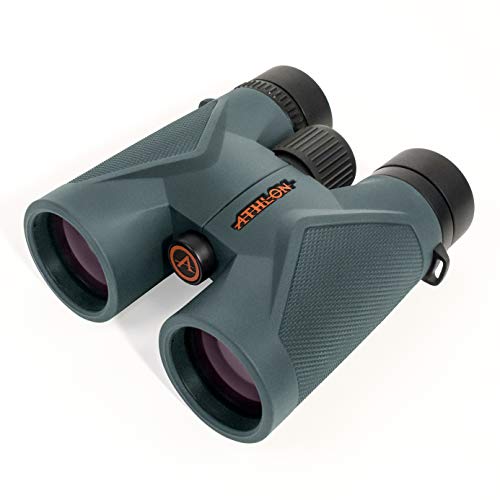
- 5.25mm exit pupil for bright viewing
- ED glass and dielectric prism coating
- Wide 8.1° field of view with 17.2mm eye relief
Best For: Birdwatching, hunting, and wide-area scanning
Accessible Hunting Pick

- Multi-coated optics for low-light clarity
- Compact 22-ounce design with non-slip grip
- Waterproof and tripod compatible
Best For: Hunting, travel, and all-day outdoor carry
High-Power Pick
FLYA 20x50 Low-Light Binoculars

- 20x magnification with 50mm objective lenses
- BAK4 Porro prism and multilayer-coated optics
- Waterproof rubberized body with tripod compatibility
Best For: Long-distance outdoor viewing and stargazing
Weatherproof Pick

- 10x42 configuration with fully multi-coated optics
- IPX7 waterproof and nitrogen-purged against fogging
- Rugged, non-slip rubber armor for wet conditions
Best For: Boating, hunting, and rainy outdoor observation
Versatile Kit Pick
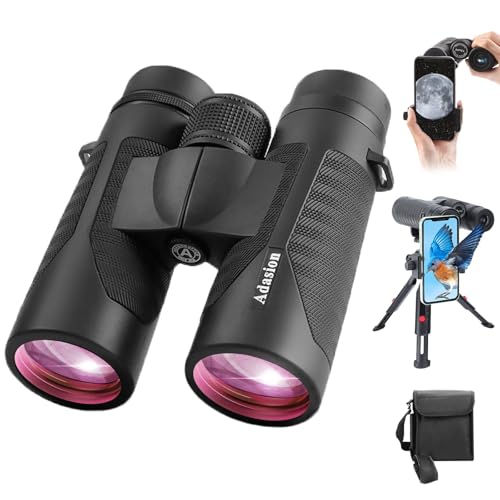
- 12x42 design with BAK4 prisms and FMC optics
- Includes phone adapter and compact tripod
- IPX7 waterproof and fog-proof construction
Best For: Travelers and viewers who want smartphone capture
Best Digital Night Vision
Barska NV-2 Night Vision Binoculars

- Day and infrared night modes
- 10x optical plus 8x digital zoom
- Captures photos and 2.5K video
Best For: Recording nighttime wildlife, camping, and property observations
Best Conventional Low-Light Optics
18x56 UHD Low-Light Binoculars

- Large 56mm objectives for limited light
- 18x magnification for distant subjects
- Waterproof and fogproof outdoor design
Best For: Birding, wildlife, travel, and dawn or dusk viewing
Best Battery-Powered Night Viewing
4K Night Vision Binoculars for Adults
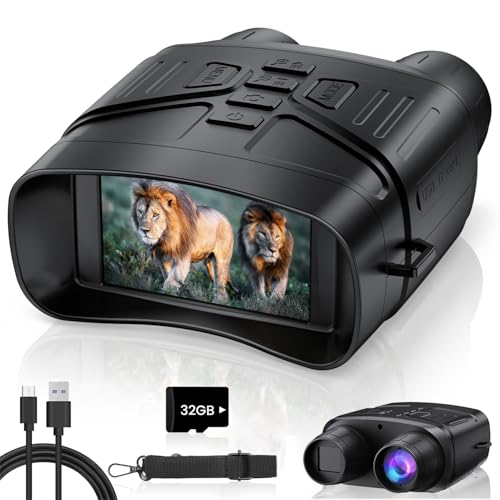
- 850nm infrared works in complete darkness
- 5000mAh rechargeable battery
- Includes 32GB card for recording
Best For: Night patrols, hunting, camping, and property monitoring
Trail-Ready Low-Light Pick – Celestron Outland X 10×50
For shoppers seeking binoculars for low light, the Celestron Outland X combines 10x magnification with large 50mm objective lenses. Its multi-coated optics and BaK-4 prisms are designed to provide bright, detailed, true-to-life views for wildlife watching and outdoor use.
Best For: Wildlife viewing, hiking, birdwatching, and extended outdoor observation in changing weather.
Pros:
- 50mm objectives and a 4.8mm exit pupil support bright views in lower light.
- Multi-coated optics and BaK-4 prisms help produce sharp, color-accurate images.
- Waterproof, nitrogen-purged, and rubber-armored construction is suited to outdoor conditions.
- Tripod-adaptable design and a 5.6° field of view help with steady scanning.
Cons:
- The larger 50mm objectives add bulk compared with many 42mm models.
- A tripod adapter is required for tripod mounting and is not included.
The Outland X is a strong choice when low-light brightness and weather resistance matter more than having the smallest possible binoculars. Its 10x magnification offers detail at distance, while the broad field of view helps you follow moving subjects.
All-Weather HD Choice – Vortex Triumph HD 10×42
The Vortex Triumph HD is a practical option for binoculars for low light when you want a full-size 10×42 design with HD optics. Fully multi-coated lenses are intended to improve light transmission, resolution, color fidelity, and edge-to-edge sharpness.
Best For: Hunting, birdwatching, hiking, and sports viewing where durability and easy carrying are priorities.
Pros:
- HD optical elements and fully multi-coated lenses support clear, detailed images.
- Waterproof, fogproof, and shockproof construction is ready for varied outdoor conditions.
- Tripod adaptability, adjustable eyecups, and an adjustable diopter support comfortable viewing.
- Includes a GlassPak harness and is backed by an unlimited, unconditional lifetime warranty.
Cons:
- Its 4.2mm exit pupil is smaller than the 50mm model’s exit pupil in this roundup.
- The 10x magnification can require extra steadiness when viewing for long periods.
The Triumph HD balances optical refinement, rugged construction, and carry comfort. It is a sensible all-purpose pick for users who want capable lower-light performance without moving to larger 50mm objectives.
Bright Wide-View Option – Athlon Midas UHD 8×42
The Athlon Optics Midas UHD is a comfortable choice for binoculars for low light, pairing 8x magnification with a 5.25mm exit pupil. ED glass, advanced fully multi-coated lenses, and dielectric prism coating are designed to deliver bright, sharp images with accurate color.
Best For: Birdwatching, hunting, hiking, and users who prefer a wide view with longer eye relief.
Pros:
- The 8×42 configuration offers a 5.25mm exit pupil for bright viewing.
- ED glass helps reduce chromatic fringe and improve image sharpness.
- Dielectric prism coating reflects over 99% of light toward the eyes.
- Wide 8.1° field of view and 17.2mm eye relief support comfortable scanning.
Cons:
- 8x magnification provides less reach than the 10x models in this roundup.
- The supplied notes list a 1.6-pound weight, making it less lightweight than some alternatives.
The Midas UHD emphasizes brightness, color, and a forgiving viewing experience. Its lower magnification and wide field of view can be useful for tracking birds or scanning landscapes, while argon purging supports waterproofing and thermal stability.
Accessible Hunting Pick – Bushnell BoneCollector 10×42
The Bushnell PowerView BoneCollector is a useful set of binoculars for low light for hunting and outdoor viewing. Its multi-coated optics are designed to draw in light for clear images, while the 10×42 format keeps the binoculars compact enough for pack or neck carry.
Best For: Hunting, hiking, travel, and all-day outdoor use where grip and straightforward controls matter.
Pros:
- Multi-coated optics are designed for clear, vibrant images in lower light.
- Diamond-cut grip texture and focus controls help with handling, including when wearing gloves.
- Compact 22-ounce design is easy to carry throughout the day.
- Waterproof and tripod compatible for changing conditions and steadier viewing.
Cons:
- Its 4.2mm exit pupil is smaller than the Athlon and Celestron models’ listed exit pupils.
- The supplied specifications identify the enclosure material as plastic.
The BoneCollector focuses on practical field handling rather than elaborate extras. It is a reasonable choice for hunters and travelers who want 10x reach, low-light-oriented multi-coated optics, and a secure camouflaged design in a relatively compact package.
High-Power Pick – FLYA 20×50 Low-Light Binoculars
For shoppers seeking binoculars for low light with long-range reach, this FLYA model combines 20x magnification, 50mm objective lenses, and multilayer-coated optics. Its Porro prism design and manual center focus make it suited to distant viewing, though the high magnification may be less forgiving of hand movement.
Best For: Long-distance bird watching, hunting, stargazing, travel, and outdoor observation where magnification is a priority.
Pros:
- 20x magnification and 50mm objective lenses support detailed distant viewing.
- Multilayer-coated lenses and a BAK4 Porro prism are designed to improve brightness and color accuracy.
- Waterproof, shock-resistant rubber construction provides a secure grip outdoors.
- 26mm eyepieces and a soft rubber focus wheel support comfortable extended use.
Cons:
- The 0.89 kg weight is relatively substantial for a compact model.
- The 2.5mm exit pupil may provide less low-light brightness than lower-magnification binoculars with larger exit pupils.
- Waterproof construction is intended for outdoor exposure, but the binoculars should not be immersed.
This is a feature-rich option when reach matters more than portability. For steadier views at 20x, its tripod mount compatibility is worth considering.
Weatherproof Pick – Bushnell H2O Xtreme 10×42
The Bushnell H2O Xtreme is a practical choice among binoculars for low light if you also need dependable weather protection. Its 10×42 configuration, BaK-4 prisms, fully multi-coated glass, and nitrogen-purged body are designed for bright viewing in changing outdoor conditions.
Best For: Hunting, boating, birdwatching, hiking, travel, and general observation in wet or fog-prone conditions.
Pros:
- Fully multi-coated optics and BaK-4 prisms support clear, bright images.
- IPX7 waterproofing allows protection against accidental submersion in standing water.
- Nitrogen purging helps prevent internal fogging.
- Rugged rubber armor and non-slip grips remain practical when wet.
Cons:
- 10x magnification offers less reach than the higher-powered models in this roundup.
- Its 17mm eye relief may be less accommodating for some eyeglass wearers than longer-relief designs.
- The listed field of view is narrower than the 12×42 Adasion model’s stated 367-yard view.
Choose this model when waterproofing and fog resistance are central to your buying decision. It is a balanced outdoor binocular rather than a specialized long-range option.
Versatile Kit Pick – Adasion 12×42 Binoculars
For buyers who want binoculars for low light plus useful accessories, the Adasion 12×42 pairs fully multi-coated lenses and BAK4 prisms with a phone adapter and compact tripod. The 4mm exit pupil, wide stated field of view, and adjustable eyecups make it a flexible option for travel and outdoor activities.
Best For: Birdwatching, cruises, sports, travel, hiking, stargazing, and users who want to capture views with a smartphone.
Pros:
- 12x magnification and a 42mm objective lens offer a useful balance of reach and portability.
- Fully multi-coated optics and BAK4 prisms are designed for bright, vivid views in dim lighting.
- Includes a universal phone adapter and 360-degree swivel tripod for photos and video.
- IPX7 waterproof and fog-proof construction supports use in varied weather.
Cons:
- The 13.6mm minimum eye relief may be limiting for some eyeglass wearers.
- At about 1.2 to 1.25 pounds, it is heavier than an ultralight travel binocular.
- The included tripod is compact, so it may be less suitable for extended heavy-duty support.
This is the most accessory-friendly choice in the group. It makes sense for shoppers who want one binocular setup for viewing, travel, and smartphone recording.
Best Digital Night Vision – Barska NV-2 Night Vision Binoculars
If you need binoculars for low light that can also record what you see, the Barska NV-2 combines infrared night vision with daytime viewing, digital zoom, and onboard image capture. Its rechargeable battery and included accessories make it practical for extended outdoor sessions.
Best For: Nighttime wildlife observation, camping, hunting, property viewing, and users who want to save photos or video.
Pros:
- Supports both daytime viewing and infrared night vision.
- Combines 10x optical magnification with 8x digital zoom.
- Records 40MP photos and 2.5K AVI video to a Micro SD card.
- Includes a rechargeable battery, carrying bag, neck strap, and USB-C cable.
Cons:
- Not water resistant, so it requires care in wet conditions.
- Digital night vision uses a display rather than traditional optical binocular viewing.
- Long-range viewing may benefit from the compatible tripod mount.
The NV-2 is a versatile choice when documentation matters as much as observation. Choose it over conventional low-light binoculars if you want infrared viewing, substantial zoom, and easy file transfer in one device.
Best Conventional Low-Light Optics – 18×56 UHD Low-Light Binoculars
For buyers seeking binoculars for low light without an electronic night-vision system, these 18×56 UHD binoculars emphasize light-gathering optics. The large objective lenses, BAK4 prisms, and wide field of view suit dawn, dusk, cloudy conditions, and outdoor travel.
Best For: Bird watching, wildlife observation, cruises, travel, hiking, and long-distance viewing in changing light.
Pros:
- Large 56mm objective lenses are designed to support brighter low-light views.
- 18x magnification helps reveal detail at long distances.
- Wide field of view makes it easier to follow moving subjects.
- Waterproof, fogproof construction and a non-slip grip support outdoor use.
Cons:
- High 18x magnification can make steady handheld viewing more demanding.
- The large objective lenses may be less compact than smaller travel binoculars.
- Low-light performance is not the same as viewing in complete darkness with infrared night vision.
These binoculars are a strong fit for natural-light viewing when brightness, reach, and a broad viewing window are priorities. The included phone adapter also makes them useful for capturing distant scenes with a compatible smartphone.
Best Battery-Powered Night Viewing – 4K Night Vision Binoculars for Adults
These night vision binoculars are suited to buyers who want binoculars for low light that can work in complete darkness. An 850nm infrared illuminator, 3-inch screen, rechargeable 5000mAh battery, and included 32GB memory card support extended observation and recording.
Best For: Hunting, wildlife observation, camping, night patrols, and farm or property monitoring.
Pros:
- Works in daylight, low light, and complete darkness with infrared illumination.
- 5000mAh rechargeable battery supports extended outdoor use.
- Records photos and videos to the included 32GB memory card.
- Tripod-compatible design enables hands-free viewing and recording.
Cons:
- Uses a 25mm objective lens and up to 5x digital zoom, offering less stated reach than the other options.
- Tripod is not included.
- Runtime varies with infrared level, screen brightness, recording, and other settings.
The NV4000B is the most practical choice here for complete-darkness use and longer recording sessions. Its large display and rechargeable power make it convenient for monitoring, while the tripod mount helps steady the image during extended observation.
How We Picked the Best Binoculars for Low Light
We focused on the specifications and features that matter most when daylight fades: objective-lens size, magnification, optical quality, waterproofing, field of view, focusing controls, and overall handling. The selection includes dependable 8×42 and 10×42 formats, brighter 10×50 and 18×56 designs, higher-power options that benefit from support, and digital night-vision binoculars for genuinely dark conditions.
Traditional binoculars generally provide a more natural image, faster response, and simpler operation. Digital night-vision models can extend viewing after dark, but they rely on batteries and display technology rather than passive glass optics.
Quick Comparison
| Type | Best For | Main Advantage | Watch-Out |
|---|---|---|---|
| 8×42 or 10×42 | General wildlife and outdoor use | Balanced brightness, size, and steadiness | Less light gathering than larger lenses |
| 10×50 | Dawn, dusk, and open-country viewing | More light and detail potential | Heavier and harder to hold steady |
| 12x to 20x | Long-distance observation | Greater apparent detail | Narrower view and more visible shake |
| Digital night vision | Darkness and nighttime surveillance | Works with infrared illumination | Needs batteries and may look less natural |
Key Buying Factors for Binoculars for Low Light
Objective Lens and Exit Pupil
The objective lenses are the front lenses, measured in millimeters. A 50mm lens can gather more light than a 42mm lens, but it adds weight and bulk. Exit pupil, calculated by dividing objective size by magnification, also matters: 10×50 produces a 5mm exit pupil, while 10×42 produces 4.2mm. A larger exit pupil can make dim scenes easier to view, especially when your eyes are dark-adapted.
Magnification and Stability
Higher magnification is not automatically better. Models above 10x magnification reveal more distant detail but amplify hand movement and usually reduce field of view. Consider a tripod adapter for 12x, 18x, and 20x binoculars, particularly for extended observation.
Glass, Coatings, and Focusing
ED or UHD glass and fully multi-coated optics can improve sharpness, color control, and contrast. Smooth central focusing is valuable when subjects move between distances. Check the minimum focus distance if you plan to watch nearby wildlife or birds.
Weather Protection and Ergonomics
Waterproof, fogproof construction is useful in humid, rainy, or cold conditions. Also consider grip texture, eye relief, diopter adjustment, weight, and whether the binoculars fit comfortably with glasses.
Who Should Buy Which Binoculars for Low Light?
- For most wildlife viewers: Choose a quality 8×42 or 10×42 model for a practical balance of brightness, steadiness, and portability.
- For dawn and dusk: A 10×50 design is worth considering if you can manage the extra weight or use a support.
- For long-range viewing: Select a 12x, 18x, or 20x model when distance matters more than compact size, and plan on stabilizing it.
- For wet outdoor use: Prioritize waterproof and fogproof construction, especially for hunting, boating, and camping.
- For true nighttime observation: Pick digital night-vision binoculars with infrared capability. They are better suited to darkness than conventional binoculars, which still need some available light.