A cable crossover machine can add adjustable resistance, multiple training angles, and full-body exercise variety to a home or commercial gym. The right setup can support presses, rows, pulldowns, flyes, curls, triceps work, and lower-body movements without requiring a room full of separate machines.
We’ve selected 10 cable crossover machines for strength training, ranging from space-saving wall-mounted systems to heavier functional trainers with dual weight stacks. Use the guide below to compare adjustability, installation needs, capacity, and overall fit before buying.
Best 10 Cable Crossover Machines for Strength Training Picks for 2026
Best Overall
Body-Solid Powerline Functional Trainer

- Dual independent 160-pound weight stacks
- Wide range of full-body pulley exercises
- Heavy-duty frame with long frame warranty
Best For: Home or commercial gyms wanting a versatile, substantial functional trainer
Most Versatile

- Folds for compact storage
- Combines rack, crossover, pulleys, and pull-up station
- Dual 1:1 pulleys with 15 height positions
Best For: Small home gyms needing both rack and cable training
Best Wall-Mounted Pick

- Compact wall-mounted 3.28-square-foot footprint
- 17 pulley positions and two cable ratios
- Includes several common cable attachments
Best For: Space-conscious gyms with a suitable masonry or concrete wall
Best Smooth-Action Option
Body-Solid Best Fitness Trainer

- Swiveling pulleys move through more than 180 degrees
- Eight sealed ball-bearing pulleys
- Broad selection of full-body exercises
Best For: Home gyms prioritizing smooth pulley action and traditional cable training
Space-Smart Strength Station
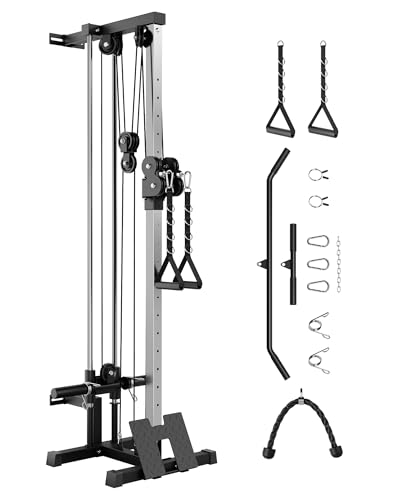
- 19 adjustable cable positions
- Compact 6.16-square-foot footprint
- Includes multiple training attachments
Best For: Space-conscious home gyms using weight plates
Commercial-Style All-in-One
Functional Trainer Cable Machine

- Dual 180-pound weight stacks
- 17 adjustable cable positions
- 11-gauge steel frame
Best For: Dedicated home gyms seeking a heavy freestanding trainer
Fold-Flat Versatility Pick

- 26 height and 13 angle settings
- Folds flat against the wall
- Switches between 2:1 and 1:1 ratios
Best For: Compact home gyms needing adjustable full-body training
Space-Smart Versatility

- High and low pulley system with 15 adjustment levels
- Compact triangular frame for home gyms
- Includes bars, handles, and triceps rope
Best For: Full-body cable training in a space-conscious home gym
Corner-Friendly Training
Mikolo Wall Mount Cable Station
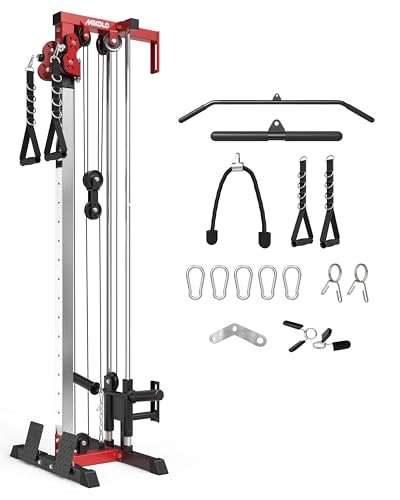
- Wall-mounted design saves floor space
- 19 adjustable pulley positions
- Includes three core cable attachments
Best For: Compact home, garage, or office gyms
Heavy-Duty Resistance

- Two integrated 160-pound weight stacks
- Swiveling adjustable pulleys and chinning bar
- Heavy 11-gauge steel construction
Best For: High-use home or commercial training spaces
Best Overall – Body-Solid Powerline Functional Trainer
The Body-Solid Powerline is a substantial choice for cable crossover machines for strength training, combining dual independent weight stacks with high and low pulley exercise options. Its broad exercise selection suits users who want one machine for full-body training.
Best For: Home or commercial gyms seeking a durable, versatile functional trainer with dedicated resistance on each side.
Pros:
- Dual independent 160-pound weight stacks support isolateral movements.
- Enables a wide range of exercises, including crossovers, rows, presses, pulldowns, and kickbacks.
- Heavy-duty alloy-steel construction with an extra-wide frame.
- Includes a 10-year frame warranty and 1-year parts warranty.
Cons:
- Large 42.3-by-62.6-by-83-inch footprint may require considerable floor space.
- At 476 pounds, it is difficult to move after assembly.
- The listed 1/2:1 weight ratio provides less cable resistance than a 1:1 system.
This is a strong all-around pick when stability, exercise variety, and a traditional dual-stack setup matter more than compact dimensions.
Most Versatile – WM3-V4 Folding Cable Rack
The WM3-V4 combines a folding squat rack, dual cable crossover, functional trainer, lat pulldown, and pull-up station. For shoppers comparing cable crossover machines for strength training, its multiple configurations offer a way to accommodate varied workouts in a relatively compact setup.
Best For: Space-conscious home gym users who want rack-based strength training and cable work in one system.
Pros:
- Folds to a stated 4.3 square feet and expands to 12.3 square feet when deployed.
- Offers five configurations, including half rack, functional trainer, and cable crossover modes.
- Dual independent 1:1 pulleys support simultaneous training and heavy cable movements.
- Provides 15 pulley height positions and supports more than 80 listed exercises.
Cons:
- Requires installation and ships in two boxes.
- Its many functions may involve more setup changes than a dedicated crossover machine.
- The supplied notes list a 1-year warranty, shorter than some competing options here.
With its folding design and integrated rack, this model is especially appealing when floor space is limited but exercise variety remains a priority.
Best Wall-Mounted Pick – GOIMU WM1 Cable Station
The GOIMU WM1 is a wall-mounted option for cable crossover machines for strength training, with dual pulleys, 17 height positions, and a compact installation profile. Its included bars, rope, and handles support a broad selection of cable movements.
Best For: Garage, apartment, or home gym users who have a suitable concrete or masonry wall and need to conserve floor space.
Pros:
- Wall-mounted design uses a stated 3.28-square-foot footprint.
- Dual pulley settings can switch between 1:1 and 2:1 ratios.
- Seventeen height positions allow varied angles for presses, rows, and flys.
- Includes a lat pull bar, cable bar, triceps/biceps rope, and dual-grip handles.
Cons:
- Installation is specified for concrete or masonry walls, limiting placement flexibility.
- Its listed maximum weight recommendation is 300 pounds.
- Wall mounting may require more planning than a freestanding machine.
This compact station makes the most sense for users who can mount it securely and want broad cable functionality without dedicating much floor area.
Best Smooth-Action Option – Body-Solid Best Fitness Trainer
The Body-Solid Best Fitness Functional Trainer focuses on smooth pulley movement and broad exercise coverage. Among cable crossover machines for strength training, it stands out for its swiveling pulleys, sealed ball bearings, and straightforward full-body training format.
Best For: Home gym users who prioritize smooth cable travel and a traditional high-and-low pulley layout.
Pros:
- Eight sealed ball-bearing pulleys and nylon bushing technology are designed for smooth operation.
- Top and bottom pulleys swivel through more than 180 degrees.
- Supports exercises including flys, rows, presses, pulldowns, crunches, and kickbacks.
- Includes a 10-year frame warranty and 1-year parts warranty.
Cons:
- The listed 112-by-39-by-82-inch dimensions require substantial width.
- Its listed 133-pound maximum weight recommendation is lower than several options in this roundup.
- The supplied specifications show a fixed-handle setup rather than independently adjustable handles.
This is a sensible choice for users who want a conventional functional trainer with smooth, multidirectional pulley movement and a strong exercise library.
Space-Smart Strength Station – Wall-Mount Dual Pulley
If you need cable crossover machines for strength training but have limited floor space, this wall-mounted dual-pulley station is a practical option. Its 19 height positions, rotating mounting brackets, and support for up to 400 pounds create flexibility for movements ranging from rows and presses to pulldowns and face pulls.
Best For: Home gyms that prioritize a compact footprint, broad attachment selection, and adjustable cable positioning.
Pros:
- Uses about 6.16 square feet of floor space and includes a fold-down footplate.
- Offers 19 adjustable positions with 360-degree rotating mounting brackets.
- Includes handles, triceps rope, T-bar, and lat pulldown bar; the weight bar accepts 1-inch and 2-inch plates.
- Supports a listed maximum load of 400 pounds and uses carbon-steel construction.
Cons:
- Requires secure wall installation, so it is less portable than a freestanding machine.
- Only a 30-day manufacturer warranty is listed.
This model makes the most sense when efficient use of wall and floor space matters more than having built-in weight stacks. Verify your wall and plate setup before buying.
Commercial-Style All-in-One – Functional Trainer Cable Machine
For shoppers comparing cable crossover machines for strength training, this functional trainer offers a more substantial freestanding setup with dual 180-pound weight stacks and 17 adjustable cable positions. Its 2:1 resistance ratio, height-adjustable handles, and full-body exercise range suit both beginners and experienced users.
Best For: Dedicated home gyms wanting a sturdy, stack-loaded functional trainer with precise adjustments.
Pros:
- Provides dual 180-pound weight stacks and 17 cable positions for varied training.
- Uses laser-etched markings and pre-lubricated uprights for easier setup and adjustments.
- Constructed from 11-gauge steel with aluminum pulleys designed for smooth cable movement.
- Includes D-handles, additional grip options, and a mountable 15-exercise diagram.
Cons:
- At 855 pounds, it is far less practical to move than a wall-mounted unit.
- Its 65-inch width and nearly 85-inch height require substantial dedicated space.
This is the strongest fit for a permanent training area where stability, integrated weight stacks, and commercial-style construction are priorities. Measure ceiling and floor clearance carefully before delivery.
Fold-Flat Versatility Pick – GMWD Wall-Mount Cable Machine
This GMWD station is a versatile choice among cable crossover machines for strength training, combining dual swivel arms with 26 height holes and 13 arm-angle settings. The wall-mounted design folds flat when not in use, while selectable 2:1 and 1:1 cable ratios let you adjust resistance feel for different exercises.
Best For: Home users who want many exercise configurations in a foldable, wall-mounted station.
Pros:
- Supports more than 100 listed exercises, including flys, presses, curls, pulldowns, and woodchoppers.
- Provides 26 height adjustment holes, 13 arm-angle settings, and 180-degree arm movement.
- Folds against the wall and supports both 2:1 and 1:1 cable ratios.
- Includes a lat bar, cable bar, dual-cable bracket, leg holder, and wall-mounting hardware for wood and concrete.
Cons:
- Wall mounting is required, and installation must be secure before use.
- The listed one-year manufacturer warranty is shorter than the three-year parts and lifetime-frame coverage of some larger trainers.
- It has a listed maximum weight recommendation of 350 pounds, below its 400-pound counterpart.
Choose this model if adjustability and storage are more important than a freestanding frame. Its selectable cable ratios and folding arms make it particularly adaptable for varied home workouts.
Space-Smart Versatility – CC01 Functional Trainer
The CC01 is a practical option among cable crossover machines for strength training, combining high and low pulleys, pull-up bars, and multiple attachments in a relatively compact frame. Its 15 adjustment levels support exercises such as rows, pulldowns, chest flyes, triceps pushdowns, and leg work.
Best For: Home-gym users who want broad full-body exercise coverage in a space-efficient machine.
Pros:
- Supports rows, pulldowns, pull-ups, flyes, pushdowns, and lower-body cable exercises.
- Compact 12.1-square-foot footprint with a triangular frame for stability.
- Includes a lat pulldown bar, low row bar, triceps rope, cable handles, and pull-up handles.
- PU-coated cables, premium pulleys, and 15 height positions are designed for smooth, adjustable training.
Cons:
- Assembly is recommended for two to three people and takes approximately 1.5 hours.
- The main frame weighs 146 pounds, so positioning it may require assistance.
The CC01 balances exercise variety, adjustability, and footprint efficiently. Its included accessories and pull-up capability make it a versatile choice for users building a compact home training setup.
Corner-Friendly Training – Mikolo Wall Mount Cable Station
The Mikolo wall-mount station is designed for shoppers comparing cable crossover machines for strength training where floor space is limited. Its dual adjustable pulley system offers 19 height positions, while the rotating brackets and included attachments support unilateral and bilateral exercises.
Best For: Garage, office, or home gyms that need a compact cable station installed against a wall or in a corner.
Pros:
- Wall-mounted design helps conserve floor space.
- Dual pulleys provide 19 height positions for varied training angles.
- Includes a lat bar, cable bar, triceps rope, adjustable strap handles, and plate sleeves.
- Commercial-grade 14-gauge steel frame, H-shaped base, and cables rated for a 400-pound maximum load.
Cons:
- Wall installation is required, so placement depends on a suitable mounting location.
- Its compact dimensions may provide less open training space than a freestanding crossover frame.
The Mikolo focuses on efficient installation and adjustable pulley training rather than a large standalone footprint. It is a sensible fit for users who prioritize corner placement, attachment variety, and flexible cable height.
Heavy-Duty Resistance – Body-Solid GFT100
The Body-Solid GFT100 is a substantial functional trainer for shoppers seeking cable crossover machines for strength training with built-in weight stacks. Dual 160-pound stacks, swiveling pulleys, an integrated chinning bar, and multiple attachments support a broad range of home or commercial-gym exercises.
Best For: Serious home or commercial users who want a robust, full-featured functional trainer with integrated resistance.
Pros:
- Includes two 160-pound weight stacks with a 1:2 resistance ratio.
- 11-gauge, 2-by-3-inch steel construction supports demanding use.
- Swiveling adjustable pulleys and integrated chinning bar expand exercise options.
- Includes stirrup handles, triceps rope, chin-and-dip belt, and double swivel bar.
Cons:
- At approximately 633 pounds, it is difficult to move after setup.
- Its 45.1-by-64-by-83-inch dimensions require considerably more room than compact cable stations.
- Optional weight-stack shrouds are listed separately rather than as standard equipment.
The GFT100 emphasizes durability, built-in resistance, and long-term versatility. Its size and weight make it less suitable for tight spaces, but they may appeal to users who want a stable machine for frequent, intensive training.
How We Picked These Cable Crossover Machines for Strength Training
We evaluated these machines by focusing on the features that most affect daily training: pulley adjustability, cable travel, attachment compatibility, frame design, weight-stack or plate-loading configuration, footprint, and installation requirements. We also considered whether each unit suits progressive strength work, functional movements, and varied user heights.
Because specifications and included accessories can vary by configuration, verify the manufacturer’s current dimensions, resistance capacity, warranty, and mounting requirements before ordering. Wall-mounted models generally need a suitable structural surface and careful installation, while freestanding trainers require more floor space but may offer easier placement.
Quick Comparison
- Best for broad exercise variety: Full functional trainers with dual adjustable pulleys and integrated pull-up bars.
- Best for smaller rooms: Wall-mounted cable stations with multiple height positions.
- Best for strength-focused users: Models with substantial weight stacks, smooth cable travel, and a stable frame.
- Best for flexibility: Systems with swivel arms, numerous pulley positions, and widely compatible attachments.
- Best for combined rack training: Squat-rack and pulley combinations that consolidate several gym functions.
Key Buying Factors
Adjustability and Exercise Range
Look for independent pulley adjustment and enough height positions for presses, rows, flyes, pulldowns, lateral raises, and low cable work. Dual independent systems allow bilateral or unilateral training and make it easier to accommodate different body sizes.
Resistance and Progression
Compare the weight-stack rating, resistance ratio, and whether the machine uses selectorized stacks, plates, or both. A smooth system with manageable increments is often more useful than a very high stated capacity that feels inconsistent through the range of motion.
Space, Mounting, and Stability
Measure ceiling height, wall width, surrounding clearance, and the machine’s full cable travel. Wall-mounted units save floor space but must be secured to appropriate framing. Freestanding trainers need a stable, level floor and enough room for the user to move safely around the cables.
Build Quality and Accessories
Inspect the frame, pulley housings, cable construction, adjustment hardware, and included handles. A pull-up bar, footplate, ankle strap, straight bar, or lat attachment can expand usefulness, but confirm exactly what comes in the selected bundle.
Who Should Buy Which Cable Crossover Machines for Strength Training?
Choose a wall-mounted station if floor space is limited and you are comfortable with permanent installation. These models work well for home gyms that prioritize adjustability without adding a large freestanding frame.
Choose a full functional trainer if multiple users need a durable, versatile setup for frequent full-body training. Dual stacks and integrated pull-up features can justify the larger footprint.
Choose a rack-and-pulley combination if you want to combine barbell squats, pressing, pull-ups, and cable exercises in one station. It is especially practical when consolidating equipment matters more than having a dedicated crossover frame.
Before checkout, confirm assembly support, replacement-part availability, ceiling clearance, and the return policy. Those details can matter as much as the advertised number of adjustment positions.