If you want a faster, less tiring way to loosen tight muscles, an electric foam roller can be a smart upgrade from a traditional roller. The best models add vibration, automation, or percussion to help target soreness with less effort.
Below, we focus on the top options for recovery, comfort, and ease of use so you can quickly find the right fit for your routine and budget.
Best 10 Electric Foam Roller Picks for 2026
App-Controlled Premium Pick

- Bluetooth app control with 5 vibration settings
- Wave texture and silicone grooves improve traction
- 180-minute battery life for longer sessions
Best For: Buyers who want premium app control and textured rolling
Rolling Pressure Recovery Pick
Electric Muscle Roller for Legs and Back

- Rolling massage emphasizes controlled pressure over vibration
- 3 speed settings for lighter or deeper recovery
- Rechargeable portable design with Type-C charging
Best For: Users who want controlled rolling massage for post-workout recovery
Spine-Friendly Contoured Pick

- Contoured shape targets muscles beside the spine
- 5 app-adjustable vibration settings
- 200-minute battery life with EVA foam construction
Best For: Targeted back and neck relief without direct spine pressure
High-Intensity Recovery Pick
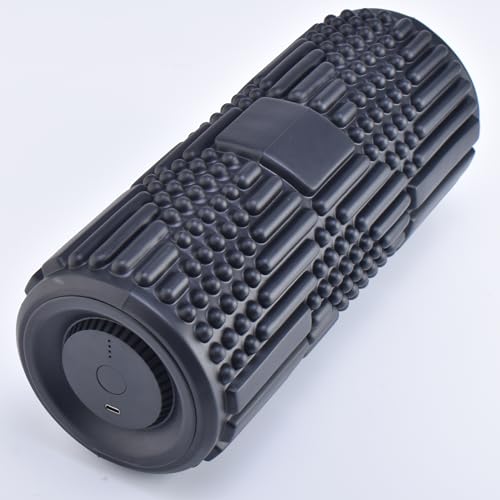
- 5 vibration modes for adjustable intensity
- Multi-zone EVA surface targets key muscles
- Rechargeable and travel-friendly 13-inch design
Best For: Athletes wanting targeted vibrating recovery for multiple muscle groups
Hands-Free Recovery Upgrade

- Hands-free rolling with app-controlled programs
- Supports up to 300 lb and runs below 45 dB
- Long battery life in a portable 5.4 lb design
Best For: Users who want automated recovery with minimal effort
Durable Deep-Tissue Choice
Rechargeable 5-Speed Vibrating Roller

- 5 speeds plus variable mode for customization
- 4000 mAh battery lasts 4 to 8 hours
- High-density EVA foam is built for durability
Best For: People seeking a portable vibrating roller for recovery and flexibility work
Rolling Percussive Recovery
Chirp RPM Rolling Percussive Massager

- Combines percussion and rolling pressure
- 5 intensity levels with reversible spin
- Hands-free base for easier use
Best For: Athletes and recovery-focused users who want targeted leg, back, and full-body relief
Vibrating Full-Body Roller
High-Density Vibrating Foam Roller Black

- Five vibration levels up to 3200RPM
- Wave texture for traction and pressure
- Three density patterns for versatile use
Best For: Full-body recovery and users who want a rechargeable vibrating roller
Shoulder Focus Roller
High-Density Vibrating Foam Roller Blue
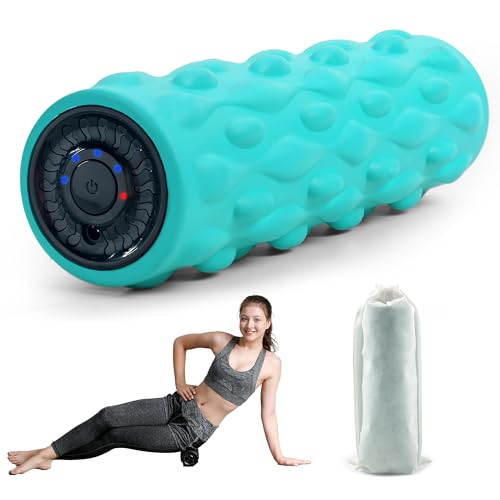
- Five vibration settings for recovery
- Wave grooves add traction and pressure
- Lightweight with portable carrying bag
Best For: Shoulder-focused recovery and portable vibration massage
Extra-Long High-Intensity Pick – Vulken 17" Vibrating Foam Roller
If you want an electric foam roller that can cover more muscle in fewer passes, this extra-long vibrating model is built for large-area recovery. The 17-inch length makes it easier to roll your back, quads, hamstrings, or calves with less repositioning, while the 4-speed vibration settings let you scale intensity from warm-up to deeper relief.
Best For: Bigger athletes, full-back coverage, and leg recovery sessions.
Pros:
- 17-inch full-size design rolls wider areas, including both legs at once.
- 4 vibration settings, including an auto pulsating mode, add flexibility to recovery.
- 3800RPM motor is made for high-intensity vibration and muscle relief.
- Lighter 2.1-lb build includes a carrying bag for portability.
Cons:
- Longer size may be less convenient for tight storage spaces.
- Firm feel and strong vibration may be more than some users want for light use.
This is a straightforward choice if your priority is coverage and power over compactness. The longer format and strong vibration make it especially practical for larger muscle groups and post-training recovery.
App-Controlled Premium Pick – Therabody WaveRoller
This electric foam roller is aimed at users who want a more premium, app-connected recovery tool for large muscles and full-body rolling. The WaveRoller combines high-density EVA foam with silicone wave grooves and 5 vibration settings, giving you a more guided way to loosen soreness and improve range of motion.
Best For: Users who want app control, textured rolling, and a premium build.
Pros:
- Bluetooth-enabled control through the Therabody app with 5 adjustable vibration settings.
- Wave texture and silicone grooves provide traction and added pressure detail.
- High-density EVA foam is designed for sound insulation and a firmer rolling feel.
- 180-minute battery life supports longer recovery sessions.
Cons:
- Smaller 12″ x 5″ size may not cover as much area as extra-long rollers.
- Premium feature set may be more than basic users need.
For buyers who value customization and a refined rolling experience, this stands out as a well-equipped option. It’s especially compelling if you already use Therabody products or want app-based vibration control.
Rolling Pressure Recovery Pick – Electric Muscle Roller for Legs and Back
If you prefer rolling pressure over vibration, this electric foam roller takes a different approach to post-workout recovery. It’s designed to deliver controlled rolling massage for legs, calves, back, shoulders, and neck, with 3 speed settings so you can match the intensity to your routine.
Best For: Athletes who want steady rolling pressure instead of percussion or vibration.
Pros:
- Rolling massage delivers targeted pressure with more control than percussion-style devices.
- 3 speed settings help tailor lighter activation or deeper recovery.
- Portable rechargeable design uses Type-C charging for easier everyday use.
- Targets multiple areas including thighs, calves, lower back, shoulders, and neck.
Cons:
- Battery life is about 1 hour, so it’s better suited to shorter sessions.
- Smaller handheld format may not feel as expansive as full-length rollers.
This is a useful pick if you want a compact recovery tool with a more controlled feel. Its rolling action and simple speed options make it practical for home, gym, or travel use.
Spine-Friendly Contoured Pick – Therabody WaveDuo
This electric foam roller is designed for targeted relief along the back, neck, and spine rather than broad full-body rolling. Its contoured shape sits on either side of the spine, and the 5 vibration settings in the Therabody app let you adjust the feel to match soreness, tension, or mobility work.
Best For: Back and neck relief with a shape that avoids direct spine pressure.
Pros:
- Ergonomic contour is built to target muscles beside the spine.
- 5 vibration settings can be adjusted in the Therabody app.
- Hypo-allergenic EVA foam with silicone wave grooves adds grip and texture.
- 200-minute battery life supports extended use.
Cons:
- Designed mainly for back and neck, not full-body rolling.
- Contoured shape is more specialized than a standard cylindrical roller.
If your main goal is targeted upper-back and neck work, this is the most specialized option here. Its shape is the key feature, making it easier to focus on problem areas without extra pressure on the spine itself.
High-Intensity Recovery Pick – VibePro Flow Vibrating Roller
If you want an electric foam roller that can handle warmups, recovery, and everyday muscle care, the VibePro Flow is built for versatile use. Its 5 vibration modes and multi-zone EVA surface let you adjust intensity and target different areas without changing tools.
Best For: Athletes and active users who want a portable vibrating roller for back, legs, shoulders, and full-body recovery.
Pros:
- 5 vibration modes from 2000 to 3700 RPM for different intensity needs
- Multi-zone surface pattern adds targeted pressure across major muscle groups
- Rechargeable design with quick 3.5-hour USB charging
- Compact 13-inch size makes it easy to pack for the gym or travel
Cons:
- Smart 15-minute timer may feel short for longer recovery sessions
- Firm feel may not suit users who prefer very soft rolling
This is a practical pick if you want one vibrating foam roller that can switch from gentle prep to deeper pressure work. The combination of portability, multiple modes, and focused surface design makes it a strong all-around recovery tool.
Hands-Free Recovery Upgrade – RheoFit A1 Automatic Roller
If you want an electric foam roller that does the work for you, the RheoFit A1 stands out with hands-free automatic rolling and app control. It is designed for users who want consistent motion for recovery without the awkward positioning or effort of manual rolling.
Best For: People who want a fully automatic massage roller for recovery at home, the office, or while traveling.
Pros:
- Hands-free 10-minute sessions let you relax while the roller works
- App-controlled programs and 3 speeds offer simple customization
- Supports up to 300 lb with quiet operation below 45 dB
- Portable 5.4 lb build and long battery life make it easy to move around
Cons:
- Requires an app, which may not appeal to users who want a simple manual tool
- Heavier and less traditional than a standard foam roller
The A1 is a strong choice if convenience matters more than a basic roller shape. Its automatic motion, two cover options, and quiet operation make it especially appealing for repeat daily use.
Durable Deep-Tissue Choice – Rechargeable 5-Speed Vibrating Roller
This electric foam roller is a good fit if you want a straightforward vibrating option for warmups, recovery, and general tension relief. With 5 speeds plus a variable mode, it gives you enough range to keep sessions gentle or make them more intense depending on your workout.
Best For: Users who want a durable vibrating roller for post-workout recovery, flexibility work, and travel-friendly use.
Pros:
- 5 adjustable speeds plus 1 variable mode for flexible intensity control
- 4000 mAh battery delivers 4 to 8 hours of use per charge
- High-density EVA foam is designed to hold its shape over time
- Lightweight, rechargeable design is easy to take to the gym or class
Cons:
- Strong vibration may be too much for users who prefer gentler massage
- Best usage time is listed within 15 minutes, so it is built for shorter sessions
Overall, this model is a practical pick for buyers who want a durable, portable recovery roller with strong vibration options. It covers the basics well and should suit users focused on post-exercise muscle relief.
Rolling Percussive Recovery – Chirp RPM Rolling Percussive Massager
If you want an electric foam roller-style recovery tool with more bite than a standard roller, this rolling percussive massager blends high-speed percussion with rolling pressure for targeted relief. It’s designed to help loosen tight muscles after workouts or long days on your feet, while the hands-free base makes it easier to use across different body areas.
Best For: Athletes, recovery-focused users, and anyone who wants a hands-free roller for legs, back, and full-body tension relief.
Pros:
- Combines percussion and rolling pressure for deep tissue massage
- Five intensity levels plus reversible spin for more control
- Hands-free base makes self-massage easier
- Wide roller design covers larger muscle areas
Cons:
- Heavier than a typical handheld roller at 7 pounds
- Battery-powered design may not suit users who prefer corded power
This is a strong pick if you want a more powerful, targeted recovery tool than a basic foam roller. Its combination of adjustability, wide coverage, and cordless convenience makes it especially practical for regular post-workout use.
Vibrating Full-Body Roller – High-Density Vibrating Foam Roller Black
This electric foam roller adds vibration to a textured foam surface, giving you a more active rolling experience for muscle recovery and pain relief. With multiple speeds and a wave-style design, it’s built for users who want broader coverage across large muscle groups instead of a simple manual roller.
Best For: Full-body recovery, gym use, and users who want a rechargeable vibrating roller with customizable intensity.
Pros:
- Five vibration settings from 1500RPM to 3200RPM
- Wave foam texture adds traction and pressure variation
- Three density patterns for different body areas
- Rechargeable design includes a carrying pouch
Cons:
- May be more feature-heavy than users need for simple rolling
- At 13 x 4.5 inches, it’s less compact than a small handheld massager
If you want a vibrating foam roller that can handle a wide range of muscle groups, this model stands out for its adjustable intensity and versatile density zones. It’s a practical option for people who use rolling as part of workouts, yoga, pilates, or physical therapy.
Shoulder Focus Roller – High-Density Vibrating Foam Roller Blue
This electric foam roller uses the same vibrating wave-roller design as the black version, but it’s presented here as a shoulder-focused option. The textured foam surface, adjustable speeds, and compact build make it a useful choice when you want targeted relief for shoulders and nearby muscle groups.
Best For: Shoulder work, compact recovery sessions, and users who want a portable vibrating roller with adjustable speeds.
Pros:
- Five vibration settings for customizable recovery
- Wave grooves help improve traction and pressure delivery
- High-, medium-, and low-density zones support varied use
- Lightweight 2.2 lb build with portable bag
Cons:
- Best aligned to shoulder use rather than all-over rolling
- Smaller 13 x 4.5 inch size may limit coverage for larger users
For shoppers who want a portable vibrating foam roller with a more targeted feel, this blue model is a sensible pick. It keeps the same recovery-friendly features as the black version while fitting especially well into shoulder-focused routines.
How We Picked the Best Electric Foam Roller Options
We prioritized recovery performance, build quality, comfort, and ease of use. For this roundup, we looked for models that offer meaningful vibration or automatic rolling, practical speed settings, and designs suited to common trouble spots like the back, calves, quads, and neck. Rechargeable power, portability, and control layout also mattered.
Quick Comparison: What Matters Most
Some Electric Foam Roller designs are made for hands-free full-body use, while others work better as handheld or contoured tools for targeted pressure. Vibrating rollers are usually the most familiar choice and can feel easier to control, while automatic rollers and percussion-style models often deliver a more assisted massage. If you want simple post-workout recovery, a standard vibrating roller is a safe starting point. If you want less manual effort, look for automatic or hands-free options.
Key Buying Factors for an Electric Foam Roller
Massage Style
Choose between vibration, automatic rolling, or percussion based on how much control you want. Vibration is best for broad muscle relief; automatic rolling can reduce effort; percussion tends to feel more intense.
Speed and Intensity Settings
More settings help you match the roller to different body areas. Lower speeds are usually better for sensitive spots, while higher settings can help with larger muscle groups.
Shape and Coverage
Long rollers suit the back and legs, while contoured or handheld designs are better for targeted work. If you want one tool for multiple areas, make sure the shape supports both balance and reach.
Battery Life and Charging
Rechargeable models are the most convenient for frequent use. Check charging time and runtime if you plan to use your Electric Foam Roller several times a week.
Noise, Grip, and Portability
A quieter roller is better for home use, and a stable grip matters when working on harder-to-reach muscles. If you travel, weigh size and carry convenience against performance.
Who Should Buy Which Electric Foam Roller?
A vibrating model is a strong choice for most users who want general recovery after workouts. If you need a more hands-free experience, an automatic roller may be worth the premium. Athletes and frequent trainers often benefit from higher-intensity settings, while beginners should start with simpler, lower-vibration options. If your main goal is back, neck, or spine relief, contoured designs may feel more natural and controlled.
Overall, the best Electric Foam Roller is the one that matches your recovery style, tolerance for intensity, and the body areas you use it on most often.