The best lightweight fitness trackers make everyday health data easier to follow without the bulk of a full smartwatch. This roundup compares 10 options across comfort, activity tracking, sleep features, battery life, displays, and smart coaching.
Whether you want a simple step counter, a discreet band for sleep tracking, or a more advanced wearable with personalized insights, use the guide below to narrow your choices by features and budget.
Best 10 Lightweight Fitness Trackers Picks for 2026
Long-Battery AMOLED Pick

- Up to 21-day battery life
- Bright 1.72-inch AMOLED display
- Multi-sport and sleep tracking
Best For: Long battery life and a large, readable screen
Simple Budget Tracker
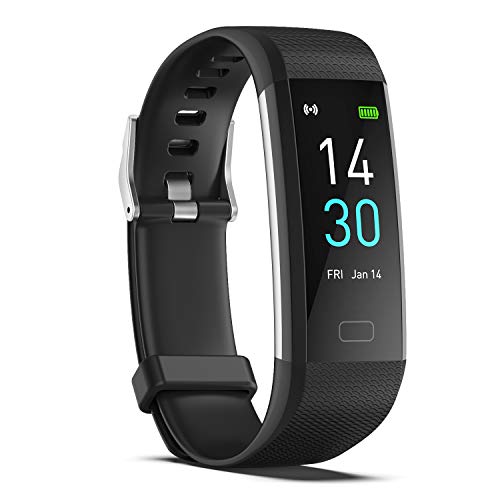
- Slim 1.8-ounce design
- 16 sports modes and notifications
- Approximately 5–7 days of battery
Best For: Basic daily tracking on a slim, budget-friendly band
Balanced Wellness Choice

- Up to 10 days of battery life
- 40-plus exercise modes and auto tracking
- Sleep, stress, and readiness insights
Best For: All-around wellness tracking in a compact band
Advanced Screenless Coach

- 14-plus days of battery life
- Screenless sleep and recovery tracking
- AI coaching from extensive health metrics
Best For: Training recovery and personalized app-based coaching
Best Overall

- Built-in GPS and 40+ exercise modes
- Sleep, stress, heart-rate, and readiness insights
- Up to seven days of battery life
Best For: Active users wanting detailed tracking and Google features
Best Large-Display Value

- 1.58-inch touchscreen with always-on clock
- 120+ exercise modes and all-day activity tracking
- Up to seven days of battery life
Best For: Users prioritizing screen size and broad sport tracking
Best No-Phone Simplicity

- Basic use does not require an app or phone
- Tracks heart rate, sleep, and daily activity
- Five to seven days of battery life
Best For: Beginners wanting simple, low-setup fitness tracking
Balanced Daily Monitor
AMOLED 25-Sport Fitness Tracker

- Tracks heart rate, blood pressure, blood oxygen, and sleep
- Includes 25 sports modes and smart notifications
- Up to 7 days of regular use with a 1.1-inch AMOLED screen
Best For: Everyday wellness tracking and varied workouts
Long-Lasting Waterproof Pick

- 5 ATM waterproofing for swimming and daily water exposure
- Tracks multiple health metrics, sleep, and 25 sports modes
- Up to 10–14 days of regular use and 30 days standby
Best For: Water activities and extended battery life
Connected Activity Companion

- 24/7 heart-rate and sleep tracking with 25 sports modes
- Connected GPS records workout routes through a phone
- IP68 water resistance and up to 7 days of battery life
Best For: Connected workouts and everyday activity reminders
Long-Battery AMOLED Pick – Xiaomi Smart Band 10
The Xiaomi Smart Band 10 is a strong choice among lightweight fitness trackers for shoppers who want a bright, responsive display and minimal charging. Its broad activity, sleep, and swimming features make it versatile for everyday wellness and training.
Best For: Users who prioritize long battery life, a large AMOLED screen, and multi-sport tracking.
Pros:
- Up to 21 days of battery life, with fast charging to full in about an hour.
- 1.72-inch AMOLED display with up to 1500 nits HBM brightness.
- Tracks activity, heart rate, blood oxygen, sleep, and multiple sports.
- 5ATM water resistance and a swimming-focused electronic compass.
Cons:
- No built-in GPS; satellite features depend on the stated device and app setup.
- The Xiaomi Fit app supports the metric system; imperial measurements may require a third-party connection.
The Smart Band 10 stands out for its combination of a readable display, extended battery, and broad fitness tracking. Consider it if you want smartwatch-style visibility without frequent charging.
Simple Budget Tracker – ENGERWALL Fitness Tracker
The ENGERWALL fitness tracker is a practical lightweight fitness tracker for basic daily activity monitoring. Its slim design, phone notifications, and health measurements cover common needs without adding much weight to the wrist.
Best For: Shoppers seeking an affordable, slim band for steps, sleep, notifications, and everyday activity.
Pros:
- Tracks steps, calories, distance, exercise time, heart rate, sleep, and blood oxygen.
- Slim, lightweight design weighs 1.8 ounces and fits wrists from 4.7 to 8.2 inches.
- Offers 16 sports modes, reminders, alarms, and call or message notifications.
- IP68 water resistance supports daily wear and swimming, with cautions against prolonged soaking or hot water.
Cons:
- Battery life is approximately 5–7 days.
- Connected GPS uses app-based phone positioning rather than built-in GPS.
- Blood pressure measurement must be enabled through the app.
This model makes sense for straightforward tracking and notification features at a low-complexity form factor. Its app-dependent GPS and shorter battery life are worth considering before purchase.
Balanced Wellness Choice – Fitbit Inspire 3
The Fitbit Inspire 3 is a well-rounded lightweight fitness tracker for people who want activity, sleep, stress, and exercise features in a compact band. It adds guided wellness tools and supports automatic exercise tracking for a more hands-off experience.
Best For: Users who want broad wellness insights, automatic activity tracking, and a familiar Fitbit ecosystem.
Pros:
- Up to 10 days of battery life and water resistance to 50 meters.
- Includes a Daily Readiness Score, Active Zone Minutes, 40-plus exercise modes, and automatic exercise tracking.
- Tracks sleep, stress, heart rate, blood oxygen, resting heart rate, and menstrual health.
- Includes a smart wake alarm, mindfulness sessions, and reminders to move.
Cons:
- GPS is provided through a connected smartphone rather than built into the tracker.
- The 0.76-inch display is smaller than the screen on some fitness bands.
- Compatibility requires Apple iOS 16.4 or higher or Android OS 11.0 or higher.
Inspire 3 is a sensible middle ground for shoppers who want more than step counting but still prefer a discreet band. Its phone-connected GPS is the main limitation for runners who want phone-free route tracking.
Advanced Screenless Coach – WHOOP 5.0/MG
WHOOP 5.0/MG takes a different approach to lightweight fitness trackers, using a screenless design and an included 12-month Peak membership to focus on continuous health data and coaching. It is built for users who prefer app-based insights about training, recovery, sleep, and habits.
Best For: Athletes and wellness-focused users who want personalized recovery coaching and continuous, screen-free tracking.
Pros:
- Screenless, lightweight design supports all-night wear and continuous monitoring.
- Offers 14-plus days of battery life and a waterproof wireless PowerPack that charges on the wrist.
- Tracks sleep stages, sleep need, sleep debt, recovery-related metrics, stress, heart rate, HRV, respiratory rate, blood oxygen, and skin temperature.
- Includes AI coaching, Healthspan insights, and menstrual-cycle and hormonal-health features.
Cons:
- The product is centered on a 12-month WHOOP Peak membership.
- There is no display for viewing data directly on the wrist.
- Its feature set is primarily accessed through the WHOOP app.
WHOOP 5.0/MG is best understood as a coaching and recovery platform rather than a conventional screen-based tracker. The membership model and screenless experience make it a more specialized choice, but the charging and analytics approach suits dedicated users.
Best Overall – Google Fitbit Charge 6
For shoppers comparing lightweight fitness trackers, the Google Fitbit Charge 6 offers a strong balance of workout tracking, health insights, navigation, and everyday smart features in a compact tracker format. It includes built-in GPS, 40+ exercise modes, sleep scoring, and up to seven days of battery life.
Best For: Active users who want detailed fitness tracking plus Google-connected features.
Pros:
- Built-in GPS, 40+ exercise modes, automatic exercise tracking, and all-day activity monitoring
- Tracks heart rate, sleep, stress management, Daily Readiness, and Active Zone Minutes
- Includes Google Maps directions, Google Wallet contactless payments, and YouTube Music controls
- Up to seven days of battery life with 50-meter water resistance
Cons:
- Some advanced coaching features require a separately sold Google Health Premium subscription
- Compatible phones require relatively recent Android or iOS versions
The Charge 6 is the most feature-rich option here for users who want a compact tracker that can handle workouts, recovery insights, navigation, and basic connected conveniences without moving to a larger smartwatch.
Best Large-Display Value – H32 Ultra Fitness Smartwatch
This H32 Ultra is a practical choice among lightweight fitness trackers for shoppers who prefer a larger screen and broad activity coverage. Its 1.58-inch display, 120+ exercise modes, health monitoring, and phone notifications make it suited to everyday use, though the supplied details do not identify built-in GPS.
Best For: Users who want a larger touchscreen, extensive sport-mode selection, and wrist notifications.
Pros:
- Large 1.58-inch high-resolution display with full-touch controls and an always-on clock
- Offers 120+ exercise modes plus all-day step, distance, and calorie tracking
- Monitors heart rate, blood oxygen, blood pressure, and sleep stages
- Supports incoming call and message notifications and offers up to seven days of battery life
Cons:
- The supplied details do not list built-in GPS
- Health readings are monitoring features and should not be treated as medical diagnoses
- The product listing repeats the notification bullet, so some feature details are limited
Choose this model if display size and sport-mode variety matter more than a slim band design or built-in route tracking. It provides a wide feature set for daily activity and notification checking.
Best No-Phone Simplicity – LIVIKEY Fitness Tracker Watch
The LIVIKEY tracker stands out among lightweight fitness trackers for its simple, watch-like approach. The product description says it does not require an app or smartphone connection for basic use, while still offering heart-rate and sleep monitoring, nine sport modes, activity tracking, and five to seven days of battery life.
Best For: Beginners and users who want straightforward fitness tracking without a required phone setup.
Pros:
- Basic fitness tracking does not require an app or smartphone connection
- Tracks heart rate, sleep, steps, calories, distance, and active time
- Includes nine sport modes, alarms, a stopwatch, breathing guidance, and sedentary reminders
- Offers five to seven days of use and an IP68 waterproof rating for everyday conditions
Cons:
- Only nine sport modes are listed, fewer than the other options in this roundup
- GPS is via a smartphone rather than built into the tracker
- It can display notifications but cannot make calls or send texts
This is the clearest pick for low-complexity tracking. It keeps core metrics accessible without a mandatory phone connection, while optional smartphone compatibility adds notifications and expanded settings when desired.
Balanced Daily Monitor – AMOLED 25-Sport Fitness Tracker
This lightweight fitness tracker is designed for everyday activity and wellness monitoring, combining continuous heart-rate, blood-pressure, and blood-oxygen tracking with sleep analysis. Its 1.1-inch AMOLED display, notification support, and 25 sports modes make it a practical option for users who want broad features in a compact wearable.
Best For: Everyday health tracking, sleep monitoring, and varied workouts.
Pros:
- Tracks heart rate, blood pressure, blood oxygen, and sleep stages.
- Offers 25 sports modes, including walking, running, dancing, and yoga.
- Supports call, text, and app notifications plus sedentary and water reminders.
- Provides up to 7 days of regular use and includes a bright AMOLED touch display.
Cons:
- Health measurements are intended for lifestyle tracking rather than medical diagnosis.
- Battery life is shorter with regular use than the stated standby time.
Choose this model if you want a feature-rich daily tracker with a clear screen and a broad selection of workout modes. It is especially useful for people who value notifications and reminders alongside basic fitness metrics.
Long-Lasting Waterproof Pick – Zeacool 5 ATM Fitness Tracker
For shoppers comparing lightweight fitness trackers for active, water-focused routines, this Zeacool model stands out with 5 ATM waterproofing, 25 sport modes, and a reported 10-to-14-day regular-use battery life. It also combines health readings, sleep scoring, and practical reminders in a 1.1-inch AMOLED touchscreen.
Best For: Swimming, outdoor activities, and longer stretches between charges.
Pros:
- 5 ATM waterproof design is intended for swimming, bathing, rain, and other water exposure.
- Monitors heart rate, blood oxygen, blood pressure, temperature, and sleep.
- Supports 25 sports modes and records steps, distance, and calories in the app.
- Offers up to 10–14 days of regular use and up to 30 days on standby.
Cons:
- The supplied information does not specify medical validation for its health measurements.
- Its Bordeaux color may not suit shoppers seeking a neutral finish.
This is a strong fit when water resistance and battery endurance matter more than having the smallest possible feature set. Its reminders, weather display, remote photography, and menstrual-cycle tracking add useful everyday functionality.
Connected Activity Companion – IP68 AMOLED Fitness Tracker
This lightweight fitness tracker focuses on connected daily activity, pairing 24/7 heart-rate monitoring with sleep analysis, 25 sports modes, and smartphone notifications. The 1.1-inch AMOLED display and IP68 water resistance make it a versatile choice for routine workouts and day-to-day wear.
Best For: Users who want activity goals, connected GPS workout records, and smart reminders.
Pros:
- Tracks continuous heart rate, steps, calories, sleep duration, and sleep stages.
- Includes 25 sports modes and can record workout routes using connected GPS.
- Provides weather updates, hydration and sedentary reminders, remote camera control, and female health tracking.
- Supports IP68 water resistance and up to 7 days of battery life.
Cons:
- Connected GPS requires a paired smartphone rather than built-in GPS.
- Battery life is listed at up to 7 days of regular use, so frequent charging may still be needed.
- Sleep and health readings should be treated as reference information, not medical advice.
This model makes sense for shoppers who want a broad set of phone-connected features without moving to a larger smartwatch. Its route recording, notifications, reminders, and customizable watch face give it a practical everyday focus.
How We Picked These Lightweight Fitness Trackers
We focused on wearables that are slim or relatively light enough for continuous use, including during sleep and exercise. We compared the stated tracking features, display design, battery claims, water resistance, phone requirements, subscription costs, and compatibility considerations. Because health sensors and app features can vary by software version, treat blood pressure and blood oxygen readings as wellness estimates rather than medical diagnoses.
We also included a range of designs: established models from Xiaomi, Fitbit, and WHOOP, plus simpler fitness bands and watch-style trackers. That makes it easier to choose based on how much data, coaching, and convenience you actually need.
Quick Comparison
| Best For | Look For | Trade-Off |
|---|---|---|
| Simple daily activity | Step, distance, and calorie tracking | Fewer advanced insights |
| Sleep and recovery | Comfortable band, sleep metrics, long battery | May require an app or membership |
| Workouts | Heart-rate tracking, sports modes, GPS support | More features can mean shorter battery life |
| Smartwatch-style use | Larger AMOLED display and notifications | Usually less discreet than a slim band |
Key Buying Factors for Lightweight Fitness Trackers
Comfort and Fit
A tracker should sit securely without pinching or sliding. Look for adjustable bands, a low-profile body, and a weight you will tolerate overnight. A comfortable device is more useful than one with impressive specifications that stays in a drawer.
Tracking Accuracy and Sensors
Heart-rate monitoring is useful for trends and workout intensity, while step counts are best treated as estimates. If a product lists blood pressure or blood oxygen monitoring, check how those measurements are produced and whether the manufacturer describes them as medical-grade. Built-in GPS can improve outdoor workout records, but phone-connected GPS may be sufficient for casual users.
Battery, Display, and Phone Dependence
Long battery life reduces charging interruptions, especially for sleep tracking. AMOLED screens are bright and attractive but can use more power. Also check whether the tracker requires a phone nearby, an app account, or a paid membership for core insights. WHOOP-style services, for example, may place more features behind a subscription than traditional fitness bands.
Water Resistance and Durability
For swimming, showers, or sweaty workouts, verify the stated water-resistance rating and its limits. Water resistance is not the same as waterproofing, and salt water, hot tubs, and high-pressure water can still cause damage.
Who Should Buy Which Lightweight Fitness Trackers?
Choose the Xiaomi Mi Smart Band 10 if you want a feature-rich band, a bright display, and extended battery life. Fitbit Inspire 3 suits buyers who prefer a compact, established tracker with sleep and activity insights, while the Fitbit Charge 6 is a better fit for users who want a larger display and broader workout functionality.
WHOOP 5.0/MG is aimed at serious training and recovery-focused users who value coaching and are comfortable with a membership model. A basic step-and-calorie tracker is more appropriate for anyone who wants simple activity feedback without paying for advanced analytics.
Finally, consider the watch-style options if you want an on-device screen, multiple sports modes, or health-monitoring features at a lower upfront price. Prioritize verified compatibility, return policies, and app quality before relying on unfamiliar brands for long-term health data.