The best smart scales for athletes do more than display body weight. They can help track trends in body fat, muscle mass, BMI, and other measurements between training blocks, provided you use consistent testing conditions.
We compared 10 connected scales across measurement features, app support, display design, connectivity, and athlete-friendly usability. Use the guide below to choose the right balance of data, convenience, and value for your routine.
Best 10 Smart Scales for Athletes Picks for 2026
Full-Body Tracking Pick
Arboleaf Dual-Frequency 8-Electrode Scale
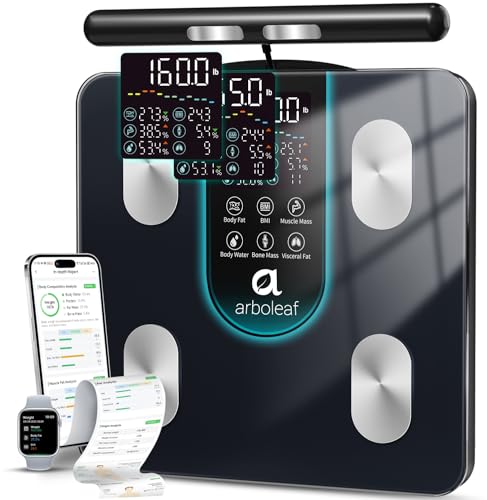
- Seven metrics appear directly on the scale
- 50+ app metrics with segmental views and reports
- Supports up to 400 pounds and eight stored profiles
Best For: Athletes wanting detailed full-body trend tracking
Gym-Friendly Analysis Pick
RENPHO MorphoScan Body Composition Scale
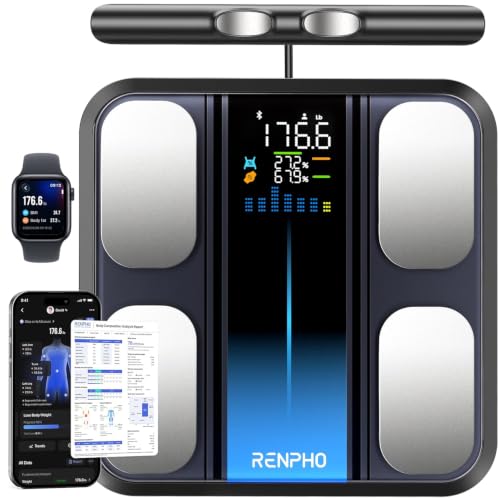
- Eight-electrode segmental BIA with dual-frequency technology
- App offers reports and major fitness-app syncing
- 400-pound capacity with up to 130 days of battery life
Best For: Fitness users and shared home or gym spaces
Athlete-Mode Value Pick
Arboleaf 8-Electrode Body Fat Scale

- Standard and Athlete Modes support different user types
- Choose a 34-metric or 50-metric app dashboard
- Retractable handle and 400-pound capacity suit home use
Best For: Training-focused users wanting athlete-specific trend tracking
Connected Display Pick

- Wi-Fi and Bluetooth provide automatic data syncing
- TFT display shows seven customizable health metrics
- Athlete Mode, rechargeable battery, and 400-pound capacity
Best For: Active users wanting connected, low-maintenance tracking
Most Detailed Segmental Tracking

- 8-electrode segmental BIA estimates
- Tracks 50 body-composition metrics
- App charts and up to nine profiles
Best For: Athletes wanting detailed long-term composition trends
Best At-a-Glance Display

- Large 5.3-inch color screen
- Displays eight metrics instantly
- Syncs with major fitness apps
Best For: Athletes who want fast, visible feedback
Best for Health-Focused Tracking

- Tracks weight trends to 50 grams
- Measures heart rate at weigh-in
- Wi-Fi and Bluetooth connectivity
Best For: Athletes seeking broader health insights
App-Connected Precision

- 13 biometrics with 0.05 lb precision
- Syncs with major fitness apps and Apple Watch
- Includes Zero-Current, Baby, and Light Items modes
Best For: Athletes wanting precise, connected progress tracking
Everyday Fitness Tracking

- Tracks 13 metrics in the RENPHO Health app
- Syncs with Apple Health, Samsung Health, and Fitbit
- Supports unlimited users and Baby Mode
Best For: Athletes wanting simple Bluetooth-based progress tracking
High-Capacity Athlete Mode

- 500-pound capacity with a larger 11.8-inch platform
- Shows seven readings directly on the display
- Includes Athlete Mode and tracks 13 app-based metrics
Best For: Athletes needing a spacious, high-capacity scale
Full-Body Tracking Pick – Arboleaf Dual-Frequency 8-Electrode Scale
For athletes comparing smart scales for athletes, this Arboleaf model combines a handle and foot electrodes with dual-frequency BIA for a broader full-body view. Its built-in display shows seven useful metrics, while the app adds deeper analysis and trend tracking.
Best For: Athletes and households wanting detailed composition trends, segmental views, and multiple user profiles.
Pros:
- Eight-electrode, dual-frequency design measures beyond a standard foot-only scale.
- Displays weight, BMI, body fat, muscle mass, body water, bone mass, and visceral fat.
- App provides more than 50 metrics, trend charts, reports, and health-app syncing.
- Supports unlimited app users and stores up to eight profiles with auto recognition.
Cons:
- Requires app pairing and profile setup before body-composition measurements.
- BIA readings are estimates for long-term trends, not replacements for DEXA or professional analysis.
- Not intended for people with pacemakers or those who are pregnant.
This is a feature-rich choice for athletes who want both quick on-scale check-ins and more detailed app-based analysis. Consistent measuring conditions will matter when using its readings to monitor changes over time.
Gym-Friendly Analysis Pick – RENPHO MorphoScan Body Composition Scale
The RENPHO MorphoScan is one of the smart scales for athletes built around eight-electrode, dual-frequency, segmental BIA. It combines a large platform and handle with app reports that can help users review body-composition trends alongside exercise and nutrition plans.
Best For: Fitness-focused users, home gyms, and families seeking detailed reports and broad app compatibility.
Pros:
- Eight-electrode dual-frequency technology provides segmental body-composition analysis.
- LED display shows BMI, body fat, skeletal muscle, visceral fat, and a seven-day weight trend.
- App supports unlimited profiles, printable reports, and syncing with Apple Health, MyFitnessPal, and Samsung Health.
- Supports up to 400 pounds and is rated for up to 130 days of battery life.
Cons:
- Additional body data and reports require using the companion app.
- The larger handle-and-platform design may be less compact than a basic bathroom scale.
- Detailed readings are intended for fitness and wellness tracking rather than medical assessment.
Its combination of segmental data, printable reports, and fitness-app syncing makes the MorphoScan practical for structured training routines. It is especially appealing when several people need separate profiles in one home or gym setting.
Athlete-Mode Value Pick – Arboleaf 8-Electrode Body Fat Scale
This Arboleaf scale stands out among smart scales for athletes because it includes a dedicated Athlete Mode alongside Standard Mode. The retractable handle keeps the design compact, while the scale and app offer options ranging from a streamlined 34-metric view to a more comprehensive 50-metric dashboard.
Best For: Consistent trainers who want athlete-specific tracking, offline measurements, and a space-saving design.
Pros:
- Athlete Mode is designed for users with higher muscle mass.
- Eight electrodes and dual-frequency BIA provide full-body composition estimates.
- Seven key metrics can appear on the scale without needing a phone at every weigh-in after setup.
- Stores up to eight profiles and the latest 20 offline measurements per stored profile.
Cons:
- App setup is required for body-composition measurements; without it, the scale measures weight only.
- Stored offline history is limited to the latest 20 measurements per profile.
- BIA results are estimates for wellness and long-term trends, not professional body-composition testing.
For athletes who want a mode tailored to regular training, this model offers useful flexibility without requiring a large permanent footprint. Its offline storage is convenient, but users should still measure under similar conditions for more meaningful comparisons.
Connected Display Pick – RENPHO Elis Evo Smart Scale
The RENPHO Elis Evo is a connected option among smart scales for athletes, using Wi-Fi and Bluetooth to upload readings and a color TFT display to show key metrics at a glance. Its rechargeable design and Athlete Mode make it suited to users who want routine tracking with less manual data transfer.
Best For: Active users who want automatic cloud syncing, a customizable display, and multiple measurement modes.
Pros:
- Wi-Fi and Bluetooth connectivity can upload scale data to the cloud.
- Vibrant TFT display shows weight, BMI, and five customizable biometrics.
- Provides 18 body-analysis metrics, including composition and target metrics.
- Includes Athlete, Baby, and Pregnancy modes, plus a rechargeable battery.
Cons:
- Its broader feature set may be more than needed for users who only track body weight.
- Detailed tracking depends on the RENPHO Health App and wireless connectivity.
- Body-composition values are estimates and should be used for trend tracking.
The Elis Evo is a strong fit for athletes who prioritize convenient syncing and an informative on-scale display. Its specialized modes and app-based tools add versatility for households, while the rechargeable battery avoids routine disposable-battery replacement.
Most Detailed Segmental Tracking – GE 50+ Metric Smart Scale
For athletes comparing smart scales for athletes, the GE CS10G stands out for its 8-electrode, dual-frequency segmental BIA design. It estimates body composition across the torso and four limbs, making it useful for following long-term changes rather than relying on weight alone.
Best For: Athletes and fitness groups who want extensive body-composition trend data and multiple user profiles.
Pros:
- Tracks 50 body-composition metrics, including muscle mass, body water, visceral fat, BMR, and skeletal muscle.
- Shows seven key metrics directly on its HD LED display after setup.
- Fit Profile stores historical charts and works with Apple Health, Fitbit, and Google Fit.
- Supports unlimited users, with up to nine profiles and automatic user recognition.
Cons:
- The scale is not recommended for people with pacemakers, other internal medical devices, or during pregnancy.
- BIA results are intended for trend tracking and are not equivalent to DEXA or professional analysis.
- Users need to zero-calibrate the scale if readings appear inconsistent.
With its segmental measurement approach and unusually broad metric selection, this GE model is a strong option for athletes focused on tracking composition trends across training blocks. Its large platform and 400-pound capacity also suit shared fitness spaces.
Best At-a-Glance Display – GE 14-Metric Smart Scale
The GE 14-Metric Smart Scale is a practical pick among smart scales for athletes who want quick feedback without opening an app. Its 5.3-inch color screen displays eight measurements immediately, while Bluetooth and the Fit Profile app add trend charts and goal tracking.
Best For: Athletes who prioritize a large built-in display, straightforward measurements, and fitness-app syncing.
Pros:
- Displays weight, BMI, body fat, muscle mass, water, visceral fat, bone mass, and body type on the color screen.
- Measures 14 body metrics and supports 0.1-pound/0.05-kilogram increments.
- Syncs with Fit Profile, Apple Health, Samsung Health, Health Connect, and Fitbit.
- Supports unlimited users and includes goal-setting features for progress tracking.
Cons:
- The compact 11-by-11-inch platform may provide less standing room than larger models.
- BIA readings are designed for long-term trends, not DEXA-equivalent or professional analysis.
- Not recommended for people with pacemakers, internal medical devices, or during pregnancy.
This model balances accessible on-scale feedback with useful app connectivity. It is a sensible choice for athletes who want to see core metrics during weigh-ins and review longer-term progress on a phone.
Best for Health-Focused Tracking – Withings Body Smart Scale
Withings Body Smart takes a broader health-monitoring approach to smart scales for athletes. Along with weight and body-composition estimates, it tracks heart rate at weigh-in and presents weight trends on a high-resolution color display, with Wi-Fi and Bluetooth connectivity for ongoing monitoring.
Best For: Athletes who want weight, body-composition, heart-rate, and metabolism-related insights in one connected scale.
Pros:
- Provides weight readings to within 50 grams and displays weight trends on the scale.
- Analyzes body composition to help users monitor muscle-mass changes.
- Measures heart rate at every weigh-in as an indicator of cardiovascular fitness.
- Uses Wi-Fi and Bluetooth connectivity and is compatible with Apple Health.
Cons:
- The supplied specifications list an unusual maximum capacity of 8 pounds, so shoppers should verify the applicable regional specifications before buying.
- Body-composition and metabolism figures are estimates rather than replacements for professional assessment.
- Its feature set may be more than needed for athletes seeking only basic weight and body-fat tracking.
Body Smart is appealing when recovery and general health context matter alongside body weight. Its heart-rate readings, muscle-composition analysis, and connected trend display give athletes more information than a basic body-fat scale.
App-Connected Precision – Etekcity Smart Scale
For athletes seeking smart scales for athletes with broad app compatibility, the Etekcity Smart Scale combines weight tracking with 13 biometrics and high-precision readings. Its VeSync app adds goal-setting, progress graphs, and customized diet and exercise plans, while the scale supports up to 400 pounds.
Best For: Athletes who want detailed app-based tracking, fitness-platform syncing, and flexible weighing modes.
Pros:
- Measures 13 biometrics and reads weight in increments as small as 0.05 lb.
- Syncs with Apple Health, Samsung Health, Google Fit, Fitbit, MyFitnessPal, and Apple Watch.
- Includes Zero-Current, Baby, and Light Items modes, including items as light as 100g.
- Supports unlimited users and offers Alexa integration through the VeSync app.
Cons:
- The more advanced metrics and plans require using the VeSync app.
- Its 400-pound capacity is lower than some high-capacity alternatives.
With its precise 0.05-pound increments, broad ecosystem compatibility, and customizable modes, this Etekcity model is a practical choice for athletes who want connected progress tracking beyond basic weigh-ins.
Everyday Fitness Tracking – RENPHO Elis 1 Smart Scale
The RENPHO Elis 1 is a straightforward option among smart scales for athletes, pairing Bluetooth app syncing with 13 body metrics. It displays weight, BMI, and body fat, while the RENPHO Health app stores longer-term progress and connects with several popular fitness platforms.
Best For: Athletes and households looking for affordable, app-based body-composition tracking with simple setup.
Pros:
- Tracks 13 body metrics through the RENPHO Health app.
- Syncs with Apple Health, Samsung Health, Fitbit, and Apple Watch.
- Uses four high-sensitivity electrodes, auto-calibration, and 0.2-pound increments.
- Supports unlimited users and includes Baby Mode for infants or pets.
Cons:
- The scale’s physical display shows only three metrics: weight, BMI, and body fat.
- Its 400-pound capacity is less than the 500-pound capacity of some larger models.
The Elis 1 balances useful body-composition tracking with a family-friendly design. It is a sensible pick when you want fitness-app integration and historical progress data without needing a large on-device display.
High-Capacity Athlete Mode – RENPHO Elis 2XL Smart Scale
Built for a wider range of users, the RENPHO Elis 2XL stands out among smart scales for athletes with a 500-pound capacity, larger platform, and dedicated Athlete Mode. Its 7-in-1 display shows key readings directly on the scale, while the app provides access to 13 body-composition metrics.
Best For: Athletes who prioritize a larger platform, higher capacity, and quick on-scale body-composition feedback.
Pros:
- Supports up to 500 pounds and uses a larger 11.8-by-11.8-inch platform.
- Displays weight, BMI, body fat, muscle mass, water percentage, bone mass, and metabolic age.
- Offers Athlete Mode, Baby Mode, unlimited users, and RENPHO Health app tracking.
- Syncs with fitness apps and Apple Watch while storing data through a built-in chip.
Cons:
- Detailed body-composition analysis requires connecting to the RENPHO Health app.
- The larger platform may take up more bathroom or bedroom space.
The Elis 2XL is the strongest fit here for athletes who want a roomier weighing surface and higher capacity. Its Athlete Mode and seven on-scale readings make routine check-ins more convenient, while the app retains deeper trend data.
How We Picked the Best Smart Scales for Athletes
We focused on scales that provide more than basic weight readings and offer useful body-composition tracking through a companion app or built-in display. The lineup includes models with multi-electrode or handle-based designs, Wi-Fi and Bluetooth connectivity, rechargeable batteries, large displays, and support for multiple metrics.
Because smart-scale readings can vary with hydration, meals, exercise, and foot placement, we considered trend tracking and ease of consistent use just as important as the number of advertised measurements. No consumer scale replaces professional testing, but a well-designed model can make routine monitoring more convenient.
Quick Comparison
- Most detailed measurements: Look for full-body or multi-electrode systems, especially models with a handle and multiple contact points.
- Best for simple daily tracking: Choose a straightforward Bluetooth scale with an uncluttered app and automatic data syncing.
- Best for shared households: Prioritize multi-user profiles, automatic recognition, and a clear display.
- Best for connected routines: Wi-Fi-enabled scales can sync readings without requiring a phone to be nearby.
- Best for accessibility: A large display, high weight capacity, and stable platform may matter more than an extensive metric list.
Key Buying Factors for Smart Scales for Athletes
Measurement Method and Consistency
Most consumer models use bioelectrical impedance analysis, or BIA, to estimate body composition. Electrode count and handle placement can increase contact points, but readings are still estimates. For useful comparisons, weigh under similar conditions—ideally at the same time of day, before training, and on a hard, level floor.
Metrics That Match Your Goals
Weight, body-fat percentage, BMI, and muscle-mass estimates are common. More metrics are not automatically better. Choose the data you will actually review, and treat changes as long-term trends rather than precise day-to-day measurements. Athletes may also value visceral-fat estimates, body-water readings, or segmental analysis when the app presents them clearly.
App, Connectivity, and Data Management
Bluetooth is sufficient for many users, while Wi-Fi is more convenient for automatic syncing. Check whether the app supports multiple profiles, exports data, integrates with your preferred health platform, and keeps historical trends easy to interpret. A rechargeable design can reduce battery replacements, but replaceable batteries may be simpler for occasional use.
Build, Display, and Capacity
Look for a wide, stable platform, readable numbers, and a weight limit suitable for every intended user. A built-in display is useful when you do not want to open an app, while a handle-based design may require more storage space and a consistent setup.
Who Should Buy Which Smart Scales for Athletes?
Choose an advanced full-body model if you want the broadest set of estimates and are willing to follow consistent measurement habits. These are best for users who actively review trends rather than glance at weight alone.
Choose a connected midrange scale if you want automatic records, multiple metrics, and a convenient app without adding a handle or complicated setup. This is the practical choice for most athletes and active households.
Choose a basic smart scale if your main goals are weight, BMI, and body-fat trend tracking. Simpler models can be easier to use consistently and often provide better value when advanced measurements would go unchecked.
Whichever model you select, use it as a progress-tracking tool—not a diagnostic device. Combine scale trends with training performance, recovery, measurements, and how you feel to make better-informed decisions.