The right stretching strap can make mobility work more controlled, repeatable, and easier to tailor to your range of motion. For athletes, a well-designed strap can support warmups, cooldowns, flexibility training, and physical therapy exercises without relying on partner assistance.
These 10 options include looped and traditional designs, different lengths, and features such as exercise books or posters. Use the guide below to choose a strap that matches your sport, flexibility goals, and preferred training style.
Best 10 Stretching Straps for Athletes Picks for 2026
Elastic PNF Pick
Therapist’s Choice Stretch Strap

- Elastic design supports contract-relax stretching
- Toe and large loops target varied stretches
- Includes an instructional manual
Best For: Athletes seeking elastic PNF-style stretching and targeted foot work
Extra-Long Training Pick

- 7-foot-5-inch length suits taller users
- Ten loops offer controlled positioning
- Includes exercise booklet and video guide
Best For: Tall athletes and users needing a durable woven strap
Progressive Resistance Pick

- Six numbered loops support progression
- Medium stretch adds controlled resistance
- Includes a downloadable exercise guide
Best For: Athletes wanting adjustable resistance for mobility and recovery
Wide-Grip Mobility Pick
12-Loop Physical Therapy Stretch Strap

- Eight-foot length provides generous reach
- Twelve loops support varied positioning
- Includes storage bag and instruction manual
Best For: Athletes needing wide-grip mobility and rehabilitation support
Top Choice
OPTP Original Stretch Out Strap

- Durable six-foot woven nylon strap
- Ten loops for versatile stretching
- Includes poster and video guide
Best For: Athletes and physical-therapy stretching
Most Adjustable

- Long 96-inch nylon design
- Twelve loops with numbered tags
- Includes soft handles and carry bag
Best For: Portable, customizable stretching routines
Best for Symmetry

- Centered 11th loop for symmetry
- Durable USA-made nylon construction
- Includes 40-plus-exercise booklet
Best For: Symmetrical mobility and rehabilitation work
Best Guided Pick
Trideer Stretching Strap with Loops

- 10 numbered loops for repeatable positioning
- Soft neoprene handles and durable nylon
- Includes guide cards, poster, and travel bag
Best For: Guided stretching, rehabilitation, yoga, and travel
Best Simple Training Strap
Abiarst 10-Loop Stretching Strap
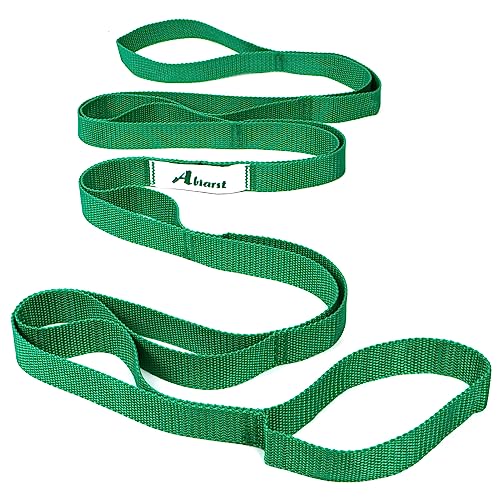
- Non-elastic design for controlled stretching
- 10 roomy loops across a 75-inch length
- Washable, skin-friendly fabric construction
Best For: Everyday flexibility, Pilates, dance, and gymnastics
Best Performance-Focused Pick

- 10 loops plus hand straps on both sides
- Durable stitching and neoprene construction
- Compact carrying bag for portability
Best For: Workout warmups, recovery, mobility, and physical therapy
Elastic PNF Pick – Therapist’s Choice Stretch Strap
For athletes seeking stretching straps for athletes that support both static and contract-relax work, this elastic looped design offers useful flexibility. Its multiple loops cover common lower-body and upper-body stretches, while the toe loops add a more targeted option for foot and heel work.
Best For: Athletes wanting an elastic strap for PNF-style stretching, hamstrings, quads, calves, hips, shoulders, and plantar-focused foot stretches.
Pros:
- Elastic construction supports contract-relax stretching and provides slight give during static stretches.
- Large loops accommodate hamstring, quadriceps, lower-back, calf, and hip stretches.
- End toe loops allow more specific foot and heel positioning.
- Includes a basic instructional manual.
Cons:
- Contains latex, which may not suit users with latex sensitivities.
- At approximately 50 inches long, it may offer less reach than extra-long straps.
This is a practical choice when you want elastic assistance and partner-free PNF stretching in one compact tool. The loop arrangement is especially useful for athletes building a varied mobility routine.
Extra-Long Training Pick – OPTP Stretch Out Strap XL
The OPTP Stretch Out Strap XL is a strong option among stretching straps for athletes who need extra length and precise hand or foot placement. Its woven 10-loop construction reaches 7 feet 5 inches, making it particularly practical for taller users and demanding lower-body mobility work.
Best For: Athletes over six feet tall, runners, golfers, and users who want a durable strap for warm-ups, cool-downs, physical therapy, and recovery.
Pros:
- Extra-long 7-foot-5-inch length suits users over 6 feet tall.
- Ten individual loops provide controlled, unassisted positioning.
- Durable woven fabric is designed for heavy use.
- Includes an exercise booklet and video stretching guide.
Cons:
- The extra-long format may be more strap than shorter users need.
- Woven fabric does not provide the elastic give of a resistance-style strap.
Choose this model if reach, loop control, and durability matter more than elastic resistance. The included guides also make it a well-rounded option for athletes developing a structured stretching routine.
Progressive Resistance Pick – Gaiam Restore Stretch Band
For athletes comparing stretching straps for athletes with adjustable resistance, the Gaiam Restore uses six numbered loops plus two stabilizing handholds. Its medium stretch helps users progress through different positions for warm-ups, post-workout recovery, yoga, Pilates, and rehabilitation exercises.
Best For: Athletes and active users who want medium resistance with progressive loop positions for calves, hamstrings, hips, glutes, triceps, and yoga stretches.
Pros:
- Six numbered loops support progressive degrees of stretching.
- Two stabilizing handholds provide additional grip options.
- Medium stretch offers a balance of flexibility and resistance.
- Includes a downloadable exercise guide.
Cons:
- At 39.75 inches, it is shorter than several long strap designs.
- Medium tension may not suit users seeking very light or heavy resistance.
This strap is a sensible fit for athletes who prefer a guided progression rather than a simple fixed-length aid. The numbered loops make it easier to adjust reach as flexibility improves.
Wide-Grip Mobility Pick – 12-Loop Physical Therapy Stretch Strap
This 8-foot strap gives athletes plenty of reach for mobility drills, recovery, and assisted stretching. Its 12 reinforced loops create many hand and foot positions, while the 1.5-inch-wide SBR and nylon construction is designed for a more comfortable, sweat-resistant grip.
Best For: Athletes and rehabilitation users working on hamstring flexibility, lower-back mobility, hip range of motion, shoulder traction, and post-workout recovery.
Pros:
- Twelve reinforced loops offer numerous controlled hand and foot positions.
- Eight-foot length provides generous reach for mobility exercises.
- Wide, shock-absorbing SBR construction is designed to reduce digging into skin.
- Includes an instruction manual and storage bag.
Cons:
- The non-elastic design does not provide the give of resistance bands.
- Its 8-foot length may be cumbersome for compact storage or shorter routines.
If you prioritize reach, loop variety, and a wider grip, this strap offers a versatile setup for athletic recovery and therapy-oriented mobility work. The storage bag is useful for carrying it between the gym, clinic, home, and travel.
Top Choice – OPTP Original Stretch Out Strap
For athletes comparing stretching straps for athletes, the OPTP Original is a proven, woven nylon option with 10 loops and a six-foot length. Its durable construction and included exercise materials make it useful for warmups, cooldowns, mobility work, and recovery-focused stretching.
Best For: Athletes, physical-therapy users, and anyone wanting a versatile strap for lower- and upper-body flexibility work.
Pros:
- Durable woven nylon construction designed for heavy use
- Ten loops support varied stretching positions
- Includes an exercise poster with 20 contract-relax stretches and a video guide
- Made in the USA and recommended by physical therapists and athletic trainers
Cons:
- At six feet long, it may offer less reach than longer straps
- Only one strap is included
The Original Stretch Out Strap is a strong all-purpose pick when durability, structured loops, and clear stretching instruction matter more than extra accessories or maximum length.
Most Adjustable – 12-Loop Stretching Strap
This 12-loop strap is a practical choice for athletes who want a non-elastic tool with clear progress markers. Its soft handles, sturdy nylon construction, included carry bag, and 96-inch length make it convenient for varied stretching routines at home or on the go.
Best For: Users who want a longer strap with multiple loop positions, comfort-focused handles, and portable storage.
Pros:
- Long 96-inch design provides ample reach
- Twelve loops and number tags support positioning and progress tracking
- Soft handles help reduce pressure on the hands
- Includes a carry bag and exercise guide
Cons:
- The non-elastic design does not provide built-in stretch
- The supplied notes do not specify a video guide or USA-made construction
Choose this model if portability and adjustment range are priorities. Its longer format and 12-loop layout can accommodate a broad selection of leg, hamstring, yoga, and physical-therapy stretches.
Best for Symmetry – OPTP Stretch Out Strap Pro
The OPTP Stretch Out Strap Pro stands out among stretching straps for athletes with a centered 11th loop. That anchor point is designed to improve symmetry, exercise versatility, and safety, while the USA-made nylon construction supports repeated mobility, yoga, Pilates, and rehabilitation work.
Best For: Athletes and rehabilitation users who value a centered anchor point and detailed mobility instruction.
Pros:
- Centered 11th loop supports symmetrical positioning
- Strongly stitched nylon loops are designed for heavy use
- Includes a booklet with more than 40 stretches and mobility exercises
- Made in the USA and suitable for yoga, Pilates, and knee rehabilitation exercises
Cons:
- Its six-foot-three-inch length is shorter than the 96-inch alternative
- Only one strap is included
The Pro is the more specialized OPTP option for athletes who want an extra center loop. It is especially compelling for structured mobility and rehabilitation routines where consistent positioning is important.
Best Guided Pick – Trideer Stretching Strap with Loops
For athletes who want structured flexibility work, the Trideer is one of the more instruction-friendly stretching straps for athletes. Its 10 numbered loops support consistent positioning, while the soft neoprene handles and included guide materials make it practical for stretching, yoga, Pilates, and rehabilitation routines.
Best For: Athletes and physical-therapy users who want numbered loops, comfortable handles, and guided movements.
Pros:
- Ten numbered loops make it easier to track stretching progress and repeat positions.
- Full-wrapped neoprene handles provide a more comfortable grip.
- Includes a 32-page detachable guide card set, drawstring bag, and foldable poster.
- Thickened nylon construction and tight stitching are designed for repeated use.
Cons:
- The included guide materials may be more than users who already have a routine need.
- Its 81-inch length may be less convenient for minimal storage than a shorter strap.
The Trideer stands out when comfort, portability, and clear loop positioning matter. It is a particularly versatile option for athletes combining warmups, recovery work, and flexibility training.
Best Simple Training Strap – Abiarst 10-Loop Stretching Strap
The Abiarst offers a straightforward, non-elastic design for athletes who want dependable loop-based positioning without extra accessories. At 75 inches long and one inch wide, it provides multiple hand and foot placements for stretching, Pilates, gymnastics, dance, and daily mobility work.
Best For: Athletes seeking a washable, non-elastic strap with roomy loops for flexibility and recovery exercises.
Pros:
- Ten individual loops support a range of stretching positions.
- Its 75-inch length gives users more room to stretch out than standard multi-loop straps, according to the supplied notes.
- High-quality fabric is described as washable, skin-friendly, and resistant to fraying or breaking.
- Works across physical therapy, yoga, fitness, Pilates, dance, ballet, and gymnastics.
Cons:
- The one-inch width may provide less grip area than wider straps.
- It does not include the guide cards or poster listed with some competing options.
Choose the Abiarst when you want a simple, durable tool for repeatable stretches across several activities. Its non-elastic construction is suited to controlled flexibility work rather than resistance training.
Best Performance-Focused Pick – Gymreapers Stretching Strap
Gymreapers is a practical choice for athletes who want to add mobility work before or after training. The non-elastic nylon strap has 10 loop options plus hand straps on both sides, helping users adjust positioning for warmups, recovery, and deeper stretches.
Best For: Athletes who want a durable, portable strap for pre-workout mobility, post-workout stretching, and physical therapy.
Pros:
- Ten loop options and hand straps on each side support varied stretching positions.
- Designed for use before or after workouts to support flexibility and mobility routines.
- High-density stitching and quality neoprene are intended to improve durability and grip comfort.
- Includes a compact carrying bag for use at home or on the go.
Cons:
- The product is listed as one size, so users cannot select a different strap length.
- Its performance-oriented design may be less appealing to shoppers looking for printed instructional guidance.
Gymreapers makes the most sense for training-focused users who want multiple loop positions and easy portability. It combines a simple non-elastic format with construction features aimed at regular fitness use.
How We Picked the Best Stretching Straps for Athletes
We focused on straps that support controlled, gradual stretching rather than aggressive pulling. The lineup includes nonelastic straps with multiple loops, traditional exercise straps, resistance-band-style options, and models designed for physical therapy or yoga. We considered loop placement, strap width, length, construction, included instructions, and how easily each design can accommodate different body sizes and flexibility levels.
Because Stretching Straps for Athletes are used repeatedly, practical factors matter as much as versatility. A strap should be easy to grip, simple to position around a foot or limb, and durable enough for regular sessions. Instructional materials are also useful for beginners who need guidance on safe positioning and exercise selection.
Quick Comparison
- Best for guided routines: Choose a strap that includes an exercise book, poster, or clearly defined loop positions.
- Best for precise positioning: Multi-loop, nonelastic designs make it easier to adjust tension in small increments.
- Best for portability: A lightweight strap with a compact design is convenient for gyms, travel, and competition days.
- Best for broader exercise use: Resistance-band-style models may support both stretching and light strengthening, depending on their construction.
Key Buying Factors for Stretching Straps for Athletes
Strap Type and Elasticity
Nonelastic straps provide consistent leverage and are often preferred for assisted stretching and rehabilitation. Elastic models can add resistance, but they may make tension less predictable. If your priority is precise flexibility work, start with a nonelastic design.
Loops, Length, and Width
Multiple loops let you change hand or foot placement without regripping the entire strap. Longer straps can be helpful for taller users, tight hamstrings, shoulder mobility drills, and partner-assisted work. A wider strap usually feels more comfortable in the hands and is less likely to dig into the skin.
Durability and Comfort
Look for reinforced stitching, secure loop construction, and materials that resist fraying. Smooth edges and comfortable handles matter during longer sessions, especially when the strap is used daily.
Instructional Support
Exercise books and posters can help users learn safe setups and maintain consistent routines. Beginners and athletes recovering from injury may benefit most from products with clear positioning guidance, though medical advice should take priority during rehabilitation.
Who Should Buy Which Stretching Straps for Athletes?
Competitive athletes and dancers may prefer a durable multi-loop strap that allows precise adjustments before training or performance. Runners and field-sport athletes should look for a portable design that works well for hamstring, calf, hip, and quad stretches. Physical therapy users may benefit from a nonelastic strap with clear loop placement and included exercise instructions. Yoga and general fitness users can choose a versatile strap that supports both assisted stretching and mobility drills.
Whichever model you choose, use steady tension, avoid bouncing, and stop if you feel sharp pain, numbness, or tingling. The best strap is one you can use consistently with controlled technique.