The best wearable health monitor for seniors is one that feels comfortable enough to wear regularly and makes useful information easy to find. Heart rate, sleep, activity, and blood pressure features can all matter, but they do not offer the same level of medical insight.
These 10 options range from simple fitness bands to hybrid smartwatches and a blood-pressure-focused system. Start with the health information you need, then consider how the device measures it and whether its app fits your routine.
Best 10 Wearable Health Monitor for Seniors Picks for 2026
Everyday Activity Pick
- Heart-rate, blood-pressure, and sleep tracking
- 120+ sport modes
- Up to seven days of normal-use battery life
Best For: Broad everyday wellness and activity tracking
Compact Display Pick
1.10-Inch AMOLED Fitness Tracker

- 1.10-inch AMOLED touch display
- Heart-rate, steps, and sleep trends
- 25 sport modes; connected GPS
Best For: Compact daily tracking and phone notifications
Blood-Pressure Pattern Pick

- Band, FDA-cleared cuff, and app
- Weekly and monthly BP pattern summaries
- Subscription required after included 12 months
Best For: Long-term blood-pressure pattern awareness
Classic Watch Pick

- Analog styling with digital health tracking
- ECG and heart-rate notifications
- Up to 35 days of battery life
Best For: Classic styling, ECG features, and less frequent charging
Longest Battery Claim

- Advertises 40–60 days per charge
- Tracks heart rate, blood oxygen, and sleep
- Lightweight band with two strap options
Best For: Long battery life and everyday wellness trends
ECG-Focused Hybrid
- 30-second ECG via Withings ECG App
- Up to 35 days of battery life
- Analog design with sapphire glass
Best For: Analog-watch styling with ECG capability
Subscription-Free App

- App advertised as free of service fees
- Advertises 15–30 days of heavy use
- Tracks wellness metrics and 120-plus sports
Best For: Wellness tracking without stated app fees
Best for On-Wrist Features

- 2.04-inch touchscreen
- Bluetooth calls and reminders
- Heart-rate, sleep, and activity tracking
Best For: Seniors wanting a larger screen and phone-connected features
Best for Longer Battery Life
Smart Watch Health Fitness Tracker

- 10–12 days of stated daily-use battery life
- Sleep-stage and step tracking
- 1.47-inch color touchscreen
Best For: Seniors seeking daily tracking with less frequent charging
Best Screen-Free Pick
- Lightweight 29 g screen-free band
- Continuous heart-rate and sleep tracking
- Up to eight days of battery life; no subscription
Best For: Seniors who want discreet tracking and app-based insights
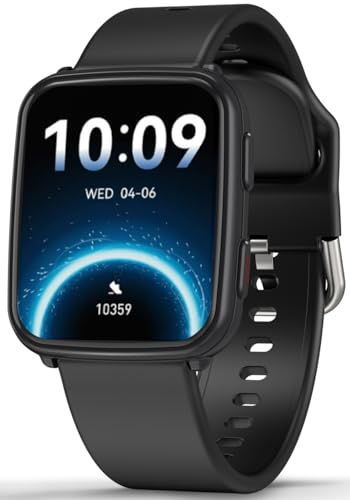
Everyday Activity Pick – MorePro Fitness Tracker
For someone comparing a wearable health monitor for seniors, the MorePro offers everyday activity tracking alongside heart-rate, blood-pressure, sleep, and on-demand blood-oxygen readings. It is intended for wellness awareness, not medical use.
Best For: Older adults who want a broad set of wellness and activity features in one wrist tracker.
Pros:
- Tracks steps, distance, calories, and sleep patterns.
- Offers 120+ sport modes and call and message notifications.
- Rated IP68 water-resistant, with up to seven days of normal-use battery life.
Cons:
- Health readings are not intended for medical use.
- Requires a compatible Android or iOS smartphone for connected features.
Choose this for routine and activity trends rather than clinical measurements. Its long feature list is useful if the wearer is comfortable using a companion phone.
This wearable health monitor for seniors pairs a 1.10-inch AMOLED touch display with continuous heart-rate tracking, sleep estimates, and a step counter. Its app provides a place to review trends; the sleep data is for reference, not a substitute for medical advice.
Best For: Someone who wants a compact screen for checking activity, notifications, and sleep trends.
Pros:
- Shows steps and supports 25 sport modes.
- Offers sleep-stage estimates, hydration reminders, and phone notifications.
- IP68 water-resistant, with up to seven days of stated battery life.
Cons:
- Workout route recording uses connected GPS rather than standalone GPS.
- Listing specifies no warranty.
The compact display and basic reminders make this a practical daily tracker, but anyone needing clinical guidance should not rely on its wellness estimates alone.
If blood-pressure patterns are the priority in a wearable health monitor for seniors, Hilo Core takes a focused approach: a wrist band, an FDA-cleared upper-arm cuff, and an app work together to show longer-term trends. The band has no display, so reviewing results means using the app.
Best For: People who want cuff-based blood-pressure readings and weekly or monthly pattern summaries.
Pros:
- Includes an FDA-cleared cuff alongside the wearable band.
- Shows blood-pressure patterns with sleep, steps, activity, and heart-rate context.
- Band is IP68 water-resistant and offers up to 15 days of battery life.
Cons:
- An active subscription is required for the band to collect and display data; after the included 12 months, it renews at $149.99 annually.
- No on-band display; the system is not presented as a fitness tracker or medical device.
Hilo Core is the most purpose-built option here for understanding blood-pressure patterns, provided the ongoing subscription and app-based viewing suit the buyer.
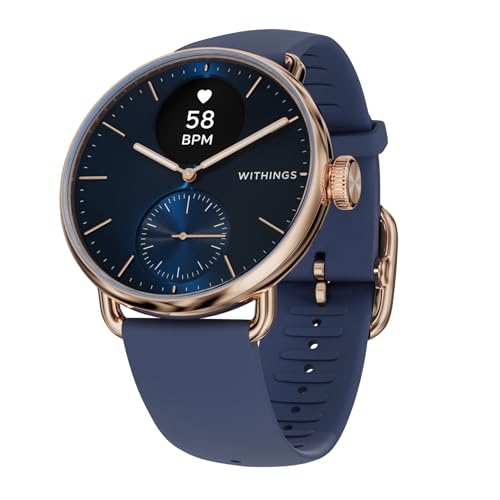
The Withings ScanWatch 2 suits shoppers seeking a wearable health monitor for seniors that looks like a traditional watch. Its analog hands sit alongside digital tracking, including continuous heart rate and a 30-second ECG through the Withings ECG App.
Best For: Someone who prefers classic watch styling and wants ECG and heart-rate features without frequent charging.
Pros:
- Offers ECG, AFib detection via the app, and high and low heart-rate notifications.
- Tracks sleep and workouts, with connected GPS through a smartphone.
- Rated for up to 35 days of battery life and has a sapphire-glass, stainless-steel design.
Cons:
- The digital screen is small at 0.63 inches.
- GPS depends on a connected smartphone.
This is a strong fit when familiar watch styling and battery life matter most. Check whether the small digital display and app-based features match the wearer’s preferences.
Longest Battery Claim – 60-Day Smart Bracelet
If you want a wearable health monitor for seniors that needs relatively little charging, this bracelet advertises up to 40–60 days per charge. It tracks heart rate, blood pressure, blood oxygen, and sleep, with results available in the QWatch Pro app.
Best For: Someone who prioritizes long battery life, a lightweight band, and basic wellness trends.
Pros:
- Advertises continuous heart-rate, blood-pressure, and blood-oxygen tracking.
- Includes nylon and silicone straps and weighs a stated 18.4 g.
- Offers vibration alerts for calls and messages when paired with a phone.
Cons:
- Phone pairing and the companion app are needed for connected features.
- Blood-pressure readings are not described as medical-grade; do not use them to replace a cuff or clinical advice.
The extended battery claim is the main draw. Its many sports modes may be less relevant than comfort and charging frequency for a senior buying primarily for everyday tracking.
For shoppers seeking a wearable health monitor for seniors with traditional watch styling, the Withings ScanWatch 2 combines analog hands with digital tracking. Its stated features include a 30-second ECG through the Withings ECG App, continuous heart-rate tracking, and high and low heart-rate notifications.
Best For: Someone who wants an analog-style watch with ECG capability and fewer charging interruptions.
Pros:
- Offers a 30-second ECG and AFib detection via the Withings ECG App.
- Advertises up to 35 days of battery life.
- Stainless steel case and sapphire glass provide durable watch materials.
Cons:
- ECG use depends on the companion app; connected GPS uses a smartphone.
- The listed digital screen is 0.63 inches, which may be small for someone who prefers large on-watch text.
This is the strongest fit of the three for buyers specifically interested in the stated ECG feature, while its analog-first design is worth weighing against screen readability needs.
If avoiding app fees matters, this wearable health monitor for seniors comes with a companion app the seller says is free to use. The bracelet advertises continuous tracking of heart rate, blood pressure, blood oxygen, and heart-rate variability, alongside sleep and activity features.
Best For: Someone who wants an app without stated subscription fees and a band for wellness and activity trends.
Pros:
- Seller promises no subscription or service fees for the companion app.
- Advertises 15–30 days of heavy use after a two-hour charge.
- Supports 120-plus exercise modes and vibration alerts for phone notifications.
Cons:
- Blood-pressure monitoring is not described as medical-grade; confirm concerns with a validated cuff and clinician.
- Product notes conflict on GPS: the bullets describe app-based route tracking, while the details list built-in GPS.
The no-fee app promise distinguishes this band, but clarify its GPS implementation before buying if independent route tracking is important.
Best for On-Wrist Features – Advanced Health Smartwatch
If you want a wearable health monitor for seniors with a large display and plenty of everyday functions, this smartwatch offers a 2.04-inch touchscreen, heart-rate and sleep tracking, and on-wrist call handling when paired with a phone.
Best For: Seniors who prefer a larger touchscreen and want calls, reminders, and activity tracking in one watch.
Pros:
- Tracks heart rate, blood oxygen, body temperature, sleep, and stress; also offers blood-pressure readings.
- Bluetooth calling, message notifications, and water-drinking and sedentary reminders add everyday convenience.
- Supports more than 150 sports modes and offers over 150 watch-face choices.
Cons:
- Calling and app-based features require a paired smartphone.
- Blood-pressure readings from a smartwatch should not replace a medical cuff or clinical advice.
The larger screen and broad feature set are the main draws. Choose it for convenient trend tracking and phone functions, rather than medical-grade measurements.
Best for Longer Battery Life – Smart Watch Health Fitness Tracker
For shoppers comparing a wearable health monitor for seniors, this tracker balances a 1.47-inch color touchscreen with heart-rate and sleep data, step counting, and a stated 10–12 days of battery life with daily use.
Best For: Seniors who want routine activity and sleep tracking without charging every day.
Pros:
- Tracks heart rate, blood oxygen, sleep stages, steps, distance, and calories; also provides blood-pressure readings.
- Rated for 10–12 days of daily use or 6–7 days of heavy use per charge.
- Shows call and message notifications and includes water-drinking and sedentary reminders.
Cons:
- Workout route maps depend on a connected phone’s GPS.
- Blood-pressure readings are not a substitute for a validated cuff or medical guidance.
This is a practical choice if battery life and basic daily trends matter more than making calls from the wrist. The adjustable strap is specified to fit wrists from 5.0 to 9.05 inches.
Best Screen-Free Pick – Polar Loop Health Band
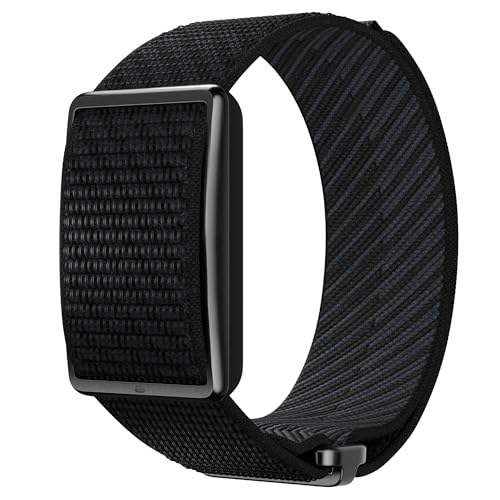
If a screen feels like an unnecessary distraction, the Polar Loop is a wearable health monitor for seniors focused on continuous heart-rate and sleep tracking. Its 29 g, screen-free design is intended for comfortable day-and-night wear.
Best For: Seniors who prefer a discreet band and are comfortable reviewing health trends in an app rather than on the wrist.
Pros:
- Continuously tracks heart rate and sleep, with detailed insights in the Polar Flow app.
- Offers up to eight days of battery life and includes two wristband sizes.
- No subscription is required to access the stated app features.
Cons:
- There is no screen for checking readings directly on the band.
- The supplied features do not include blood-pressure or blood-oxygen monitoring.
Polar Loop keeps the focus on wearability and sleep insights rather than smartwatch extras. It makes the most sense for someone willing to use a connected device to view the data.
How We Picked the Best Wearable Health Monitor for Seniors
We focused on the practical differences among the 10 selected products: what each is designed to track, whether blood pressure is measured with a cuff or estimated by a wearable, how information is viewed, and the likely demands of daily wear. We also considered choices that may matter to seniors, including a traditional watch appearance, a screen-free design, and whether a device requires a phone app to see detailed trends.
Feature lists are a starting point, not proof of clinical accuracy. In particular, a wristband that advertises blood pressure monitoring should not be assumed to replace a validated upper-arm cuff or a clinician’s advice.
Quick Comparison: Find the Right Type
- Blood-pressure-focused system: Hilo Core pairs a wrist band with a cuff and app. Check its setup and calibration requirements before buying.
- Hybrid watches: The two Withings ScanWatch 2 listings offer the same general watch style and ECG feature set in different finishes. Compare color, size, and listing details rather than treating them as different health categories.
- Screen-free band: Polar Loop suits someone who wants passive heart-rate, sleep, and activity tracking without checking a wrist display.
- General-purpose trackers: The remaining watches and bracelets emphasize combinations of heart rate, sleep, steps, SpO2, and advertised blood pressure features. Their screens, controls, and apps may be more important than their sport-mode counts.
Key Buying Factors for a Wearable Health Monitor for Seniors
Measurements You Can Act on
Choose the device around the question you want answered. For blood pressure management, look closely at whether readings involve a cuff, require calibration, and can be shared with a healthcare professional. Wrist-based blood pressure claims are not interchangeable with a standard cuff reading. ECG features can be useful for recording a reading when prompted, but they do not diagnose every heart problem. SpO2, temperature, and sleep figures are best viewed as trends unless the manufacturer specifies a validated medical use.
Comfort, Visibility, and Daily Effort
A Wearable Health Monitor for Seniors should have a comfortable band, readable information, and controls the wearer can use confidently. Consider charging frequency, water-resistance limits, and whether alerts are noticeable without becoming distracting. A screen-free band removes on-wrist menus but makes the phone app more important; a hybrid watch can feel familiar while still needing an app for deeper data.
App and Household Fit
Before ordering, confirm phone compatibility, account requirements, any subscription terms, and how readings can be exported or shown at appointments. If a family member will help with setup, choose a device whose routine can remain manageable after setup is complete.
Who Should Buy Which Wearable Health Monitor for Seniors?
Prioritize blood pressure: Start with Hilo Core if its cuff-based workflow fits your needs; ask your clinician what readings they want you to record. Prefer a familiar watch: Compare the two ScanWatch 2 finishes. Want fewer distractions: Consider Polar Loop if app-based viewing works for you. Want basic everyday trends at the wrist: Compare the other trackers by readability, comfort, and app usability before weighing extra health claims or large sport-mode lists. No wearable should be your only way to assess urgent symptoms.