iHealth Push Wrist Blood Pressure Monitor review for buyers who want compact tracking with app syncing and a simpler wrist-cuff format.
If you need a portable monitor you can carry and use without an upper-arm cuff, this model is built for that use case.
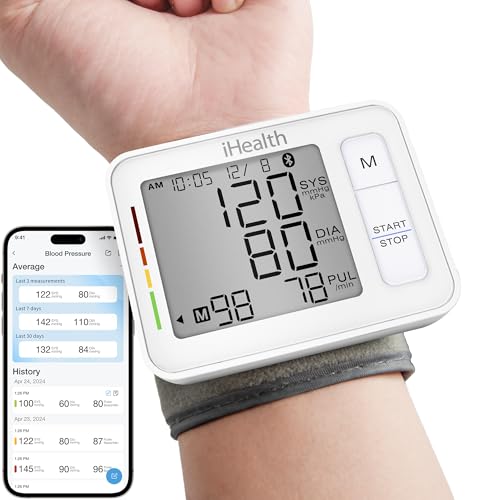
iHealth Wrist BP Monitor Review Summary
The iHealth Push Wrist Blood Pressure Monitor is a strong fit for people who want portable, app-connected blood pressure tracking without the bulk of an upper-arm device.
Its main appeal is straightforward: it is lightweight, it syncs over Bluetooth to a free app, and it stores readings both on the device and in the app, which makes it easier to follow trends over time.
That combination makes it especially sensible for frequent travelers, office use, or anyone who wants a monitor that is easy to keep nearby and use regularly.
The tradeoff is also clear from the listing: wrist monitors depend more on correct positioning and posture, so this is best for disciplined users who will follow the setup steps carefully rather than for people who want the most foolproof all-around blood pressure monitor.
Review Scorecard
| Category | Score | Editorial rationale |
|---|---|---|
| Portability | 9/10 | Lightweight and compact enough for travel, office storage, or daily carry. |
| Ease of use | 8/10 | The four-step process is simple, though wrist positioning still matters. |
| App tracking | 9/10 | Bluetooth syncing and unlimited app storage make trend tracking practical. |
| Comfort | 8/10 | Inflation technology is designed to reduce discomfort and shorten readings. |
| Readability | 8/10 | The color-coded indicator helps interpret results at a glance. |
| Capacity | 7/10 | Device memory is limited to 99 readings, so the app matters more. |
| Buyer confidence | 8/10 | The California-based support, warranty, and included case add reassurance. |
Bottom line: this is a good buy for portable, app-based home monitoring, especially if you value convenience and tracking over a larger cuff style.
Key Features and Specifications of iHealth Wrist BP Monitor
The product is a wrist blood pressure monitor from iHealth, designed for people who want a compact way to track blood pressure on the move.
The listing emphasizes gentle inflation, Effortless Data Syncing, and Enhanced Precision, along with compatibility for both iOS and Android.
Key evidence-based details from the product record:
- Form factor: wrist blood pressure monitor
- Connectivity: Bluetooth syncing to a free app
- Memory: stores 99 readings on the monitor
- App storage: unlimited data in the app
- Measurement flow: a 4-step measurement process
- Indicator: color-coded blood pressure classification display
- Included accessories: 2 AAA batteries, carrying case, instruction manual
- Cuff fit: adjustable wrist cuff for wrists from 5.5″ to 7.7″
- Support and coverage: 12-month limited warranty and California-based customer service
The most important functional detail is the measurement workflow.
The listing specifically asks the user to place the cuff, sit with back supported, keep feet flat and uncrossed, and hold the arm across the chest at heart level.
That is useful because it shows the monitor is not meant to be casual or sloppy in use.
It is a convenience product, but accuracy still depends on good technique.
The app side is the other major selling point.
Since the monitor stores only 99 readings itself, the app becomes the real long-term archive.
For buyers who like to review patterns or share data with a doctor, that is the most meaningful part of the package.
Pros and Cons of iHealth Wrist BP Monitor
Pros
- Very portable compared with bulky upper-arm monitors
- Bluetooth syncing makes recordkeeping easier
- App storage is unlimited, which supports long-term tracking
- Color-coded indicator simplifies quick interpretation
- Includes batteries and a carrying case
- Worry-free warranty and accessible support add peace of mind
Cons
- Wrist monitors require more careful positioning than arm monitors
- The built-in memory is limited to 99 readings
- Buyers who want the simplest possible routine may prefer an upper-arm style
- The product is more about convenience and tracking than clinical-style hardware feel
The biggest strength is not one specific hardware feature but the overall package: portability, syncing, and easy logging.
The biggest weakness is also predictable for the category: wrist devices can be less forgiving if the user does not follow the instructions closely.
Who Should Buy iHealth Wrist BP Monitor?
This product makes the most sense for buyers who want a portable blood pressure monitor for routine self-checks and who are comfortable using an app to store readings.
It is a sensible option for people who travel often, keep a monitor at work, or want a secondary device that is easy to carry.
It also fits buyers who like simple visual feedback.
The color-coded indicator reduces friction when you just want to know whether a reading falls into an easy-to-understand range.
If the goal is consistent tracking rather than a one-off measurement, the app syncing becomes a real advantage.
People who should be more cautious are those who want the most straightforward, no-thinking-needed setup.
Wrist monitors can work well, but the listing itself shows that good results depend on heart-level positioning and posture.
If you are likely to rush, sit unevenly, or skip the steps, an upper-arm monitor may be a better fit.
It is also less compelling for buyers who do not want to use an app at all.
The local memory is useful, but the product clearly leans on the free app for longer-term recordkeeping.
Blood Pressure Monitoring Fit and Use
Portable Tracking for Daily Routines
The strongest case for this monitor is portability.
The compact wrist format and carrying case make it easier to keep in a bag, drawer, or desk than a bulkier arm cuff system.
For people who check readings in more than one location, that matters.
App-Based Recordkeeping
Bluetooth syncing is not just a convenience feature here; it is a core part of the product identity.
The device can hold 99 readings, but the app can store unlimited data, which makes the monitor more useful over time for trend tracking and sharing with a clinician.
Comfort and Measurement Experience
The listing highlights inflation technology that shortens measurement time and aims to reduce discomfort.
That matters because many buyers are sensitive to cuff pressure.
The product seems designed to make repeated checks easier to tolerate, not just easier to perform.
Reading Clarity and User Guidance
The color-coded indicator and four-step setup are the features that make this monitor friendlier than a bare-bones device.
They do not remove the need for proper technique, but they do help the user understand the process and interpret results faster.
Alternatives to iHealth Wrist BP Monitor
If you want a different style of monitor, the main alternatives are usually other established blood pressure brands with upper-arm cuffs or premium connected options.
Good Amazon search starting points include Omron blood pressure monitor, Withings BPM, and A&D blood pressure monitor.
Omron is often the first brand buyers compare against because it has a broad monitor lineup and strong category recognition.
Withings is worth looking at if you want a more connected health-device ecosystem.
A&D is a practical option if you want a more traditional blood-pressure-monitor buying path.
These alternatives are most relevant if you decide wrist-based convenience is not enough of a tradeoff for you.
If your priority is maximum ease of positioning and a more conventional form factor, comparing against upper-arm monitors is the right move.
Is iHealth Wrist BP Monitor Worth It?
Yes, if you want a compact blood pressure monitor that is easy to carry and easy to sync.
The iHealth Push Wrist Blood Pressure Monitor is worth considering for buyers who value portability, app-based history, and simple readout guidance more than a larger cuff format.
It is less ideal if you want the least technique-sensitive option or if you do not plan to use the app.
But for regular self-monitoring with a travel-friendly footprint, this is a practical, well-thought-out wrist monitor.