Mikolo lateral raise attachment review searches usually come from people trying to build better shoulders without adding another bulky machine.
This one is aimed at controlled side-delt work from a squat rack setup, and that gives it a clear use case.
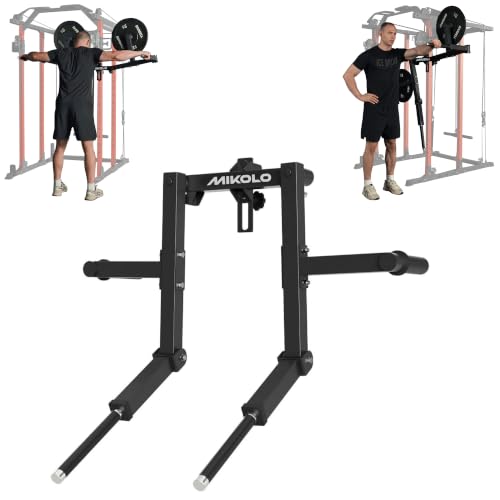
Mikolo Lateral Raise Review Summary
If you want a rack-mounted shoulder accessory that prioritizes lateral deltoid isolation, the Mikolo Lateral Raise Attachment makes sense as a focused home-gym add-on.
It is best for buyers who already have a compatible rack and want a more guided movement than free weights can provide.
The appeal is straightforward: the machine is designed to reduce cheating, keep the motion controlled, and save floor space while expanding upper-body training options.
That combination is especially useful for lifters who care about form quality, want a consistent path for side raises, and do not have room for a dedicated standalone machine.
Review Scorecard
| Category | Score | Buyer-focused rationale |
|---|---|---|
| Shoulder isolation | 9/10 | Built specifically to target the lateral delts with a controlled machine-style path. |
| Movement control | 8/10 | Machines generally reduce form drift, and the listing emphasizes reduced cheating. |
| Build quality | 8/10 | Solid steel construction and a powder-coated finish point to durability. |
| Comfort and grip | 8/10 | Non-slip rubber handles and ball-bearing grip rotation should help steady reps. |
| Space efficiency | 9/10 | Rack attachment design is a strong fit for smaller home gyms. |
| Versatility | 6/10 | Useful for shoulders and upper body, but it is still a highly specialized tool. |
| Buyer value | 7/10 | Strong if you want this exact function, less compelling if you need a general-purpose machine. |
Key Features and Specifications of Mikolo Lateral Raise
The biggest selling point is the product’s narrow purpose.
It is built to isolate the lateral deltoids, which matters because side raises are one of the few movements where form quality changes the result a lot.
A guided attachment can help keep the emphasis on the shoulder instead of turning the lift into a whole-body swing.
The listing also highlights ball bearings inside the grip, which should make the handle rotation smoother and more consistent.
In practical terms, that matters when you want the movement to feel fluid rather than sticky, especially across sets where fatigue can make awkward handles more annoying.
Another important detail is the construction.
Mikolo says the attachment uses premium solid steel with a black powder-coated finish for durability and rust resistance.
That does not make it indestructible, but it does suggest the unit is designed for repeated use in a home-gym environment.
The grip design is another relevant feature.
The handles use non-slip rubber to improve security and reduce hand fatigue.
For a shoulder accessory, that is not a cosmetic feature; it is part of what helps you keep the same arm path and stay focused on the delts instead of fighting the grip.
Finally, the space-saving angle is real value here.
Because this is a rack attachment rather than a full machine, it should be much easier to fit into a garage gym, basement setup, or multi-use training area.
| Spec or claim | What it means for buyers |
|---|---|
| Lateral deltoid isolation | Focused shoulder work instead of a general upper-body machine. |
| Rack attachment form factor | Needs a compatible squat rack or power rack with 1-inch holes. |
| Ball-bearing grip rotation | Smoother handle motion and less friction during reps. |
| Solid steel construction | Better odds of long-term durability than lightweight accessories. |
| Powder-coated finish | Added resistance to wear and rust. |
| Non-slip rubber handles | More secure grip and less hand fatigue. |
| Space-saving design | Better fit for compact home gyms. |
Pros and Cons of Mikolo Lateral Raise
Pros
- Strong focus on lateral delt isolation, which is exactly what many lifters want from a side-raise accessory.
- The guided motion can help reduce sloppy reps and shoulder swinging.
- Ball-bearing grip design should make the handle feel smoother under load.
- Solid steel construction is a good sign for durability.
- Rack-mounted format saves space compared with a standalone machine.
- Non-slip handles improve control during repeated sets.
Cons
- It is highly specialized, so it is not a broad upper-body solution.
- You need the right rack setup, which limits who can use it.
- A machine-style attachment will not replace the flexibility of dumbbells or cables.
- The value drops if you only want an occasional shoulder accessory.
Who Should Buy Mikolo Lateral Raise?
This is a good fit for lifters who already train in a home gym and want a more deliberate, repeatable side-delt movement.
If your goal is to improve shoulder isolation without buying a full machine, the Mikolo Lateral Raise Attachment has a clear lane.
It also makes sense for people who struggle to keep lateral raises strict with dumbbells alone.
The listing’s emphasis on controlled motion and reduced cheating suggests that the attachment is meant to help keep reps honest when fatigue starts to pull form apart.
The best buyers are likely:
- Home-gym owners with a compatible squat rack or power rack
- Lifters focused on shoulder development
- People who prefer machine-style guidance over free-weight variability
- Buyers who need a space-saving accessory
Who should skip it:
- Anyone without the right rack hole size or rack type
- Buyers who want a more versatile machine
- People who already get enough shoulder work from cables, dumbbells, or a commercial gym
- Lifters who do not care about a dedicated lateral raise station
Shoulder Training Setup and Use
Controlled Isolation
The main reason to buy this attachment is the controlled path.
Lateral raises are easy to turn into a shrugging, swinging exercise, and that tends to shift effort away from the delts.
A guided machine-style setup should make it easier to keep tension where it belongs.
Grip and Repetition Quality
The ball-bearing design in the grips is a useful detail because it should support a smoother rotation through the motion.
For repetitive shoulder work, that kind of smoothness matters more than it sounds, since awkward handles can make a set feel harsher before the target muscles are even fully challenged.
Rack-Based Convenience
Because this is an attachment, the convenience is in the setup rather than in portability.
Once mounted, it can give you a dedicated shoulder station without claiming permanent floor space.
That makes it practical for garages, basements, and compact training rooms where every square foot matters.
Durability for Home Gyms
Mikolo’s solid steel and powder-coat claims point to a straightforward durability story: this is meant to live in a real training space, not sit on a shelf as a novelty item.
If you train consistently and want equipment that can stay mounted and used regularly, that matters.
Alternatives to Mikolo Lateral Raise
If you want a different route, the most sensible alternatives are other shoulder isolation tools rather than unrelated upper-body machines.
Search Amazon for a Powertec lateral raise machine, a Titan Fitness lateral raise attachment, or a Rogue shoulder accessory if you are comparing rack-based options.
If you do not need a machine-style attachment, adjustable dumbbells or cable lateral raise handles can cover the same muscle group with more versatility.
Those choices are better when you want broader programming flexibility instead of a dedicated side-delt station.
Is Mikolo Lateral Raise Worth It?
Yes, if your main goal is controlled lateral delt work and you already have a compatible rack.
The Mikolo Lateral Raise Attachment looks worthwhile for home-gym buyers who value shoulder isolation, space savings, and a more guided movement than free weights typically provide.
It is less compelling if you need a general-purpose machine or if your rack setup does not match the attachment requirements.
For the right buyer, though, this is a focused accessory with a clear training job, and that is exactly where it seems strongest.