The Paiseec Q5 22 lbs Carbon Fiber Folding Electric Wheelchair is built for buyers who care most about portability without giving up electric mobility.
This review focuses on the real tradeoffs in the listing: very low weight, carbon-fiber construction, travel-friendly folding, and caregiver-oriented controls.
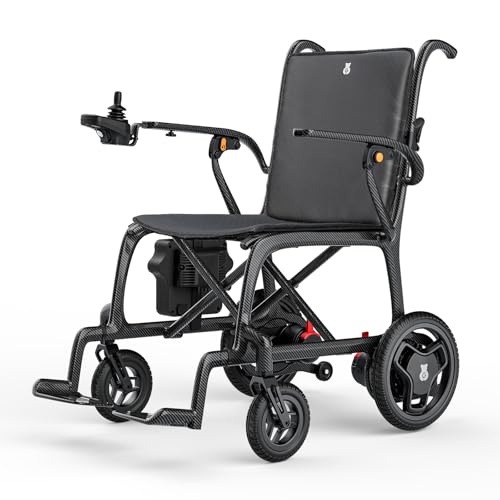
Paiseec Q5 Review Summary
The Paiseec Q5 makes sense for shoppers who need a compact power chair that is easier to lift, store, and transport than typical electric wheelchairs.
Its appeal is straightforward: a 22 lb claimed weight, a one-piece carbon fiber frame, a tight turning radius, and a fold size that should be friendlier to cars, apartments, and travel days than bulkier alternatives.
Best fit: people who want a lightweight electric wheelchair for transport and routine use, plus caregivers who value remote control options.
Main caution: this is a specialization-first product, so if your top priority is maximum cushioning, heavy-duty terrain handling, or the broadest long-range setup, you should compare carefully.
Review Scorecard
| Category | Score | Buyer assessment |
|---|---|---|
| Portability | 10/10 | The 22 lb claim and compact fold are the headline reason to consider it. |
| Build concept | 9/10 | Carbon fiber construction suggests a strong focus on stiffness and low weight. |
| Maneuverability | 8/10 | The 34.5-inch turning radius is a useful sign for indoor and tight-space use. |
| Travel convenience | 9/10 | Folding dimensions and airline-approved positioning point toward trip-friendly design. |
| Control flexibility | 8/10 | Bluetooth remote and rear joystick options help caregivers and companions. |
| Range versatility | 8/10 | Optional dual batteries extending range up to 28 miles adds real planning flexibility. |
| Everyday practicality | 8/10 | Strong for errands, short trips, and transport, with fewer signs of off-road ambition. |
Key Features and Specifications of the Paiseec Q5
The Paiseec Q5 is defined by a few unusually strong portability specs.
The listing says it weighs 22 lbs, uses a 100% carbon fiber one-piece frame, and folds down to 28.3″ L x 10.4″ W x 27.5″ H.
That combination matters because it speaks directly to the hardest part of buying a power chair: not whether it can move, but whether it can be moved by the user, a caregiver, or into a vehicle without making every outing a project.
The listed 34.5-inch turning radius is another practical detail.
For indoor shoppers, that is often more useful than raw speed numbers because it suggests better handling in hallways, doorways, stores, and crowded shared spaces.
The chair is also positioned as airline approved for travel, which is a meaningful signal for frequent flyers, though buyers should still confirm airline and battery rules before any trip.
Other advertised features include:
- Optional dual-battery setup with range up to 28 miles
- Standard range listed at 14 miles
- Bluetooth remote controller for caregiver assistance
- Rear-facing joystick control option
- LED light for visibility
- Dedicated 7-day phone hotline support claim from the brand
For a product like this, the details that matter most are not flashy extras.
They are the weight, fold size, control layout, and range flexibility.
On those points, the Paiseec Q5 is clearly aimed at buyers who want mobility assistance that can still fit into a travel routine.
Pros and Cons of the Paiseec Q5
Pros
- Very light for an electric wheelchair, at a claimed 22 lbs
- Carbon fiber frame should appeal to buyers prioritizing low weight and rigidity
- Compact folding size supports car travel and storage
- Tight turning radius is valuable for indoor navigation
- Remote control and rear joystick options make it more caregiver-friendly
- Dual-battery option gives buyers a way to extend range for longer days
Cons
- The listing emphasizes portability more than comfort detail, so cushion and ride feel are harder to judge from the facts alone
- Buyers needing rugged all-terrain use may want a heavier-duty chair
- The strongest selling points are specific, which means this is not a general-purpose compromise product
- Range is presented as optional and configuration-dependent, so shoppers must pay attention to battery setup
The overall pros and cons picture is consistent: this is a chair for moving easily, not for trying to be everything at once.
That is a strength if portability is the actual pain point.
Who Should Buy the Paiseec Q5?
The Paiseec Q5 is a strong candidate for adults who need an ultra-light folding electric wheelchair for day-to-day mobility, travel, or caregiver-assisted transport.
It also makes sense for people who expect to lift the chair into a trunk, navigate tighter indoor spaces, or bring the chair along on more frequent outings where weight and fold size matter.
It should also appeal to caregivers, family members, and companions who want simpler control options.
The Bluetooth remote and rear joystick design suggest the product was built with shared use in mind, not just solo operation.
You should probably skip it if you want a wheelchair first and a travel product second.
If your needs lean toward long outdoor sessions, rough surfaces, maximum seating comfort, or the most configurable rehabilitation-style setup, this listing does not provide enough evidence that the Q5 is the best match.
In short, the ideal buyer is someone asking: Can I get a lighter electric wheelchair that is genuinely easier to move around and still feels capable enough for regular life? If that is the question, the Q5 is positioned well.
Folding and Travel Performance of the Paiseec Q5
Lifting and Stowing
A claimed 22 lb weight changes the buying conversation immediately.
For many shoppers, that is the difference between a chair that requires extra help every time and a chair that can be handled more independently.
If the real-world weight and balance match the listing, the Q5 should be one of the more practical options for people who regularly load a chair into a car.
Tight-Space Maneuvering
The 34.5-inch turning radius suggests the Q5 is not just portable when folded, but practical when opened and in use.
Tight indoor turning is one of the most important features for apartment life, store aisles, and older buildings where wide arcs are a daily frustration.
A chair like this is easier to recommend when the steering geometry supports those environments.
Travel Setup
The airline approved claim and compact folded dimensions point toward a chair that is designed around travel logistics.
That does not remove the need to verify battery policies, but it does show the brand is thinking in the right direction.
For buyers who routinely move between home, car, and destination, this design philosophy is more useful than a bulkier chair with a bigger theoretical feature list.
Range and Control Options
The optional dual-battery setup is the right kind of flexibility for a mobility product.
A 14-mile standard range and up to 28 miles with dual batteries gives shoppers a way to choose between lighter day-to-day use and longer outings.
The Bluetooth remote and rear control also make the chair more adaptable for mixed-user situations, which can be a deciding factor for families and caregivers.
Alternatives to the Paiseec Q5
If the Paiseec Q5 feels too specialized, the main alternatives are other lightweight folding electric wheelchairs from established mobility brands.
A few credible Amazon search starting points are:
- Drive Medical folding electric wheelchair
- Golden Technologies power wheelchair
- Karman lightweight electric wheelchair
- Aotedor folding electric wheelchair
These alternatives are worth comparing if you want a different balance of weight, seating feel, battery setup, or brand familiarity.
In practical terms, shoppers should compare fold dimensions, total weight, battery removability, and whether a remote controller is included or optional.
The most important comparison question is not simply which chair is lightest.
It is which one matches your body, your car, your home, and the kind of trips you actually take.
Is the Paiseec Q5 Worth It?
Yes, if portability is your top priority. The Paiseec Q5 looks worth considering for buyers who want a very light folding electric wheelchair with carbon-fiber construction, travel-friendly dimensions, and useful caregiver control options.
It is less convincing as a universal pick for buyers who care more about long-haul comfort, rugged terrain, or broad all-purpose performance.
The listing is strongest where the chair is most differentiated: low weight, compact folding, and practical mobility logistics.
If you are shopping for a power chair that can be lifted, packed, and used in tighter spaces more easily than most, the Q5 is a serious candidate.
If not, compare it carefully against other lightweight folding models before deciding.