A reliable heart rate monitor should keep tracking through workouts, commutes, and recovery sessions without demanding constant charging. The best options balance battery endurance with accurate readings, comfortable wear, and compatibility with the apps or equipment you already use.
This roundup compares 10 heart rate monitors with long battery life, including chest straps for serious training and feature-rich trackers for all-day wellness data.
Best 10 Heart Rate Monitors with Long Battery Life Picks for 2026
Long-Lasting Smart Band

- Up to 21 days of battery life
- 1.72-inch bright AMOLED touchscreen
- Heart rate, sleep, blood oxygen, and sport tracking
Best For: Everyday wellness and activity tracking
Set-and-Forget Chest Strap

- Up to one year of battery life
- Captures heart rate and HRV data
- Machine-washable strap with 3 ATM rating
Best For: Garmin-connected training and fitness equipment
Ultra-Endurance Sensor
GEOID HS500 Heart Rate Monitor

- Up to 800 hours of battery life
- ANT+ and Bluetooth connectivity
- IP67 water resistance with replaceable battery
Best For: Multi-platform cycling, running, and indoor training
Rechargeable Training Strap
Wahoo TRACKR Heart Rate Monitor

- Rechargeable battery with up to 200 hours of active life
- ANT+ and Bluetooth connectivity
- Soft secure strap with status LEDs
Best For: Regular app-connected and equipment-based training
Long-Run Chest Strap
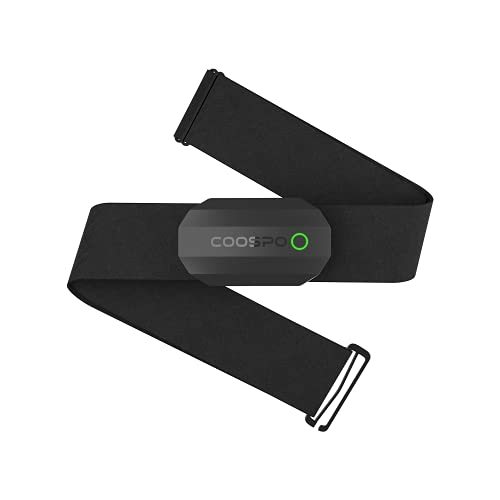
- Up to 300 hours on a replaceable CR2032 battery
- Bluetooth and ANT+ connectivity
- IP67 waterproof chest-strap design
Best For: Athletes who want maximum runtime and wide device compatibility
Comfortable Rechargeable Pick

- 38 hours of active use or 80 days of standby
- Soft, breathable armband design
- Pairs with up to three Bluetooth devices
Best For: COROS users who prefer an armband and rechargeable operation
All-Day Smartwatch Option

- 24/7 heart-rate and health tracking
- More than 120 exercise modes
- Notifications and daily smartwatch tools
Best For: Users seeking a broad fitness tracker instead of a standalone sensor
Best Long-Life Chest Strap
POWR LABS Bluetooth ANT+ Heart Rate Monitor
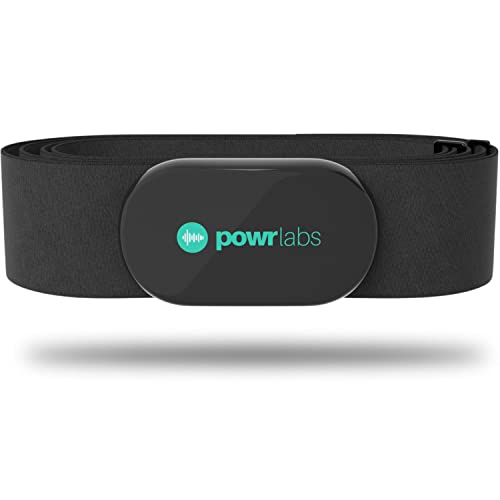
- 400+ hour replaceable-battery life
- Bluetooth and ANT+ connectivity
- Sweat- and water-resistant design
Best For: Athletes wanting low-maintenance, multi-device heart-rate tracking
Best Smartwatch Battery
BOOOMIC Smart Watch with Alexa

- Claimed 30-day battery life
- 24/7 heart-rate and sleep monitoring
- Alexa, calls, and 100+ sport modes
Best For: Everyday smartwatch users prioritizing long runtime and broad features
Best Accuracy-Focused Strap

- Claimed 400-hour battery life
- Bluetooth, ANT+, and 5 kHz connectivity
- Waterproof with internal memory
Best For: Serious exercisers seeking precise, versatile chest-strap tracking
Long-Lasting Smart Band – Xiaomi Mi Smart Band 10
For shoppers comparing heart rate monitors with long battery life, the Xiaomi Mi Smart Band 10 stands out as a versatile fitness tracker with up to 21 days of battery life. Its large AMOLED touchscreen, heart rate monitoring, sleep tracking, blood oxygen monitoring, and multi-sport features make it suited to everyday wellness tracking.
Best For: Everyday users who want a long-running fitness band with a bright display and broad activity tracking.
Pros:
- Up to 21 days of battery life, with fast charging to full in about an hour.
- Large 1.72-inch AMOLED display with up to 1500 nits HBM brightness.
- Tracks heart rate, sleep, blood oxygen, and multiple sports, with 5ATM water resistance.
Cons:
- No built-in GPS; it relies on a compatible smartphone for connected features.
- The Xiaomi Fit app supports metric measurements, while imperial units require a third-party Google Fit connection.
The Mi Smart Band 10 is a strong choice when battery endurance and all-day tracking matter more than standalone GPS. Its display and wellness features add useful convenience for daily wear.
Set-and-Forget Chest Strap – Garmin HRM 200
If you need heart rate monitors with long battery life for structured training, the Garmin HRM 200 offers real-time heart rate and heart rate variability data with up to one year of battery life. It transmits to compatible Garmin devices, fitness equipment, apps, and smartphones, making it a focused training sensor rather than a general-purpose smartwatch.
Best For: Athletes and Garmin users who want a durable, low-maintenance chest strap for training data.
Pros:
- Up to one year of battery life with a user-replaceable battery.
- Transmits real-time heart rate and heart rate variability data.
- Machine-washable strap, two available size ranges, and a 3 ATM water rating.
Cons:
- Requires a compatible device, app, or fitness machine to view the transmitted data.
- Its battery is replaceable rather than rechargeable.
The HRM 200 is a practical option for runners, cyclists, and gym users who prefer a chest strap and do not want frequent battery changes. Its compatibility with Garmin equipment is especially useful for existing Garmin ecosystems.
Ultra-Endurance Sensor – GEOID HS500 Heart Rate Monitor
The GEOID HS500 is one of the more endurance-focused heart rate monitors with long battery life, offering up to 800 hours from a replaceable CR2032 battery. Its ANT+ and Bluetooth connectivity supports phones, sports watches, bike computers, treadmills, and popular training apps.
Best For: Frequent cyclists, runners, and indoor trainers who want very long battery life and broad connectivity.
Pros:
- Up to 800 hours of battery life, with a replaceable CR2032 battery.
- Supports both ANT+ and Bluetooth connections across numerous devices and apps.
- IP67 waterproof construction, automatic activation, and an LED connection indicator.
Cons:
- Swimming is not recommended.
- Requires connection through the app being used rather than directly through the phone’s Bluetooth settings.
With its unusually long battery rating and dual-protocol support, the HS500 is well suited to athletes who use several training platforms. The replaceable battery also helps minimize charging interruptions.
Rechargeable Training Strap – Wahoo TRACKR Heart Rate Monitor
For athletes who prefer rechargeable heart rate monitors with long battery life, the Wahoo TRACKR provides real-time heart rate data with more than 100 hours of active battery life. ANT+ and Bluetooth support lets it connect to smartphones, fitness equipment, training apps, and compatible accessories.
Best For: Athletes wanting a comfortable rechargeable chest strap for regular app-based or equipment-based workouts.
Pros:
- High-capacity rechargeable battery rated for up to 200 hours of active life in the supplied details.
- ANT+ and Bluetooth connectivity for phones, fitness equipment, and training apps.
- Soft, secure strap with LED indicators for heart rate detection, battery status, and connection.
Cons:
- Battery life is lower than the GEOID HS500’s 800-hour rating and Garmin HRM 200’s one-year rating.
- Requires periodic charging rather than a quick replaceable-battery swap.
The TRACKR is a sensible middle ground for users who want rechargeable convenience without giving up broad wireless compatibility. Its secure strap and status LEDs are useful during intense workouts.
Long-Run Chest Strap – COOSPO H808S
For athletes seeking heart rate monitors with long battery life, the COOSPO H808S stands out with up to 300 hours from a replaceable CR2032 battery. Its chest-strap design, dual Bluetooth and ANT+ connectivity, and IP67 waterproof rating make it a practical choice for structured workouts.
Best For: Cyclists, runners, and indoor-training users who need extended battery life and broad device compatibility.
Pros:
- Up to 300 hours of battery life with a replaceable CR2032 battery
- Supports both Bluetooth 4.0 and ANT+ connections
- Compatible with devices and apps including Peloton, Strava, Zwift, Wahoo Fitness, and Polar Beat
- IP67 waterproof construction with LED and beep status reminders
Cons:
- Requires moistening the electrode areas before use
- Chest straps may be less comfortable than armband designs for some users
- The strap is recommended for replacement after six months or 300 washes
The H808S is a strong value for users prioritizing maximum runtime and flexible connections. Just remember to connect it through the fitness app rather than the phone’s Bluetooth settings and disconnect it after workouts.
Comfortable Rechargeable Pick – COROS Heart Rate Monitor
The COROS Heart Rate Monitor is a comfortable armband option for shoppers comparing heart rate monitors with long battery life. It provides 38 hours of active operation or up to 80 days of standby, with automatic wear detection and simultaneous pairing with up to three devices.
Best For: COROS users and athletes who prefer a soft, breathable armband over a traditional chest strap.
Pros:
- Provides 38 hours of operation or up to 80 days of standby per charge
- Soft, breathable band with flexible sizing from 9.4 to 16.9 inches
- Can pair with up to three devices simultaneously
- Automatically powers on and off when worn
Cons:
- Uses Bluetooth only and is not compatible with ANT+
- USB charging cable is included, but a Type-C adapter is not
- A full recharge takes about two hours
With its automatic wear detection and comfortable fabric band, the COROS monitor is convenient for frequent training sessions. Its main limitation is Bluetooth-only connectivity, so verify compatibility with your existing equipment before buying.
All-Day Smartwatch Option – H32 Pro Fitness Tracker
Unlike dedicated workout sensors, the H32 Pro combines heart-rate monitoring with everyday smartwatch features. It tracks heart rate continuously, along with blood oxygen, blood pressure, sleep, steps, and calories, while supporting more than 120 exercise modes and smartphone notifications.
Best For: Users who want an all-in-one fitness tracker for daily health metrics, workouts, and wrist-based notifications.
Pros:
- Offers 24/7 heart-rate, blood-oxygen, and blood-pressure monitoring
- Tracks sleep stages and all-day activity metrics
- Includes more than 120 exercise modes
- Provides call and message notifications plus weather, music, camera, and phone-finding tools
Cons:
- The supplied notes do not specify battery runtime
- Outdoor route mapping requires connection to a phone’s GPS
- Health metrics are presented for tracking and should not be treated as medical diagnoses
The H32 Pro is best viewed as a feature-rich smartwatch rather than a dedicated long-battery heart-rate sensor. It offers broad daily tracking and convenience features, but shoppers specifically prioritizing long battery life should confirm its runtime before purchasing.
Best Long-Life Chest Strap – POWR LABS Bluetooth ANT+ Heart Rate Monitor
For athletes seeking heart rate monitors with long battery life, the POWR LABS chest strap stands out with a claimed 400+ hours of use from its replaceable battery. Dual Bluetooth and ANT+ connectivity makes it a practical choice for pairing with Garmin, Wahoo, Polar, Peloton, cycling computers, smartwatches, and compatible fitness apps.
Best For: Cyclists, runners, and athletes who want a comfortable, highly compatible chest strap with minimal battery maintenance.
Pros:
- Claimed 400+ hour battery life, or roughly six months of daily training.
- Supports both Bluetooth and ANT+ connections for broad device compatibility.
- Soft, adjustable strap is designed for long-session comfort.
- IPX67 sweat and water resistance suits demanding workouts.
Cons:
- Requires wearing the monitor before pairing.
- Chest-strap format may be less convenient than a wrist-worn tracker.
The POWR LABS is a strong value-oriented option when long battery life and flexible connectivity matter most. Its replaceable battery and sweat-resistant design reduce interruptions during regular training.
Best Smartwatch Battery – BOOOMIC Smart Watch with Alexa
If you prefer an all-in-one wearable, this BOOOMIC smartwatch combines 24/7 heart-rate monitoring with a claimed 30-day battery life. It also adds sleep and stress tracking, Bluetooth calling, Alexa, notifications, and more than 100 sport modes in a waterproof design.
Best For: Users who want long-lasting smartwatch convenience alongside everyday heart-rate, sleep, and activity tracking.
Pros:
- Claimed 30-day battery life with a two-hour charge time.
- Tracks heart rate, sleep cycle, and stress around the clock.
- Includes Alexa, Bluetooth calling, notifications, and 100+ sport modes.
- IP68 waterproof rating supports swimming, showering, and sweaty workouts.
Cons:
- GPS works through a smartphone rather than built-in satellite positioning.
- Heart-rate tracking is watch-based, which may be less exercise-specific than a chest strap.
- Requires Android 6.0+ or iOS 9.0+ compatibility.
The BOOOMIC offers the broadest feature set of these picks, especially for shoppers who want notifications and smartwatch functions in addition to health tracking. Its advertised 30-day runtime is particularly appealing for those who dislike frequent charging.
Best Accuracy-Focused Strap – Polar H10 Heart Rate Monitor
The Polar H10 is a proven chest-strap option for shoppers comparing heart rate monitors with long battery life and a strong accuracy focus. Its included CR2025 battery is rated for about 400 hours, while Bluetooth, ANT+, and 5 kHz connectivity support a wide range of compatible equipment.
Best For: Serious exercisers who prioritize precise chest-strap readings, broad connectivity, and several hundred hours between battery changes.
Pros:
- Claimed 400-hour battery life from an included CR2025 button cell.
- Supports Bluetooth, ANT+, and 5 kHz connections.
- Can use Bluetooth and ANT+ simultaneously, plus two Bluetooth connections.
- Waterproof design includes internal memory for multiple hours of data.
Cons:
- Requires the specified CR2025 battery; other sizes may cause malfunction.
- As a chest strap, it does not provide smartwatch features or an on-device display.
- The listed strap size is M-XXL, which may not suit every user.
The Polar H10 is a compelling choice when dependable measurement and connection flexibility take priority over smartwatch extras. Its 400-hour battery rating also keeps routine battery replacement relatively infrequent.
How We Picked the Best Heart Rate Monitors with Long Battery Life
We focused on battery life, heart-rate accuracy, wearing comfort, durability, connectivity, and practical compatibility. The selection includes chest-strap monitors that prioritize responsive workout data, as well as fitness bands and smartwatches that add sleep, activity, and wellness tracking. We also considered connection standards such as Bluetooth and ANT+, waterproofing, replaceable versus rechargeable batteries, and whether each device suits casual users or structured training.
Quick Comparison
Chest straps generally provide the most responsive readings during interval training, cycling, running, and gym sessions. Models with replaceable coin-cell batteries can operate for hundreds of hours and are convenient for athletes who do not want another rechargeable device. Rechargeable straps reduce battery waste and are easier to maintain when used frequently.
Fitness bands and smartwatches offer a broader feature set, including continuous heart-rate tracking, sleep monitoring, step counts, notifications, and multiple sport modes. Their longer stated battery life may be measured in days rather than workout hours, and wrist-based readings can be less consistent during rapid intensity changes or exercises involving wrist movement.
Key Buying Factors for Heart Rate Monitors with Long Battery Life
Battery Type and Runtime
Check whether the monitor uses a replaceable battery or USB charging. A chest strap rated for hundreds of hours may be ideal for frequent training, while a multi-day smartwatch is better for all-day tracking. Real-world runtime can vary with sensor frequency, connected devices, notifications, and display use.
Accuracy and Wearing Position
Chest straps sit close to the heart and typically respond faster than optical wrist sensors, especially during intervals. Wrist trackers are more convenient for continuous monitoring but should fit snugly above the wrist bone. For either style, proper placement and clean sensor contact matter.
Connectivity and Compatibility
ANT+ is useful for bike computers, gym equipment, and compatible watches, while Bluetooth works with phones, tablets, and many training apps. If you train indoors or use multiple devices, choose a monitor that supports both protocols and verify compatibility before buying.
Water Resistance and Comfort
Look for an appropriate IP or waterproof rating if you sweat heavily, train outdoors, or swim. The strap should remain secure without chafing, and replacement straps or washable materials can make long-term ownership easier.
Who Should Buy Which Heart Rate Monitors with Long Battery Life?
Choose a long-runtime chest strap if workout accuracy and fast response are your top priorities. A dual-protocol model is the most flexible choice for athletes using phones, watches, cycling computers, or gym equipment. Choose a fitness band or smartwatch if you want heart rate alongside sleep, steps, notifications, and general wellness insights. For occasional exercise, prioritize comfort and simple pairing; for structured training, prioritize sensor consistency, battery runtime, and compatibility with your existing training platform.