Limited floor space does not have to limit your upper-body training. The best pull-up bars for small spaces can add chin-ups, pull-ups, hanging knee raises, and other bodyweight exercises without requiring a full home gym.
This roundup compares 10 compact options, from removable doorway bars to adjustable power towers and joist-mounted designs. Use the buying guide below to match the bar’s installation method, weight capacity, grip layout, and clearance requirements to your room.
Best 10 Pull Up Bars for Small Spaces Picks for 2026
Best Fold-Away Doorway Bar

- No screws or assembly required
- 440-pound stated capacity
- Folds away for storage
Best For: Wide doorways and compact home workouts
Best Compact Power Tower
Adjustable Pull-Up and Dip Station

- 6.6-square-foot footprint
- 10 height settings from 65 to 83 inches
- Supports pull-ups, dips, and knee raises
Best For: Low-ceiling rooms needing multiple exercises
Best Narrow-Doorway Bar
KAKICLAY Multi-Grip Pull-Up Bar

- Fits doorways as narrow as 21.65 inches
- Multiple grips and foldable design
- 440-pound stated capacity
Best For: Narrow or corner-adjacent doorframes
Best Freestanding Beginner Station

- 9.4-square-foot footprint
- Six adjustable height levels
- Supports pull-ups, dips, and knee lifts
Best For: Beginners wanting a movable freestanding station
Best Freestanding Tower

- 400-pound recommended capacity with stability features
- Nine height settings for multiple users
- Adds dips, push-ups, rows, and knee raises
Best For: Families with room for a freestanding multi-exercise station
Best Adjustable Doorway Bar
Ally Peaks Width-Adjustable Pull-Up Bar

- Fits doorways 21.65 to 39.37 inches wide
- Removes without screws for easier storage
- 500-pound recommended capacity with silicone protection
Best For: Renters and small rooms with compatible doorframes
Best Foldaway Option
ProsourceFit Foldable Doorway Bar

- Folds for closet or under-bed storage
- No assembly or permanent installation required
- Supports several pull-up and core exercises
Best For: Small rooms where easy removal and compact storage matter most
Best Joist-Mount Option
Fitarc Joist Mount Pull Up Bar
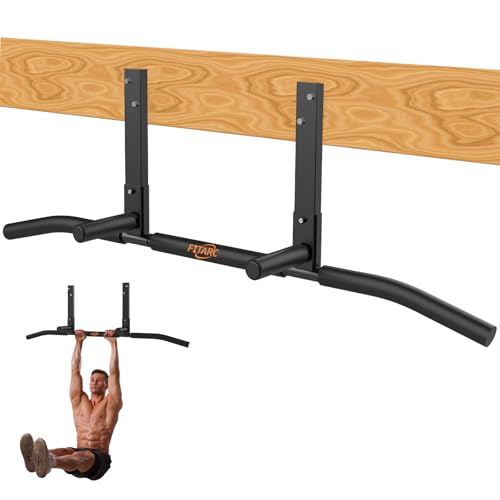
- Ceiling-mounted design saves floor space
- 440-pound maximum weight recommendation
- Padded multi-grip steel construction
Best For: Permanent home gyms with compatible wooden beams
Best Portable Doorway Bar
Ally Peaks Multi-Grip Pull Up Bar

- No-screw removable doorway installation
- 440-pound maximum weight recommendation
- Includes silicone frame protection
Best For: Renters and compact spaces needing a removable workout bar
Best Ergonomic Doorway Design
AmazeFan Multi-Angle Pull Up Bar

- Multi-angle grips support varied hand positions
- Foldable for quick, compact storage
- Fits listed openings from 21.65 to 36.22 inches
Best For: Small homes needing a comfortable, easy-to-store doorway bar
Best Fold-Away Doorway Bar – KAKICLAY Foldable Pull-Up Bar
For shoppers comparing pull up bars for small spaces, this KAKICLAY model is a practical doorway option that hooks into place without screws or assembly. Its foldable design makes it easier to store after training, while the wide-doorframe fit and raised bar accommodate a range of users.
Best For: People who want a high-capacity, no-drill pull-up bar for a wide doorway and compact storage.
Pros:
- Folds away for space-saving storage and requires no screws or assembly.
- Supports up to 440 pounds and includes larger hooks, cushioned pads, and suspension straps.
- Fits door widths from 27.56 to 36.22 inches and includes a raised bar for taller users.
- Soft, nonslip foam grips and a 24-month warranty add everyday convenience.
Cons:
- Its doorway fit is limited to frames within the specified width and depth range.
- It is not a suitable choice for hollow plasterboard walls.
This is a strong small-space pick if your doorway meets the measurements and you want a portable setup with a high stated weight limit. Measure the frame before ordering.
Best Compact Power Tower – Adjustable Pull-Up and Dip Station
Among pull up bars for small spaces, this adjustable power tower offers more exercise variety than a doorway bar while keeping its footprint to about 6.6 square feet. Its 65-to-82.7-inch height range is designed for apartments, bedrooms, basements, and other rooms with limited clearance.
Best For: Home users who want pull-ups, dips, knee raises, and push-ups in a compact freestanding station.
Pros:
- Compact 6.6-square-foot footprint and adjustable height suit low-ceiling rooms.
- Provides 10 height settings from 65 to 83 inches for different users.
- Supports pull-ups, chin-ups, dips, push-ups, vertical knee raises, and stretching.
- Heavy-duty steel construction, nonslip suction cups, and a 330-pound capacity support home use.
Cons:
- Users taller than about 6 feet may have some comfort limitations during pull-ups.
- It requires installation, and added weight at the base is recommended for resistance-band training.
This tower is a versatile choice when floor space is available but ceiling height is a concern. It offers a broader routine than a single bar, though it is less portable than a foldable doorway model.
Best Narrow-Doorway Bar – KAKICLAY Multi-Grip Pull-Up Bar
This KAKICLAY multi-grip model is a useful option for pull up bars for small spaces because its shortened hook spacing fits doorways from 21.65 to 36.22 inches, including many narrower or corner-adjacent openings. It also folds for storage and provides several grip positions for varied training.
Best For: Users with narrow doorways who want multiple grips, a raised bar, and a foldable design.
Pros:
- Fits a broad 21.65-to-36.22-inch door-width range and can work in tighter corner locations.
- Foldable design stores quickly, while silicone door protectors help prevent frame marks.
- Multiple angled and shoulder-width grip options support varied pull-up training.
- Rated for up to 440 pounds and includes suspension straps plus a 24-month warranty.
Cons:
- Requires a doorframe within the specified width, depth, and trim-height limits.
- Not suitable for hollow plasterboard walls, and the frame must be in good condition.
The narrower minimum width makes this one of the more adaptable doorway choices for compact homes. Check the inside doorframe measurements carefully, especially if the opening is near a wall or has trim.
Best Freestanding Beginner Station – Z ZHICHI Pull-Up Dip Station
For shoppers seeking pull up bars for small spaces without using a doorframe, the Z ZHICHI is a freestanding pull-up and dip station with a compact 9.4-square-foot footprint. Its six height levels and rubber feet make it suitable for home gyms, bedrooms, garages, or other indoor and outdoor locations.
Best For: Beginners who want a movable, freestanding station for basic upper-body and core exercises.
Pros:
- Compact footprint fits a variety of rooms and the 33-pound frame is easy for one adult to move.
- Reinforced pipe connections are designed to reduce shaking, with rubber feet to protect floors.
- Six adjustable height levels support different users and workout preferences.
- Allows pull-ups, chin-ups, push-ups, knee lifts, and leg-focused movements.
Cons:
- Assembly is required, although the supplied notes describe installation as taking under 20 minutes.
- The listed size may be limiting for users over 6 feet 3 inches or with a body width over 19.5 inches.
- The supplied details list no warranty.
This station suits buyers who prefer a freestanding setup and want more exercise options than a doorway bar provides. Confirm the available floor area and user dimensions before assembling it.
Best Freestanding Tower – Compact Relife Power Tower
For shoppers comparing pull up bars for small spaces, the RELIFE power tower offers a freestanding option with a compact 34-by-26.4-inch footprint. Its adjustable height and multiple exercise stations make it more versatile than a basic bar, though its 86-inch height should be checked against your ceiling clearance.
Best For: Families or home gyms wanting a freestanding station for pull-ups, dips, push-ups, rows, and knee raises.
Pros:
- Supports up to 400 pounds and uses thickened steel tubing, a safety locknut, and four suction cups for added stability.
- Nine height settings accommodate different users, including a lower setting designed for children.
- Supports several movements, including pull-ups, chin-ups, dips, push-ups, rows, and vertical knee raises.
- Adjustable armrests and backrest settings can improve comfort for different users.
Cons:
- The 86-inch height may not suit rooms with low ceilings.
- At 43 pounds, it is less convenient to move than a removable doorway bar.
- Assembly is required.
The RELIFE is a strong choice when you want more than pull-ups and have enough vertical and floor space for a tower. Its adjustable design adds family-friendly flexibility, while the larger footprint makes it less space-efficient than foldable doorway models.
Best Adjustable Doorway Bar – Ally Peaks Width-Adjustable Pull-Up Bar
The Ally Peaks is designed for pull up bars for small spaces where a permanent installation is undesirable. Its width and thickness adjustments fit doorways from 21.65 to 39.37 inches wide and 4.7 to 8.27 inches deep, so measure your frame before buying.
Best For: Users who need a removable, adjustable doorway bar for pull-ups, chin-ups, dips, push-ups, and hanging crunches.
Pros:
- Five width settings and two thickness settings allow precise doorway fitment.
- Mounts without screws and can be removed for storage when space is limited.
- Thickened chrome steel construction is rated for up to 500 pounds.
- Silicone contact surfaces and removable pads help protect the door frame.
Cons:
- It requires a compatible doorway within the stated width, depth, and trim-height ranges.
- Users should tug down on the grips to confirm secure installation before exercising.
- The bar’s multiple adjustment points may require more setup than a simpler fixed design.
With broad fit adjustments and no-screw installation, the Ally Peaks is a practical pick for renters, offices, or shared rooms. Its main limitation is doorway compatibility, so careful measuring is essential.
Best Foldaway Option – ProsourceFit Foldable Doorway Bar
ProsourceFit Foldable Pull Up Bar/Doorway Trainer for Multi Use Fitness & Home Gym Exercise
Check Price On AmazonFor pull up bars for small spaces, the ProsourceFit focuses on storage efficiency: it folds completely and can be placed in a closet or under a bed. It also requires no assembly or installation, making it convenient for quick home workouts.
Best For: Users who prioritize portability, simple setup, and compact storage for doorway pull-ups and related exercises.
Pros:
- Folds completely for storage in a closet or under a bed.
- Requires no assembly or permanent installation; unfold the hooks and place it on the doorframe.
- Supports pull-ups, chin-ups, sit-ups, and leg raises.
- Includes a lifetime limited warranty according to the supplied product details.
Cons:
- The supplied details list conflicting capacity figures: a 440-pound bullet claim and a 200-pound maximum-weight specification.
- As a doorway-mounted bar, it depends on a suitable doorframe for use.
- It offers less exercise-station variety than a freestanding power tower.
The ProsourceFit is the most storage-friendly option here, especially for bedrooms, apartments, or multipurpose rooms. Because the supplied specifications conflict on weight capacity, verify the current product information before relying on it for heavier users.
Best Joist-Mount Option – Fitarc Joist Mount Pull Up Bar
If floor space is limited, the Fitarc Joist Mount Pull Up Bar is a practical choice among pull up bars for small spaces. Its ceiling-mounted joist design creates a dedicated workout station without taking up wall or floor area. It is designed for wooden beams, basement gyms, and garage setups.
Best For: Home gyms with suitable 8–9-foot wooden beams and users who want a permanent, space-saving station for pull-ups and core exercises.
Pros:
- Joist-mounted design keeps the floor and wall area clear.
- Heavy-duty steel construction supports up to 440 pounds.
- Four padded grip positions support pull-ups, chin-ups, and hanging leg raises.
- Installation instructions and videos are included.
Cons:
- Requires a suitable wooden beam and ceiling installation.
- Less portable than a doorway-mounted bar.
The Fitarc is a strong fit when you can dedicate a ceiling joist to your workout setup. Confirm the beam compatibility and installation location before buying.
Best Portable Doorway Bar – Ally Peaks Multi-Grip Pull Up Bar
The Ally Peaks doorway bar is a convenient pick among pull up bars for small spaces because it installs without screws and can be removed for storage. Its leverage-mounted design fits standard doorways from 24 to 32 inches wide and supports several upper-body exercises.
Best For: Renters, home-office users, and anyone who needs a removable bar for pull-ups, push-ups, dips, and hanging crunches.
Pros:
- Portable, no-screw installation helps preserve wall and door space.
- Thickened steel construction has a 440-pound maximum weight recommendation.
- Multi-grip handles are covered with high-fiber foam.
- Double silicone protection is designed to reduce door-frame marks.
Cons:
- Only fits doorways within the listed width, depth, and trim measurements.
- Requires careful installation and a security check before each use.
This bar offers useful flexibility for compact homes, but accurate doorway measurements are essential. Its removable design makes it easier to reclaim the doorway when your workout is over.
Best Ergonomic Doorway Design – AmazeFan Multi-Angle Pull Up Bar
The AmazeFan doorway bar is a space-saving option for pull up bars for small spaces, especially where quick storage matters. Its smart hook design hangs on the door frame, while multi-angle grips and detachable silicone pads support comfortable use without permanent installation.
Best For: Users who want a compact, removable doorway bar with varied hand positions and a design that can fit narrower door openings.
Pros:
- Multi-angle grips are designed to support different hand positions and wrist comfort.
- Foldable design stores quickly after training.
- Fits listed door widths from 21.65 to 36.22 inches.
- Detachable silicone pads help protect the door frame.
Cons:
- Door-frame depth, trim height, and width must match the listed measurements.
- Its 400-pound maximum weight recommendation is lower than some competing options.
The AmazeFan stands out for ergonomic grip variety and compact storage. Measure the full door frame carefully, particularly if you have a narrow or corner doorway.
How We Picked the Best Pull Up Bars for Small Spaces
We organized these picks around the most important constraints in a compact home gym: installation footprint, portability, adjustability, exercise versatility, stated weight capacity, and the type of doorway, wall, or ceiling support required. The selection includes doorway bars for renters and quick workouts, freestanding towers for users who want dips and vertical knee raises, and mounted bars for a more permanent setup.
Because specifications and installation conditions vary, treat listed weight limits as maximums rather than targets. Always follow the manufacturer’s instructions and verify that your frame, wall, joists, or flooring can safely support the equipment and user.
Quick Comparison
| Type | Best For | Main Advantage | Primary Trade-Off |
|---|---|---|---|
| Doorway bar | Renters and minimal spaces | Fast setup with little storage demand | Requires a compatible, sturdy frame |
| Freestanding power tower | Fuller bodyweight workouts | Supports pull-ups, dips, and core work | Uses more floor area |
| Wall or joist mount | Dedicated home gyms | Stable, permanent installation | Needs accurate mounting and clearance |
| Adjustable-width bar | Nonstandard doorways | Can fit more openings | Requires careful fit verification |
Key Buying Factors for Pull-Up Bars for Small Spaces
Measure Before You Buy
Measure the doorway or wall area, including trim depth, opening width, ceiling height, and usable clearance above and behind the bar. A compact product may still be impractical if your head, knees, or feet contact the ceiling or wall during repetitions.
Choose the Right Installation Style
Doorway models are usually the easiest to store, but they depend heavily on frame geometry and correct placement. Wall- and joist-mounted bars can feel more stable and leave the floor open, though they require suitable structural support and tools. Power towers need no wall drilling but demand a clear, level floor footprint.
Check Capacity, Materials, and Stability
Compare the stated user-weight capacity with your body weight, added resistance, and dynamic movement. Look for secure contact points, reinforced steel construction, protective padding where appropriate, and a base that resists rocking. Capacity claims do not replace proper installation.
Evaluate Grip and Exercise Options
Multiple grips can make it easier to vary hand position and target different pulling patterns. If you also want dips, knee raises, or assisted progressions, a power tower may offer better versatility than a simple doorway bar. For occasional pull-ups, a basic compact bar may be the more efficient choice.
Who Should Buy Which Pull Up Bars for Small Spaces?
Choose a doorway bar if you rent, need quick setup, or have very limited storage. Verify the frame dimensions and avoid using one on damaged, unusually shallow, or unstable trim.
Choose a freestanding power tower if you want a broader bodyweight routine and can spare a permanent floor footprint. It is particularly useful for users who want pull-ups and dips in one station.
Choose a wall- or joist-mounted bar if stability and open floor space matter most and you can install into appropriate structural material. This is often the best long-term solution for a dedicated workout area.
Choose an adjustable or multi-grip model if several household members will use it or you want more hand-position options. Before ordering, confirm every dimension and the manufacturer’s required safety clearances.