The best fitness trackers with heart rate monitoring make it easier to understand daily activity, workouts, sleep, and overall trends without carrying a full-size smartwatch.
We compared 10 options across tracking features, battery life, durability, comfort, smart functions, and subscription requirements to help you choose a model that fits your routine and budget.
Best 10 Fitness Trackers with Heart Rate Picks for 2026
Best Overall

- 24/7 heart-rate tracking with built-in GPS
- 40+ exercise modes and automatic tracking
- Sleep, stress, and Daily Readiness insights
Best For: Comprehensive fitness and recovery tracking
Best Battery Life

- Up to 14 days of advertised battery life
- 1.6-inch AMOLED display and 100+ workout modes
- Heart rate, sleep, and blood-oxygen tracking
Best For: Android users seeking long battery life
Best Smartwatch Features

- Heart rate, SpO2, stress, and sleep monitoring
- 100+ sports modes with activity tracking
- Bluetooth calling and smartphone notifications
Best For: Everyday smartwatch and fitness essentials
Best Compact Design

- Slim band with 24/7 heart-rate tracking
- 40+ exercise modes and automatic exercise tracking
- Up to 10 days of advertised battery life
Best For: Discreet everyday wellness tracking
Best All-Around Smartwatch

- Heart rate and sleep monitoring with 140+ sport modes
- 1.83-inch HD display with customizable watch faces
- Bluetooth calling, notifications, and IP68 water resistance
Best For: Android and iPhone users seeking a versatile fitness smartwatch
Best for Recovery Insights

- Continuous heart rate, HRV, sleep, stress, and recovery tracking
- AI coaching based on 140+ health and fitness metrics
- 14+ days of battery life with charging while worn
Best For: Athletes and wellness users focused on recovery and sleep
Best No-Phone Option
Simple Heart Rate Fitness Tracker

- Works without an app or phone for basic tracking
- Monitors heart rate, sleep, steps, calories, and distance
- Nine sport modes with 5–7 days of stated battery life
Best For: Beginners wanting simple, phone-free activity tracking
Most Versatile Pick
MorePro 24/7 Heart Rate Fitness Tracker
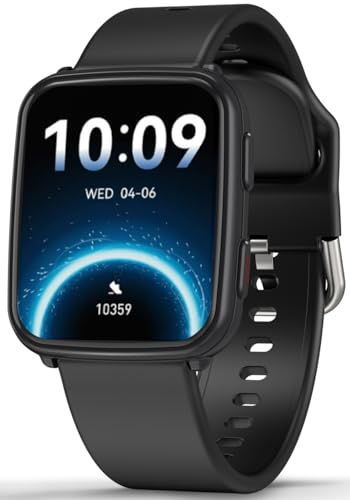
- Continuous heart-rate, blood-pressure, and blood-oxygen checks
- 120+ sport modes with detailed activity tracking
- Up to 7 days of normal-use battery life
Best For: Feature-focused users who want broad fitness and wellness tracking
Simplest Standalone Option
- No app or phone required for basic tracking
- Automatic heart-rate and sleep monitoring
- Nine sport modes and IP68 water resistance
Best For: Users seeking uncomplicated, everyday fitness tracking
Best Display-Focused Pick
Fitness Tracker with 1.1-inch AMOLED Screen

- 1.1-inch AMOLED touchscreen with custom watch faces
- 24/7 heart-rate and sleep monitoring
- 25 sports modes with connected GPS support
Best For: Shoppers who value display quality and varied workout tracking
Best Overall – Fitbit Charge 6
The Fitbit Charge 6 is a strong all-around choice among fitness trackers with heart rate, combining continuous heart-rate monitoring with built-in GPS, 40-plus exercise modes, sleep insights, and activity tracking. Its compact design also adds useful Google features for compatible Android users.
Best For: Users who want detailed workout, recovery, sleep, and heart-rate tracking in one compact band.
Pros:
- 24/7 heart-rate tracking, automatic exercise detection, and 40-plus exercise modes
- Built-in GPS and real-time heart-rate display on compatible exercise machines
- Tracks Daily Readiness, stress, sleep, calories, and Active Zone Minutes
- Includes Google Maps turn-by-turn directions and Google Wallet support
Cons:
- Google Health Premium features require a separate subscription after the trial
- Compatibility requires Android 11.0 or newer or iOS 16.4 or newer
Charge 6 is the most feature-rich option here for users who want GPS and broad health metrics without moving to a full-size smartwatch. Its advertised battery life is up to seven days, though feature use can affect runtime.
Best Battery Life – Samsung Galaxy Fit3
The Samsung Galaxy Fit3 stands out among fitness trackers with heart rate for its large 1.6-inch AMOLED display and long claimed battery life. It tracks heart rate, sleep, blood oxygen, and more than 100 workout types, but its Android-only compatibility is important to consider.
Best For: Android users who prioritize a bright display, extended battery life, and high workout-mode variety.
Pros:
- Large 1.6-inch AMOLED touchscreen with 320-by-320 resolution
- Tracks heart rate, sleep, blood oxygen, and snore detection
- More than 100 exercise modes with automatic detection for common workouts
- Advertised battery life of up to 14 days and 5ATM/IP68 water resistance
Cons:
- Compatible with Android devices only; not compatible with iPhone or iOS
- No built-in GPS
- International model has no U.S. warranty, and Samsung Pay is not supported
The Galaxy Fit3 offers an appealing combination of screen size and battery endurance, but its lack of onboard GPS means outdoor routes depend on a connected phone. Confirm Android compatibility and warranty terms before buying.
Best Smartwatch Features – ICOMTOFIT Fitness Tracker
The ICOMTOFIT smartwatch combines fitness trackers with heart rate functionality and everyday smartwatch tools. It monitors heart rate, blood oxygen, stress, sleep, and activity while also supporting Bluetooth calls, notifications, and more than 100 sports modes.
Best For: Users who want basic health tracking plus wrist-based calls and phone notifications.
Pros:
- Tracks real-time heart rate during workouts and daily activity
- Offers more than 100 sports modes and automatic health and sleep monitoring
- Built-in microphone and speaker support calls from the wrist
- Works with iOS and Android smartphones and includes a 1.83-inch touch display
Cons:
- GPS is provided through a connected smartphone rather than built in
- IP67 protection is intended for hand washing, sweat, and light rain, not swimming
- Health readings are for daily reference and are not medical measurements
This is a practical budget-style smartwatch for shoppers who value communication features alongside heart-rate and activity tracking. Those needing built-in GPS or stronger water protection should consider another option.
Best Compact Design – Fitbit Inspire 3
The Fitbit Inspire 3 is a slim, straightforward choice among fitness trackers with heart rate, offering continuous heart-rate monitoring in a lightweight activity band. It also covers exercise, sleep, stress, blood oxygen, and recovery-oriented metrics while working with both iOS and Android devices.
Best For: Users who want a discreet tracker for everyday activity, sleep, and wellness monitoring.
Pros:
- 24/7 heart-rate tracking with 40-plus exercise modes and automatic exercise detection
- Tracks Daily Readiness, Active Zone Minutes, sleep, stress, and blood oxygen
- Advertised battery life of up to 10 days
- Compatible with Apple iOS 16.4 or higher and Android OS 11.0 or higher
Cons:
- GPS relies on a connected smartphone rather than being built in
- Its 0.76-inch display is smaller than the screens on the other smartwatch-style options
Inspire 3 keeps the focus on essential health and fitness tracking in a small form factor. It is a good fit for everyday wear and sleep tracking, while runners who want phone-free route tracking may prefer Charge 6.
Best All-Around Smartwatch – 140-Sport Fitness Tracker
For shoppers comparing fitness trackers with heart rate monitoring, this smartwatch offers a broad mix of workout tracking and everyday smartwatch features. It combines real-time heart rate detection with sleep analysis, 140+ sport modes, Bluetooth calling, notifications, and an IP68 waterproof rating.
Best For: Android and iPhone users who want a full-featured smartwatch for workouts, calls, notifications, and daily health tracking.
Pros:
- Tracks heart rate, sleep quality, steps, and more across 140+ sport modes.
- Large 1.83-inch HD IPS display with customizable watch faces.
- Supports Bluetooth calling, music control, camera control, and message notifications.
- Offers IP68 water resistance and a stated 5–7 days of typical battery life.
Cons:
- GPS functionality is provided through a connected smartphone rather than built in.
- Notifications can be viewed, but messages cannot be answered from the watch.
- Actual battery life varies with individual usage.
This is a versatile choice if you want heart-rate tracking alongside a bright display and communication features. Its smartphone-dependent GPS and broad feature set make it better suited to general fitness and daily use than to phone-free training.
Best for Recovery Insights – WHOOP 5.0 Activity Tracker
Among fitness trackers with heart rate monitoring, WHOOP 5.0 stands out for continuous health, sleep, stress, and recovery analysis rather than a traditional watch display. The included 12-month WHOOP Peak membership adds personalized coaching and access to metrics such as live heart rate, resting heart rate, HRV, respiratory rate, blood oxygen, and skin temperature.
Best For: Athletes and wellness-focused users who want screenless 24/7 tracking, personalized recovery guidance, and detailed sleep insights.
Pros:
- Tracks live heart rate, resting heart rate, HRV, and other health metrics continuously.
- Provides detailed sleep, recovery, stress, and personalized coaching insights.
- Screenless design supports comfortable overnight wear and includes menstrual-cycle insights.
- Offers 14+ days of battery life, with a waterproof wireless PowerPack for charging while worn.
Cons:
- Use of the device and its features is tied to the included 12-month membership.
- The screenless design may not suit shoppers who want a watch face or on-wrist notifications.
- Its extensive metrics and coaching are primarily accessed through the WHOOP app.
WHOOP 5.0 is a specialized option for users who prioritize recovery and behavior-based coaching over smartwatch functions. The membership model is worth considering, but its continuous monitoring and long battery life make it compelling for serious, data-oriented tracking.
Best No-Phone Option – Simple Heart Rate Fitness Tracker
If you want fitness trackers with heart rate monitoring without a complicated setup, this LIVIKEY model is designed to work without an app or phone connection for basic tracking. It monitors heart rate and sleep, counts steps, calories, distance, and active time, and supports nine sport modes.
Best For: Beginners and users who prefer a straightforward fitness tracker for basic activity, heart rate, and sleep monitoring.
Pros:
- Designed to function without an app or smartphone connection.
- Tracks heart rate, sleep quality, steps, calories, distance, and active time.
- Includes nine sport modes plus alarms, a breathing guide, and a sedentary reminder.
- Provides a stated 5–7 days of use after approximately two hours of charging.
Cons:
- Offers fewer sport modes and fewer smartwatch features than more advanced models.
- It can display notifications but cannot make calls or send texts.
- Its compatibility excludes tablets and computers.
This tracker is a practical fit for someone who wants essential activity and heart-rate features without relying on a smartphone. Choose it for simplicity and basic metrics rather than advanced coaching, extensive sports tracking, or built-in calling.
Most Versatile Pick – MorePro 24/7 Heart Rate Fitness Tracker
For shoppers comparing fitness trackers with heart rate monitoring, the MorePro stands out for its broad health and activity feature set. It provides continuous heart-rate and blood-pressure monitoring, on-demand blood-oxygen checks, sleep tracking, and more than 120 sport modes. These readings are intended for general wellness reference, not medical use.
Best For: Users who want extensive workout tracking, women’s health features, and smartwatch conveniences in one device.
Pros:
- Tracks heart rate continuously, plus blood pressure, blood oxygen, sleep, steps, distance, calories, and training time.
- Offers more than 120 sport modes for varied workouts.
- Includes cycle tracking, message notifications, IP68 water resistance, and over 200 watch faces.
- Battery lasts up to 7 days with normal use or 15 days on standby.
Cons:
- Requires an Android or iOS smartphone for its supported connected features.
- Health measurements are not intended to replace professional medical advice.
- Does not support PCs or tablets.
This is the strongest all-around option for shoppers who want heart-rate tracking alongside a large selection of fitness and lifestyle tools. Its extensive sports coverage and women’s health tracking make it especially feature-rich.
Simplest Standalone Option – LIVIKEY Fitness Tracker Watch
Among fitness trackers with heart rate monitoring, this LIVIKEY model is a straightforward choice for people who prefer minimal setup. It can operate without an app or phone connection, while still tracking heart rate, sleep, steps, calories, distance, and active time. Its feature set is more basic than that of many connected smartwatches.
Best For: Shoppers who want simple on-device tracking without depending on a smartphone for everyday use.
Pros:
- Works as a fitness tracker without requiring an app or smartphone connection.
- Provides automatic all-day heart-rate monitoring and sleep analysis.
- Tracks steps, calories, distance, active time, and nine sport modes.
- Offers IP68 water resistance and 5–7 days of continuous use after charging.
Cons:
- Has only nine sport modes, fewer than some alternatives.
- Notifications are supported, but the watch cannot make calls or send texts.
- Not compatible with tablets or computers.
The LIVIKEY is a practical pick when ease of use matters more than a long list of advanced features. It can still connect to compatible phones for app-based functions and notifications, but its no-phone-required design is the main attraction.
Best Display-Focused Pick – Fitness Tracker with 1.1-inch AMOLED Screen
This fitness tracker with heart rate monitoring pairs continuous heart-rate tracking with a bright 1.1-inch AMOLED touchscreen. It also monitors sleep, steps, calories, distance, and exercise time across 25 sports modes. Connected GPS uses a smartphone to record workout routes, while the companion app provides additional health and activity details.
Best For: Users who prioritize a clear color display, workout variety, and connected health insights.
Pros:
- Uses a 1.1-inch AMOLED display with customizable watch faces.
- Provides 24/7 heart-rate tracking along with sleep and activity monitoring.
- Supports 25 sports modes and connected GPS for route recording.
- Includes IP68 water resistance, notifications, reminders, and up to 7 days of battery life.
Cons:
- Connected GPS requires a smartphone.
- Sleep and other health data are for reference and do not replace medical advice.
- Requires Android 5.0 or newer or iOS 9.0 or newer for compatibility.
The AMOLED screen gives this model a more polished viewing experience than a basic tracker, while its 25 sport modes cover common activities well. It is a good middle ground for shoppers who want a readable display without giving up core heart-rate and sleep features.
How We Picked the Best Fitness Trackers with Heart Rate
We focused on trackers that provide continuous or workout-based heart-rate monitoring and considered how useful their data is in everyday use. Our comparison also weighs exercise modes, sleep tracking, blood oxygen features, display quality, water resistance, battery life, phone compatibility, and comfort.
We included both established brands and budget-friendly alternatives because the right tracker depends on whether you want simple activity data, smartwatch conveniences, or deeper coaching and recovery insights. Subscription costs and phone requirements also matter, so they should be part of your decision.
Quick Comparison
| Best For | Features to Prioritize | Potential Trade-Off |
|---|---|---|
| Everyday activity tracking | Comfort, step tracking, heart-rate trends, long battery life | Fewer smart features |
| Workout tracking | Exercise modes, reliable heart-rate readings, water resistance | More frequent charging |
| Smartwatch-style use | Large display, notifications, Bluetooth calls | Bulkier design |
| Sleep and recovery coaching | Continuous wear, sleep metrics, personalized insights | Possible membership fee |
Key Buying Factors for Fitness Trackers with Heart Rate
Heart-Rate Tracking
Look for a tracker that records heart rate consistently during rest and exercise. Wrist-based readings are useful for trends, but they are not medical measurements and can vary with fit, movement, skin contact, and workout intensity.
Battery Life and Charging
Longer battery life makes it easier to wear a device overnight and maintain continuous data. Consider whether the stated runtime applies with frequent workouts, an always-on display, or health monitoring enabled.
Health and Workout Features
Sleep tracking, blood oxygen estimates, step counts, calorie estimates, exercise modes, and recovery metrics can all be useful. Choose features you will actually use rather than paying for a long specification list.
Comfort, Durability, and Compatibility
A slim, comfortable band is often better for 24/7 wear, while a larger watch may offer easier-to-read information and more controls. Check water resistance, band sizing, app compatibility, and whether the tracker works with your phone before buying.
Who Should Buy Which Fitness Trackers with Heart Rate?
Choose a mainstream fitness band if you want dependable activity and heart-rate trends in a comfortable, low-maintenance design. A model with a larger AMOLED display and extensive sport modes is better for shoppers who want clearer workout information and smartwatch-style convenience.
Budget trackers can work well for basic steps, heart rate, sleep, and reminders, but app quality and measurement consistency may vary. If recovery, sleep, and personalized coaching are your priorities, a premium wearable may provide more meaningful insights—provided you are comfortable with any ongoing membership cost.
Finally, shoppers who do not want a phone or companion app should verify exactly which features work independently. No tracker replaces professional medical equipment, so consult a healthcare professional for diagnosis, treatment, or decisions based on heart-rate readings.